Pest Control: Your Phone Is Ringing Off the Hook This Spring

Meric Karpat · Founder & CEO
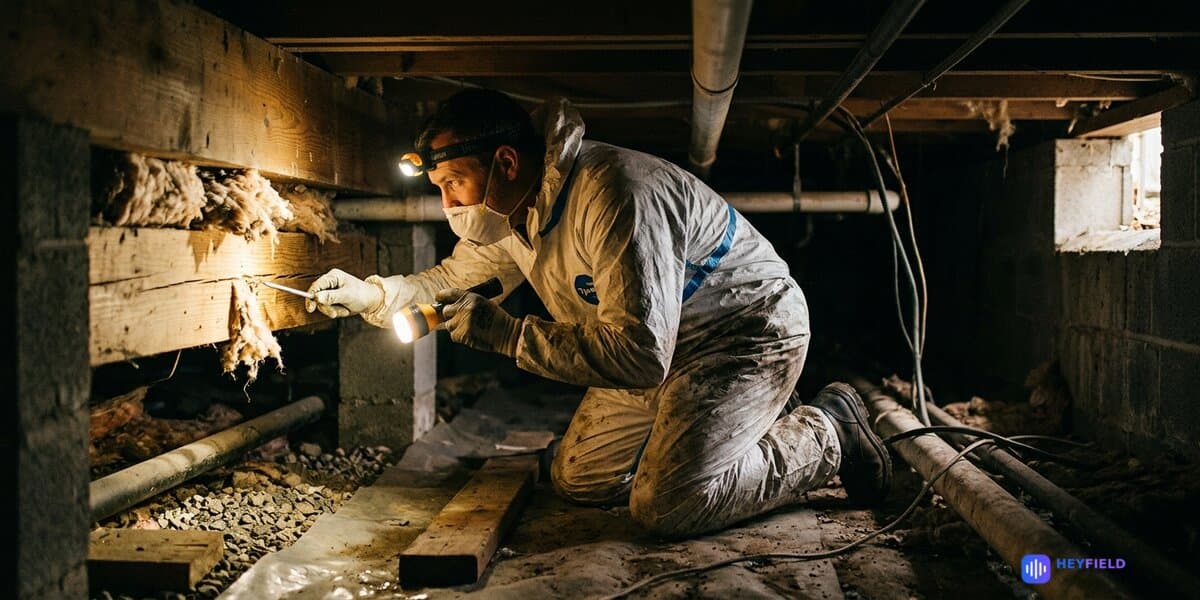
The first sustained heat wave hits and your phone doesn't stop. Termite swarms. Ant invasions. Wasps building nests under eaves. Mosquitoes turning backyards into no-go zones. Every homeowner in your service area woke up to the same problem — and they're all calling right now.
You're on a job. Gloves on, tank strapped to your back, crawling under a deck. Your phone buzzes in your pocket for the fourth time. You let it go to voicemail.
That wasn't just a call. That was a recurring annual contract walking out the door.
How Much Does a Missed Pest Control Call Cost You?
Pest control isn't a one-and-done business. Most residential customers sign up for quarterly or annual service plans. Run the numbers:
- Average recurring plan: $300–$400/year (quarterly service)
- Average customer lifetime: 3–5 years
- Customer lifetime value: $900–$2,000 per household
Let's be conservative. A pest control operator missing 4 calls per week during peak season (April through September) loses 96 potential customers over 24 weeks. Even if only half were ready to sign a service agreement, that's 48 contracts × $1,200 average lifetime value = $57,600 in lifetime revenue evaporated.
From one season of missed calls.
Why Pest Control Pros Miss More Calls Than Almost Any Other Trade
You already know the answer. You live it every day.
You can't answer your phone when you're:
- Crawling under a house doing a termite inspection
- Applying treatment in a confined space with a respirator on
- Driving between jobs with product in the back of the truck
- On a commercial account where the client expects your full attention
- Dealing with an emergency callback from this morning's job
And unlike a plumber or electrician whose customers will wait a day or two for a callback, pest control customers are emotionally activated. They just found a wasp nest in their kid's sandbox or roaches in the kitchen. They want help now. If you don't answer, the next exterminator on Google gets the job — and probably the annual contract too.
Peak Season Is When You Lose the Most Revenue
Pest control has a brutal seasonal dynamic. You have a 24-week window — roughly April through September — where call volume can spike 3x or 4x your winter baseline. This is when:
- Termite swarms emerge as temperatures warm
- Ant colonies activate and find their way into kitchens
- Mosquito season peaks, driving yard treatment demand
- Wasp and hornet nests appear under eaves and in attics
- Commercial accounts (restaurants, offices) need ongoing inspections
You can't hire a full-time receptionist for 24 weeks and then let them go. You can't be on the phone and in the field at the same time. And voicemail? 75% of callers who reach voicemail never leave a message. They just call your competitor.
What Customers Actually Need When They Call
Most pest control calls follow a predictable pattern. A homeowner calls, describes the pest problem, asks a few questions, and wants to schedule an inspection or treatment. They don't need a pest control expert on the phone — they need a knowledgeable, friendly voice that can:
- Confirm you serve their area
- Ask about the pest and severity
- Set expectations (inspection first vs. immediate treatment)
- Collect their contact info and schedule a callback or appointment
- Reassure them help is coming
That's a five-step call script. Any well-trained receptionist could handle it — or any voice system designed specifically for home service businesses.
The First Responder Wins the Contract
Here's what the data shows about pest control and home service calls in general: the company that responds first wins the job 78% of the time.
Think about your own customer behavior. When you have ants in your kitchen, you call three companies. Whoever picks up first gets the visit. The other two get a polite "never mind" — or nothing at all.
Your competitors with better phone coverage aren't necessarily better exterminators. They just answer faster. And in pest control, that's often enough.
This is especially true for emergency calls — bed bug discoveries, wasp nests near children, rodent activity in a restaurant. These callers are in a mild panic. They need to feel heard immediately. A voicemail does the opposite.
How Pest Control Pros Are Solving This
The operators who've cracked this problem aren't hiring full-time office staff. They're using an AI-powered answering service that picks up every call, sounds professional, collects the right information, and sends them a text summary so they can prioritize their callbacks.
Here's how it works in practice:
- Customer calls your business number
- If you don't pick up in 2 rings, the AI receptionist answers
- It greets them with your business name, asks about their pest problem
- Collects their name, address, type of pest, and urgency level
- Tells them someone will call back within the hour (or your preferred window)
- You get a text with the full summary in under 30 seconds
You finish the job you're on. You review the leads on your drive to the next stop. You call back the termite swarm emergency first, then the ant problem, then the mosquito quote. Every caller got answered. Nobody went to a competitor.
What It Costs vs. What You Lose
Run a quick comparison:
- Part-time receptionist: $15–$20/hr × 30 hrs/week × 24 peak weeks = $10,800–$14,400. And they still won't cover evenings, weekends, or your busiest mid-day hours.
- Full-time hire: $35,000–$45,000/year salary + benefits. For a solo or small crew operation, that's brutal.
- AI receptionist via Heyfield: $49/month. Every call answered, 24/7, no sick days, no seasonal layoffs.
That's $588/year to protect $57,000 in lifetime revenue opportunity.
Even if it only saves you one annual service contract per month, you're looking at $1,200 in recovered revenue against $49 in cost. That's a 24x return on month one alone.
Real Talk: Is This Right for Every Pest Control Business?
If you're a large operation with a dedicated office staff and full phone coverage already — you may not need this. But if you're a solo operator or small crew of 2–5 technicians who regularly misses calls during peak season, this is the fastest ROI you'll find in your business right now.
The pest control operators seeing the biggest wins are ones who:
- Work primarily residential and rely on recurring service contracts
- Get heavy call volume during spring and summer spikes
- Are often in the field and unable to answer their own phones
- Don't have the budget or need for a full-time office employee
If that's you, peak season is happening right now. Every week you wait is more contracts walking to the competition.
Stop Losing Peak Season Contracts
You built this business to do pest control — not to sit by a phone. But the phone is where the revenue lives. The gap between those two realities is where Heyfield fits.
Every call gets answered. Every lead gets captured. You stay focused on the work. The contracts stack up instead of slipping away.
See how it works at heyfield.app/pricing. Setup takes 10 minutes, and your first month is on us. Peak season is happening right now — don't spend another week missing the calls that pay for the whole year.
Frequently Asked Questions
How much does a pest control answering service cost?+
Heyfield starts at $49 per month with no setup fees or contracts. For a pest control company where the average recurring contract runs $150–$250 per month with 2+ year retention, one captured termite or bed bug lead pays for over 10 years of service. Compare that to hiring a receptionist at $35,000–$45,000 annually who still can't handle your spring swarm season when call volume explodes.
Can I keep my existing business phone number?+
Yes. You forward your current number to Heyfield when you're treating a property or in the field, and disable forwarding when you're available. Your customers always dial the same number. Most pest control operators set conditional forwarding so it routes to Heyfield after two rings or automatically during treatment hours when you're wearing PPE and can't safely answer.
What if the AI mishears a customer say 'termites' or 'bed bug infestation'?+
Heyfield is trained on pest control terminology including insects, rodents, and treatment types. It repeats key details like active swarm versus preventive treatment, interior versus exterior, and infestation severity back for confirmation. You review the full text summary before calling back, so no misheard pest type ever sends your tech with the wrong treatment plan or chemicals.
Does it answer calls after hours and on weekends?+
Yes. Homeowners discover carpenter ants at 9 PM on a Tuesday or wake up to bed bug bites on a Sunday morning and call immediately. Heyfield answers at any hour, captures their panic-driven urgency, and texts you instantly. You follow up on your schedule without losing the lead to a competitor who picked up while you were treating another property after dark.
Can it handle the spring swarm season when call volume spikes 3x to 5x overnight?+
Yes. Heyfield scales automatically so your April-through-June surge—when termites swarm, carpenter ants emerge, and every homeowner calls at once—gets the same professional response as a quiet January spider treatment. There's no scrambling to hire seasonal help, no watching leads go cold because your one office person is overwhelmed, and no losing a $2,400 annual contract to the company that answered while your tech was crawling a crawl space.
Ready to stop missing calls?
Try Heyfield free for 7 days. Your AI receptionist answers every call, collects customer details, and texts you the summary.
Keep Reading
Why Welding Shops Can't Risk Answering Their Own Phones
Sparks fly, face shields go down, and phone calls go to voicemail. How safety-first welding shops lose business to missed calls.
ReadPool Service Owners: Every Missed Call Costs You $900
Pool season is short and winterization is now. One missed call can cost you a full-season client worth $900+. Here's how solo pool service pros stop losing jobs to voicemail.
Read