Pool Service Owners: Every Missed Call Costs You $900

Meric Karpat · Founder & CEO
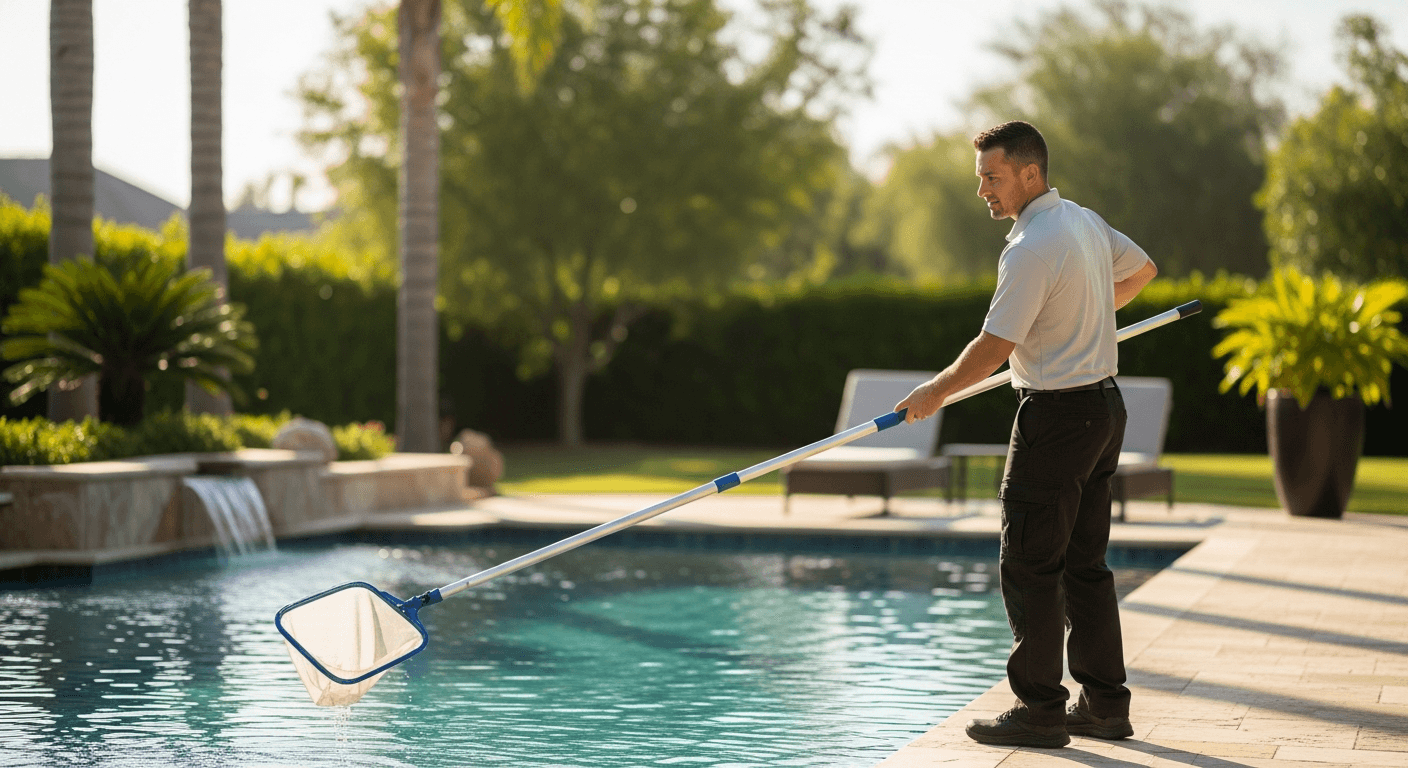
Pool Season Winds Down. Are You Still Answering Every Call?
It's October, and your phone is still ringing. Winterization calls are stacking up as homeowners rush to close their pools before the first freeze. Pump failures from a long, hard summer of use. Last-minute green water cleanups from owners who let maintenance slip. Every single call is a customer who found your number, picked up their phone, and decided to give you their money.
Then it rings again while you're elbow-deep in a sand filter swap on the other side of town. You can't answer. It goes to voicemail. They hang up without leaving a message — because nobody leaves voicemails anymore — and they call the next pool guy on Google.
That's not a hypothetical. That's a Tuesday morning for most solo pool service operators. And it's costing you more than you realize.
The Real Cost of a Missed Call in Pool Service
Let's do the math — because this number will stick with you.
The average pool service customer in the U.S. pays between $150–$250/month for weekly maintenance. Most clients stay 12–18 months before moving or switching. That means each new recurring client is worth:
- Conservative: $150 × 6 months = $900
- Average: $200 × 12 months = $2,400
- Best case: $250 × 18 months = $4,500
Now ask yourself: how many calls did you miss last spring? Three? Five? Ten?
If you missed just 5 calls during peak spring season — and even half of those were ready-to-buy customers — you left anywhere from $4,500 to $11,250 on the table. In a single month.
Pool service has one of the tightest sales windows in home services. The customers who called you in April and got voicemail? They already found someone else. And the ones calling now about winterization? If you miss them, you lose a close-out job and the chance to be their opener next March.
Why Pool Service Gets Hit Harder Than Most Trades
Other trades can spread demand across the year. An HVAC company gets calls in summer heat waves and winter cold snaps. A plumber gets emergencies year-round.
Pool service is different. Depending on your market, you have a hard seasonal window:
- Pool openings: March–May (one shot per client, per year)
- Algae/green water emergencies: June–August (peak urgency, needs same-day response)
- Winterization: September–November (another one-shot window — and right now you're in the thick of it)
Right now you're deep in the winterization window. This is when every pool owner who didn't service their equipment all summer is calling to schedule a close before the first freeze. Miss one of these calls and you don't just lose a $150 close-out — you lose the recurring weekly maintenance that client would have brought you next season. Outside those peaks? Call volume drops to a trickle. Which means every missed call during peak season doesn't just lose you one job — it loses you a recurring client for the entire season.
The Solo Operator Problem
Most pool service businesses run lean. You're the owner, the technician, the scheduler, and the salesperson. When you're on a route with 8 stops, your phone is in your pocket getting wet, getting ignored, or getting missed.
Hiring a receptionist to sit in an office and answer calls sounds great on paper. In practice:
- A part-time receptionist costs $15–$20/hour
- Even 20 hours/week = $1,200–$1,600/month
- That's before payroll taxes, training, turnover, and sick days
- And they still won't be available at 7 PM when a customer texts asking about a winterization quote
The math doesn't work for a solo operator or small crew. You can't justify a full-time front desk on a $50K–$80K revenue operation.
After-Hours Calls Are Where You're Bleeding Most
Here's what pool customers actually do: they call during their lunch break, after they get home from work, or on Saturday morning when they look outside and see their water has turned green overnight.
That's 6 PM on a Wednesday. That's 8 AM on a Saturday. That's after you've shut off for the day.
A green pool in July is a same-day emergency for most homeowners. They're not going to wait until Monday morning when you check your voicemail. They want to talk to someone right now. And if you're not available, the pool company that shows up on page 2 of Google — but answers on the first ring — gets the job.
After-hours calls in pool service aren't rare edge cases. They're a significant chunk of your inbound volume — especially during peak season when green water and equipment failures hit hardest, and during the fall close-out rush when homeowners panic about the freeze.
What Happens When Every Call Gets Answered
Imagine this: a homeowner notices their pump stopped working in early October and calls at 5:45 PM — just after you've finished your last stop for the day. If they don't winterize this week, the first freeze could crack their equipment.
Without coverage: Voicemail. They call three more companies. One answers. They book it. You never knew they called.
With Heyfield: Your phone picks up on the second ring. A professional voice greets them by trade context — pool service, not some generic call center script. It asks what they need, collects their name, address, and what the problem is. Within 60 seconds, you get a text with the full summary. You call them back in 10 minutes. You book the job.
That's a $200/month recurring client (and a winterization fee on top) you would have lost to voicemail. Captured in under an hour.
The First-Call Advantage in a Crowded Market
Pool service is increasingly competitive. Every market has a few large franchises (think Pool Guys, local franchise groups) running on aggressive Google Ads budgets, plus a dozen independent operators fighting for the same recurring clients.
Your differentiator as an independent isn't price — you can't out-discount a franchise. It's responsiveness. Homeowners hire the pool company that picked up the phone, answered their questions, and made them feel taken care of. They don't always hire the cheapest or even the most experienced.
First to respond wins. That's the rule in pool service, HVAC, pest control, and almost every home service trade.
What Heyfield Actually Does for Pool Service Operators
Heyfield is not a call center. It's not a voicemail service with a human transcription layer. It's a voice receptionist that answers your phone, handles the intake conversation, and texts you the summary instantly.
For pool service, that means:
- Spring rush handled: Every opening inquiry gets captured, not lost to voicemail overflow
- Emergency triage: Green water calls, equipment failures, and chemical emergencies get categorized by urgency in the summary text you receive
- Winterization scheduling: Fall close-out calls get booked into your calendar before the freeze window slams shut
- Quote requests logged: Pool size, existing equipment, service history — all collected before you call back
- After-hours coverage: Evenings and weekends captured without hiring weekend staff
- No scripts to write: Heyfield is pre-trained on home service context, including pool service terminology
You get back a text that says: "Sarah M. — algae bloom, 15,000 gallon inground, Pentair filter, wants shock treatment ASAP — 555-867-5309." You call Sarah. You close the job. Done.
The Numbers That Make This a No-Brainer
Heyfield starts at $49/month.
One captured call that converts to a recurring weekly maintenance client pays for 3–4 months of Heyfield in a single transaction.
If you run a pool service route with 25–50 regular clients, you're already operating a business that generates $3,750–$12,500/month in recurring revenue. A $49 tool that prevents even one missed-call loss per month isn't an expense. It's insurance with a positive ROI.
Compare that to the $1,200+/month receptionist option that still doesn't cover evenings, weekends, or the three calls that come in simultaneously during the first warm week of spring — or the last cold week of fall.
Pool Season Doesn't Wait — Neither Does Winterization
Every missed call during peak pool season is a customer who found you, chose to call you, and then handed their money to someone else because you couldn't pick up. And right now, every missed winterization call is a customer who'll be somebody else's opener next spring.
You don't need more marketing. You don't need a bigger Google Ads budget. You need the calls you're already getting to actually convert into booked jobs.
That starts with answering the phone.
See how Heyfield works for pool service operators → heyfield.app/pricing
No contracts. Takes 10 minutes to set up. Your phone gets answered starting today.
Frequently Asked Questions
How much does a pool service answering service cost?+
Heyfield starts at $49 per month with no setup fees or contracts. For a pool service company where every missed call represents $900 in lost annual contract value, capturing one recovered lead pays for over 18 months of service. Compare that to hiring a receptionist at $35,000–$45,000 annually who still can't answer while you're testing water chemistry on a route.
Can I keep my existing business phone number?+
Yes. You forward your current number to Heyfield when you're on your route or servicing equipment, and disable forwarding when you're available. Your customers always dial the same number. Most pool service operators set conditional forwarding so it routes automatically after two rings or during route hours when you're carrying chemicals and can't safely answer.
What if the AI mishears a customer say 'salt chlorine generator' or 'variable speed pump'?+
Heyfield is trained on pool service terminology including equipment brands, chemical treatments, and service types. It repeats key details like green pool recovery versus weekly maintenance, saltwater conversion versus standard chlorine, and filter type back for confirmation. You review the full text summary before calling back, so no misheard equipment spec ever sends your tech with the wrong replacement part or chemical load.
Does it answer calls after hours and on weekends?+
Yes. Homeowners notice their pool turned green Friday evening or their pump failed Saturday morning before a barbecue and call immediately. Heyfield answers at any hour, captures the issue and urgency, and texts you instantly. You follow up on your schedule without losing the lead to a competitor who picked up while you were off duty.
Can it handle existing customer calls for schedule changes and add-on services?+
Yes. Heyfield distinguishes between new service inquiries and existing customer requests like schedule changes, one-time cleanings, or equipment upgrade quotes. It captures account details, preferred service day, and add-on type so you know whether you're booking a new weekly client or moving Mrs. Henderson to Thursday before you even call back. Your regulars get handled without you stopping mid-skimmer to check your calendar.
Ready to stop missing calls?
Try Heyfield free for 7 days. Your AI receptionist answers every call, collects customer details, and texts you the summary.
Keep Reading
Why Welding Shops Can't Risk Answering Their Own Phones
Sparks fly, face shields go down, and phone calls go to voicemail. How safety-first welding shops lose business to missed calls.
ReadSecurity Companies: Stop Losing $124K a Year to Missed Calls
Security installers lose more than the install when they miss a call — they lose the monitoring contract too. Here's the real math.
Read