Running a Chainsaw and a Business: Why Tree Service Pros Can't Afford to Miss Calls

Meric Karpat · Founder & CEO
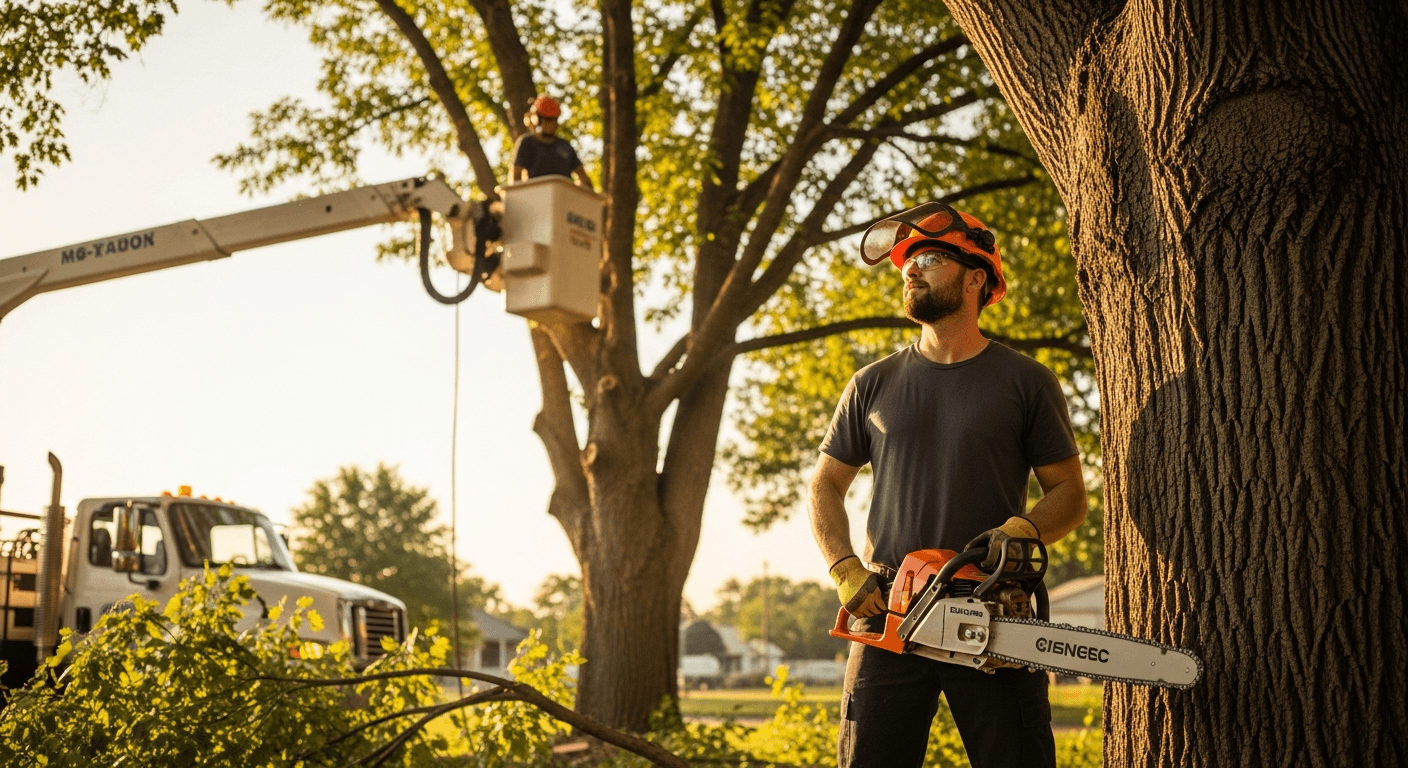
It's 2 PM on a Tuesday. You're 40 feet up in an oak tree, harness tight, chainsaw screaming through a dead limb. Your phone vibrates in your pocket. By the time you're back on the ground, the homeowner who called has already booked your competitor.
Sound familiar? If you run a tree service company, this happens more often than you think — and it's costing you thousands.
The Hidden Revenue Leak in Tree Service
The average tree removal job is worth $500 to $3,000. Emergency storm work? That jumps to $1,000–$5,000+. Yet most tree service companies miss 30-40% of their inbound calls because the crew is doing exactly what they should be — working.
Let's do the math. If you miss just 4 calls per week and each represents a $750 average job:
- $3,000/week in potential lost revenue
- $12,000/month walking out the door
- $144,000/year — enough to buy a new chipper and a bucket truck
And here's the kicker: 85% of callers who can't reach you won't leave a voicemail. They'll call the next tree service on the list. That lead is gone forever.
Why Tree Service Is Uniquely Vulnerable
Not every trade has it this bad. A handyman can pause and take a call. An office-based contractor has someone at a desk. But tree work is different:
- Safety hazard. You cannot — and should not — answer a phone while operating a chainsaw, working at height, or feeding a chipper. OSHA would have words.
- Noise. Even if you could answer, the customer can't hear you over equipment.
- Duration. Jobs take hours. You're unreachable for most of the workday.
- Storm surges. After a storm, your phone explodes with calls. You physically can't answer 30 calls while also clearing downed trees.
The reality: the better you are at your job, the worse you are at answering the phone. And customers don't care about your reasons — they just want someone to pick up.
What Doesn't Work
Voicemail? Dead end. 80% of callers hang up. The ones who do leave a message often call someone else while waiting for your callback.
Hiring a receptionist? That's $30,000–$45,000/year for someone who works 8 hours a day. Storm calls come at 6 AM and 10 PM. Your busiest months need more coverage, your slow months don't justify the overhead.
Traditional answering services? $1-2 per call adds up fast during storm season. And they read from scripts — they don't know the difference between crown thinning and crown reduction. Customers can tell.
What Actually Works: Never Let a Call Go Unanswered
The tree service companies that grow the fastest all have one thing in common: every single call gets answered, whether the owner picks up or not.
Modern solutions can answer your phone 24/7, collect the caller's details — name, address, what they need (removal, trimming, stump grinding, emergency), when they're available — and text you a complete summary the moment the call ends.
That means you're up in a tree at 2 PM, and by the time you come down at 2:15, you have a text that says:
"Sarah Mitchell, 445 Oak Lane. Large dead pine leaning toward her garage, wants removal quote. Available any morning this week. Callback: (555) 234-5678."
You call Sarah back at 2:20. She's impressed by the fast response. You drive by after your current job, give a quote, and close a $2,800 removal. That's one call that paid for months of phone coverage.
The Storm Season Multiplier
This becomes even more critical after severe weather. When a storm rolls through, homeowners are desperate. Trees on houses, blocking driveways, tangled in power lines. They're calling every tree service in the area.
The company that answers first gets the job. Period.
During a typical storm event, a tree service might receive 20-50 calls in 24 hours. If even half of those are $1,000+ emergency jobs, that's $10,000–$25,000 in potential revenue in a single day. Missing even a third of those calls is leaving $3,000–$8,000 on the table — in one day.
The ROI Is a No-Brainer
Let's be conservative. Say an automated phone solution costs $49/month. You need to capture just one extra job every two months to make it worthwhile. In reality, most tree service companies capture 5-10+ additional jobs per month — because those calls were happening all along, they just weren't being answered.
That's not an expense. That's the highest-ROI investment in your business.
Your Phone Is Your Pipeline
You didn't get into tree work to be a receptionist. But your phone is the pipeline that keeps your crew busy and your trucks rolling. Make sure every call gets answered, every lead gets captured, and every customer gets a fast callback.
Your chainsaw should be the loudest thing in your business — not your missed call notifications.
Frequently Asked Questions
How much does a tree service answering service cost?+
Heyfield starts at $49 per month with no setup fees or contracts. For a tree service where the average removal job runs $1,500–$3,000 and emergency storm work hits $5,000+, one captured after-hours emergency call pays for over 10 years of service. Compare that to hiring a dispatcher at $35,000–$45,000 annually who still clocks out at 5 PM when your highest-paying calls come in.
Can I keep my existing business phone number?+
Yes. You forward your current number to Heyfield when you're in a bucket truck or running a chainsaw, and disable forwarding when you're available. Your customers always dial the same number. Most tree service operators set conditional forwarding so it routes automatically after two rings or during job hours when you're 40 feet in the air and physically cannot answer.
What if the AI mishears a customer say 'oak removal' or 'cable bracing'?+
Heyfield is trained on tree service terminology including species, services, and risk levels. It repeats key details like removal versus pruning, deadwood versus full takedown, and proximity to structures back for confirmation. You review the full text summary before calling back, so no misheard scope ever sends your crew with a chipper when the customer actually needed a crane-assist removal on a 80-foot oak leaning toward their house.
Does it answer calls after hours and on weekends?+
Yes, and that's where tree services capture premium emergency work. A homeowner's tree splits on a Saturday night storm or blocks their driveway Sunday morning and calls immediately. Heyfield answers at any hour, captures the hazard details and location, and texts you instantly. You decide whether to roll an emergency crew or schedule for Monday without losing the $3,000 job to the competitor who picked up while you were off duty.
Can it handle emergency storm calls and dispatch me for hazardous tree situations?+
Yes. Heyfield triages calls by asking whether it's an active hazard like a tree on a house or power line, a fallen limb blocking access, or a routine estimate. It captures location, tree size, proximity to structures, and whether utility lines are involved. You get flagged as urgent for true emergencies and can dispatch immediately, while non-urgent pruning requests wait for your morning callback. You never miss a $5,000 storm job because you were grinding stumps when the call came in.
Ready to stop missing calls?
Try Heyfield free for 7 days. Your AI receptionist answers every call, collects customer details, and texts you the summary.
Keep Reading
Why Welding Shops Can't Risk Answering Their Own Phones
Sparks fly, face shields go down, and phone calls go to voicemail. How safety-first welding shops lose business to missed calls.
ReadPool Service Owners: Every Missed Call Costs You $900
Pool season is short and winterization is now. One missed call can cost you a full-season client worth $900+. Here's how solo pool service pros stop losing jobs to voicemail.
Read