Why Welding Shops Can't Risk Answering Their Own Phones

Meric Karpat · Founder & CEO
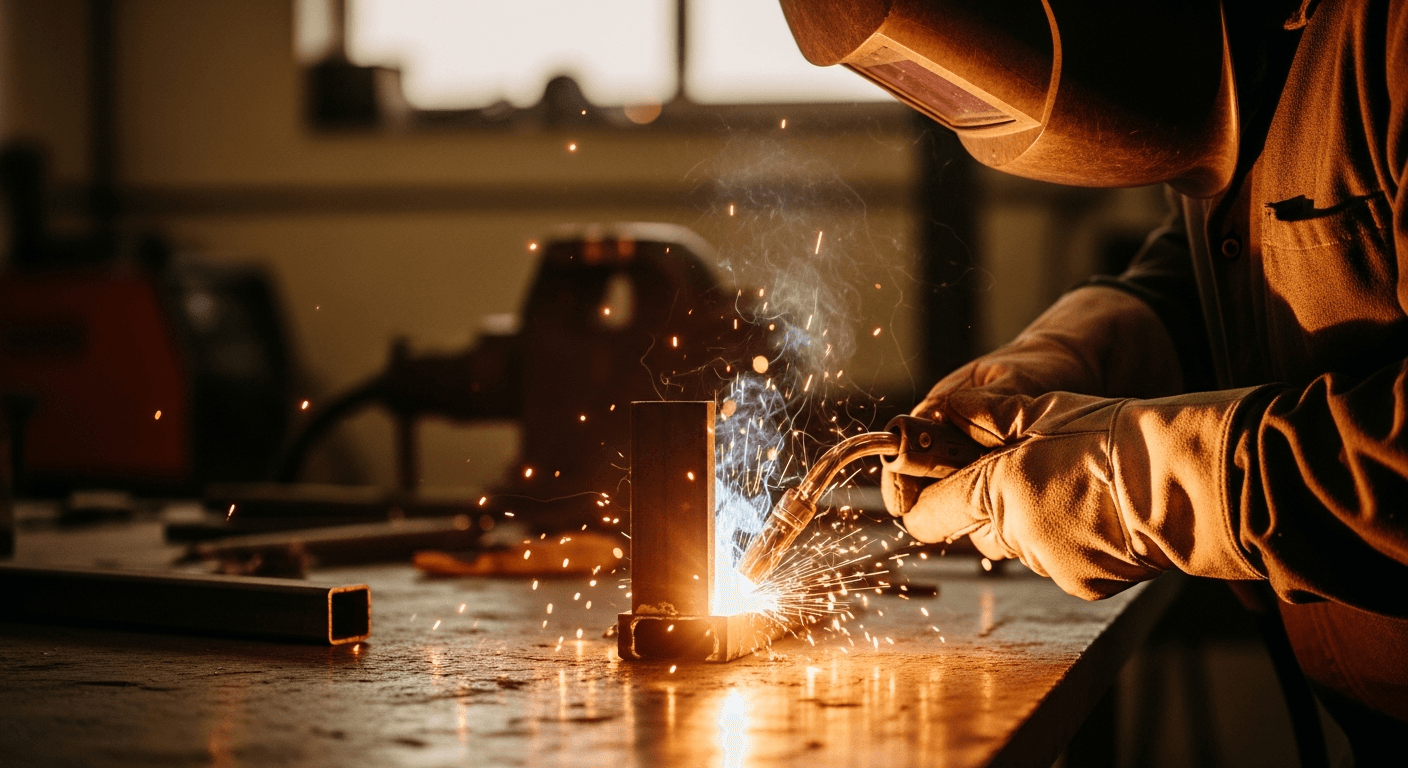
The arc strikes, sparks shower across your workspace, and your face shield drops down. Ten seconds into laying the perfect bead, your phone starts ringing. You've got two choices: stop mid-weld and ruin the joint, or let a potential $3,000 custom fabrication job go to voicemail. Most welders choose safety. Most customers choose competitors who answer.
This isn't a story about poor customer service. It's about an industry where safety and business success seem to fight each other every single day. In welding shops across America, skilled craftsmen are watching their phones ring while they work — and watching their potential revenue walk out the door.
The Safety-First Revenue Problem
Welding isn't like other trades. You can't pause mid-operation to take a call. When you're running a 200-amp stick weld on structural steel, stopping means starting over. The heat-affected zone changes, the penetration suffers, and you've just wasted $50 worth of materials and an hour of time.
But the real cost isn't the ruined weld. It's the customer who needed emergency repair work on their loading dock equipment and called three fab shops. Guess which two they're going to work with? The ones who answered.
Here's what most welding shop owners don't realize: You're not just competing against other welders on skill and price. You're competing on response time. The shop that calls back first usually gets the job, especially for emergency repairs and custom work.
A typical welding shop with 2-3 employees misses an average of 4-6 business calls per week. With average jobs ranging from $500 to $5,000, that's potentially $2,000 to $30,000 in lost revenue monthly. The math gets brutal fast.
Why Welders Miss More Calls Than Other Trades
Every trade has busy hands, but welding is different. Here's why:
- Safety equipment blocks everything: Face shields, welding helmets, and hearing protection make it impossible to hear or see incoming calls
- You can't pause mid-process: Unlike a plumber who can set down a wrench, stopping a weld ruins the entire joint
- Spark hazards: Having a phone nearby while welding is asking for equipment damage or worse
- Long, uninterrupted processes: A single weld run might take 30-45 minutes without stopping
- Noise levels: Plasma cutters, grinders, and ventilation systems drown out ringtones
Then there's the aftermath. You finish your work, pull off your gear, and see three missed calls from the same number. By the time you call back, they've already found someone else. You were literally too good at your job to get more jobs.
What Happens When Safety Meets Customer Service
Smart welding shops have tried workarounds. Some install shop phones with extra-loud ringers. Others have front-office staff answer calls — when they can afford the overhead. But most small fabrication shops run lean, with the owner-operator wearing multiple hats.
The result? A constant tension between doing quality work and growing the business. Every call you miss while working is a missed opportunity. Every job you interrupt to answer the phone risks quality issues and safety hazards.
This creates a vicious cycle. Missing calls means less revenue. Less revenue means you can't afford office staff. No office staff means you keep missing calls while you're doing the work that pays the bills.
The Real Solution: Never Stop Working to Answer
The best welding shops have figured out the secret: they never choose between safety and customer service. They've found ways to answer every call without ever stopping work.
Professional answering services designed for trades understand welding shops differently than generic call centers. They know that when someone calls about broken equipment, time matters. They understand the difference between a quote request (can wait) and an emergency repair (needs immediate response).
A good answering service for welding shops will:
- Screen calls and identify true emergencies
- Collect detailed project information while you work
- Schedule estimates and follow-ups automatically
- Send you text summaries of each call
- Qualify leads based on project size and timeline
This means you can keep your helmet down and your arc steady while your business keeps growing. No more choosing between safety and success.
The Numbers: What Full Phone Coverage Is Worth
Let's do the math for a typical 2-person welding shop:
Current situation:
- 5 missed calls per week (conservative estimate)
- 20% of missed calls would have converted to jobs
- Average job value: $1,500
- Weekly lost revenue: $1,500 × 1 converted call = $1,500
- Annual lost revenue: $78,000
With professional phone coverage:
- Capture 90% of missed calls (4.5 additional answered calls/week)
- Same 20% conversion rate
- Weekly recovered revenue: $1,350
- Annual recovered revenue: $70,200
A professional answering service costs around $49 per month plus usage. Even if it only recovered half the missed opportunities, you're looking at a 600% return on investment. That's better than any piece of equipment in your shop.
Real Impact: When Every Call Gets Answered
Mike runs a custom fabrication shop in Ohio. He specializes in heavy equipment repair and architectural metalwork. His problem wasn't skill — his welds were museum-quality. His problem was timing.
"I'd be three hours into a complicated repair, completely focused, and my phone would ring. Construction equipment breaks at the worst times, usually when other crews are waiting. But I couldn't stop mid-weld to take calls."
After setting up professional phone coverage, Mike saw an immediate change. Emergency calls got triaged properly. Quote requests got scheduled during his preferred hours. Most importantly, he stopped losing jobs to competitors who simply answered their phones faster.
"Last month, I landed a $12,000 architectural project because we answered on the second ring and could schedule the site visit same-day. Six months ago, that call would have gone to voicemail while I was welding, and by the time I called back, they would have moved on."
The safety benefits were just as important. Mike no longer rushed through critical welds or compromised on protective equipment just to catch the phone. His work quality improved, his stress decreased, and his shop became more profitable.
Never Choose Between Safety and Success Again
Your welding skills built your reputation. Your attention to safety keeps you in business. But neither matters if customers can't reach you when they need your expertise.
The solution isn't choosing between quality work and business growth. It's making sure every potential customer can reach you, whether you're running a simple repair bead or fabricating complex structural components.
Professional phone coverage pays for itself by capturing just one additional job per month. Everything beyond that is pure growth. And you never have to compromise on safety or quality to get it.
Ready to answer every call without ever stopping your work? See how Heyfield's trade-focused phone service is designed specifically for welding shops and fabricators. View pricing and start your free trial — because the best welders never miss calls, and they never compromise safety.
Frequently Asked Questions
How much does a welding shop answering service cost?+
Heyfield starts at $49 per month with no setup fees or contracts. For a welding shop where a custom fabrication job runs $2,500–$8,000 and structural steel projects hit $15,000+, one captured commercial lead pays for over 25 years of service. Compare that to hiring a shop assistant at $35,000–$45,000 annually who can't safely answer while you're running a MIG gun or grinding spatter.
Can I keep my existing business phone number?+
Yes. You forward your current number to Heyfield when you're under the hood or cutting metal, and disable forwarding when you're available. Your customers always dial the same number. Most welding shops set conditional forwarding so it routes automatically after two rings or during active fabrication hours when sparks are flying and you physically can't reach your phone.
What if the AI mishears a customer say 'TIG weld' or 'aluminum fabrication'?+
Heyfield is trained on welding and metal fabrication terminology including processes, materials, and project types. It repeats key details like MIG versus TIG, steel versus aluminum, and structural versus ornamental back for confirmation. You review the full text summary before calling back, so no misheard spec ever sends you to quote a stainless railing job with carbon steel pricing or the wrong filler wire on your prep list.
Does it answer calls after hours and on weekends?+
Yes. General contractors and property managers call at 6 PM on Thursday or Saturday morning when they're finalizing job schedules for Monday. Heyfield answers at any hour, captures project details and timeline, and texts you instantly. You follow up on your schedule without losing the lead to a competitor who picked up while you were cleaning your booth.
Can it handle complex project inquiries with material specs, drawings, and commercial deadlines?+
Yes. Heyfield captures project scope like material type, approximate dimensions, completion deadline, and whether it's a one-off repair or ongoing production run. It flags commercial versus residential, structural requirements, and drawing availability so you know before calling back whether you're quoting a single aluminum bracket or a 500-piece structural steel contract with a hard delivery date.
Ready to stop missing calls?
Try Heyfield free for 7 days. Your AI receptionist answers every call, collects customer details, and texts you the summary.
Keep Reading
Pool Service Owners: Every Missed Call Costs You $900
Pool season is short and winterization is now. One missed call can cost you a full-season client worth $900+. Here's how solo pool service pros stop losing jobs to voicemail.
ReadSecurity Companies: Stop Losing $124K a Year to Missed Calls
Security installers lose more than the install when they miss a call — they lose the monitoring contract too. Here's the real math.
Read