AC Tune Up Pricing 2026: Tiers by System Age and Refrigerant

Meric Karpat · Founder & CEO
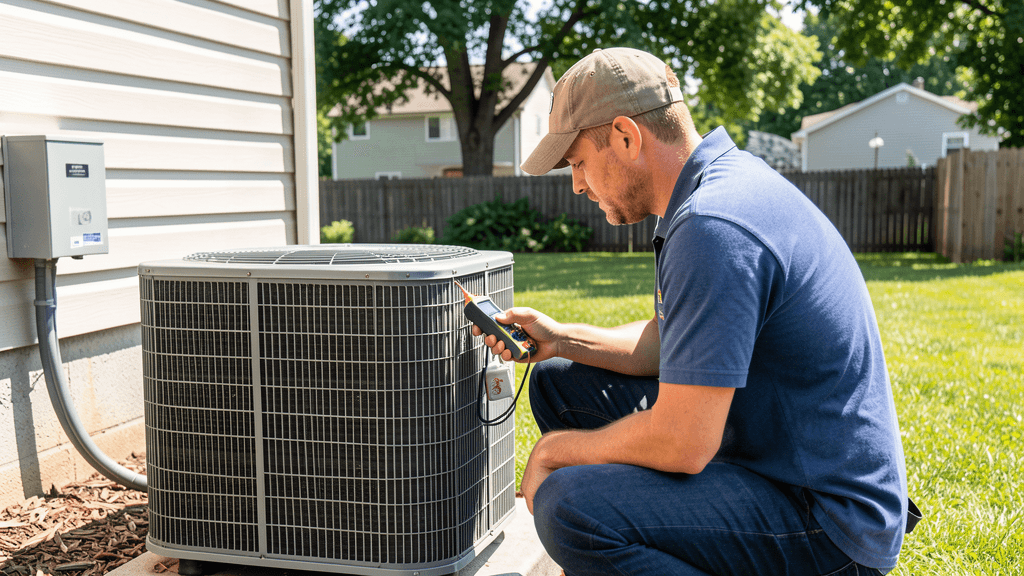
A two-tech HVAC shop in suburban Nashville runs a $129 spring tune-up special every April. The flyer is clean, the phone rings, and the calendar fills. By the third week the owner is looking at the job-cost sheet and noticing something: more than half the visits are 10-year-plus condensers sitting on rooftops or wedged into attics, and three of them needed a refrigerant top-off. The special that looked like a customer-acquisition win is quietly losing $40 to $60 a call once the real labor and material costs land.
Ac tune up pricing 2026 is the number that decides whether that spring special builds your book or drains it. A flat fee treats a five-year-old ground-level system and a fourteen-year-old roof unit as the same job, and they are not. The refrigerant inside them has a different cost basis, the access takes a different amount of tech time, and the risk of finding a dead capacitor or a leaking coil is far higher on the older unit. Here is a tiered framework for setting the number, built around system age, refrigerant type, and access difficulty, with the cost stack behind each tier.
None of this is about charging the most you can get away with. It is about quoting a price that covers the actual delivery cost on the system in front of you, so the tune-up stays profitable when the technician finds the thing the homeowner did not mention on the phone.
AC Tune Up Pricing 2026: What the Job Actually Costs You to Deliver
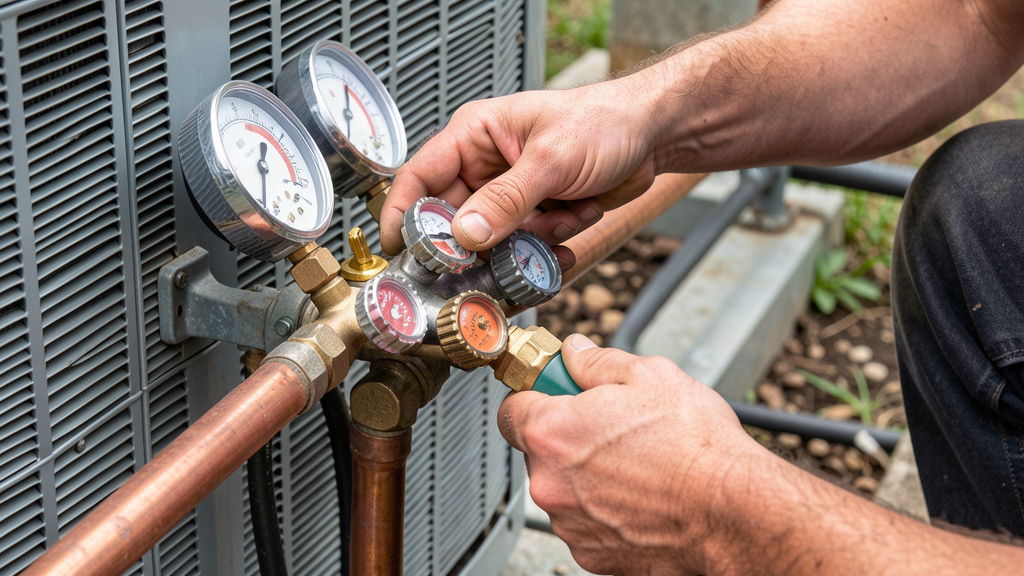
Before you set a retail price, you need the cost to deliver one tune-up on a straightforward system. The stack is not complicated, but most owners price from memory and skip it.
Technician time. A proper tune-up is 60 to 90 minutes of on-site time when it is done right: coil cleaning, refrigerant charge verification, electrical checks, filter change, and a written condition report. The U.S. Bureau of Labor Statistics puts the median wage for HVAC mechanics and installers near $28 an hour, but your loaded cost is higher. Add payroll taxes, workers' comp, truck payment, fuel, and insurance, and a journeyman tech costs most shops $55 to $70 an hour fully burdened. At 75 minutes, that is $70 to $90 of labor cost alone before any material moves.
Materials and refrigerant. A standard pleated filter runs $8 to $14 wholesale. Contactors and capacitors you only replace if failed, but a refrigerant top-off is where the number moves. A system low on charge needs the leak found, not just gas added, but even a small top-off is real money in 2026.
Truck roll and overhead. Dispatch, scheduling, fuel, and the share of shop overhead allocated to the call add another $25 to $40. Add those layers and a clean, simple tune-up costs a competent shop roughly $110 to $145 to deliver. A $129 flat special clears almost nothing on the easy jobs and loses money on the hard ones.
Tiered Pricing by System Age: The Three Buckets
System age is the single best predictor of how long the visit takes and what the tech finds. Split your tune-up pricing into three age bands and quote the band before you dispatch, with a written caveat that repairs and refrigerant are billed separately.
Under 5 Years: Clean, Verify, and Move Fast
Newer systems under warranty need a clean condenser coil, a verified charge, a filter change, and a thermostat check. The coils are usually not fouled yet, the refrigerant charge is rarely off, and the components have not aged. This is the band where a $99 to $129 tune-up is genuinely profitable: 60 to 70 minutes of tech time, minimal material, low risk of a callback. Price this tier sharp to keep the calendar full, because these are also your best maintenance-plan and warranty-enrollment candidates.
5 to 10 Years: The Margin Band Where Most Systems Live
This is the largest bucket and the one where a flat fee gets you in trouble. Coils are dirty, contactors pit, capacitors drift out of spec, and the charge is often low from a slow leak. Budget 75 to 90 minutes. A $149 to $179 tune-up covers the added time and leaves room for the one-in-four systems that needs a small parts upsell. Quote repairs as a separate line item with a flat diagnostic adder, not folded into the tune-up price, so the customer is not surprised when a $12 contactor shows up as a $180 line.
10+ Years: Quote Before You Touch It
Systems past the decade mark are where tune-ups turn into scope creep. The coil may be corroded, the refrigerant leak may be real, and a compressor nearing end of life can fail during a routine start-stop test. Do not quote these as a tune-up. Quote a $199 to $249 diagnostic and condition assessment, with a written note that any repair, refrigerant addition, or system-replacement recommendation is billed or credited separately. This tier protects you from the customer who says the tune-up killed their old unit, and it sets up the replacement sale that is the actual profitable work on a system this old.
The Refrigerant Cost Spike and How to Pass It Through
Refrigerant is the line item that wrecked flat tune-up pricing. The Environmental Protection Agency's AIM Act phase-down cut R-410A production, and the wholesale price that sat near $70 a pound before the cuts climbed past $150 a pound through 2024 and 2025 as tracked by refrigerant distributors. A system three pounds low is not a small top-off anymore. It is $450 of refrigerant before you find the leak, and finding the leak is the actual job.
The 2026 season also sits inside the R-454B transition. New systems shipped after the manufacturing cutoff use R-454B, a lower-global-warming-potential blend, and it is priced higher than R-410A on a per-pound basis because supply is still ramping. Your tune-up sheet has to name both refrigerants and price them differently, because a top-off on an R-454B system is not the same cost as one on an R-410A system.
The clean way to handle this is a separate refrigerant line item billed by the pound, with the per-pound rate printed on the quote and a leak-search charge called out on its own line. Never bury refrigerant in the tune-up fee. The first three-pound top-off on an old R-410A system will wipe out a month of $129 specials if you do.
Access Difficulty and the Truck-Roll Surcharge
The condenser location changes your labor cost more than most owners account for. A ground-level pad unit next to the driveway is a 60-minute visit. A second-story roof set requires a ladder, a second tech for safety, and 30 extra minutes of setup and teardown. An attic air handler with 18 inches of clearance means the tech is working on their back and the coil cleaning takes twice as long.
Build a simple access surcharge into your pricing sheet: ground level, no surcharge; roof or second story, add $40 to $75; crawlspace or tight attic, add $50 to $90. Quote the surcharge when you book the call, not when the tech arrives, so the customer has agreed to it before the ladder comes off the truck. Pair it with a trip fee policy so a no-access visit, where the gate is locked or the dog is loose, still pays for the truck roll.
Maintenance Plan Math: When the Tune-Up Is a Loss Leader
The reason a $129 spring special can make sense is that the tune-up is not the product. It is the lead. The economics only work if the plan is attached to a maintenance agreement that produces a second visit, priority dispatching, and a replacement sale down the road. ACCA maintenance standards recommend two seasonal visits a year for a residential system, which gives you a recurring revenue line and a reason to be in front of the customer when the 12-year-old condenser finally quits.
Run the plan math honestly. If your fully-loaded delivery cost on a straightforward tune-up is $120 and you sell an annual plan at $199 that includes two visits, the first year is near breakeven on the visits alone. The profit comes from the 15 to 25 percent of plan members who need a repair on one of those visits and the 8 to 12 percent who replace the system within three years. If your repair attach rate and replacement conversion are below those bands, the plan is a subsidy, not a profit center, and the tune-up price has to carry more of the weight.
Regional Comps and Where to Set Your Number
Tune-up prices move with local labor rates and the age of the housing stock. The same BLS data that puts HVAC wages near $28 an hour nationally runs higher in coastal and sun-belt metros and lower in rural markets. A shop in Phoenix, where systems run hard eight months a year and fail younger, can hold a higher tune-up price than a shop in a mild climate where the equipment lasts longer and customers price-shop harder.
Find your floor by calling three non-competing shops two markets over and asking what their published tune-up price is, then set your easy-tier price within $20 of the local median and let your age and access tiers pull the average up. Do not race to the bottom on the entry price. The shops advertising $69 tune-ups are either running a bare inspection with no coil cleaning, or they are losing money on every visit and making it up on repairs the customer did not need.
Review Your Tune-Up Sheet Every Six Months
Refrigerant prices, labor costs, and the age of your local installed base all drift. Pull the tune-up sheet twice a year, once before the cooling season and once before heating, and recheck three numbers: your fully-loaded delivery cost on a straightforward visit, your refrigerant per-pound rate against the current distributor quote, and the share of last season's calls that fell into the 10-plus-year bucket. If that share is climbing, raise the diagnostic-tier price and lower the tune-up you advertise, because the work you are actually doing has changed.
A pricing sheet that you revisit on a cadence is worth more than the sheet itself. The discipline of recomputing the cost stack twice a year is what keeps the spring special from turning into a quiet loss the owner only sees in October.
This guide is published by Heyfield, which makes an AI phone receptionist for home-service trade businesses. If you ever can't take the call, that's what we do. See pricing. The rest of our trade-business resources are free at heyfield.app/blog.
Frequently Asked Questions
How often should I recompute my AC tune-up delivery cost?+
Twice a year, before cooling season and before heating. Update your loaded labor rate, refrigerant per-pound cost, and the share of calls falling into each system-age bucket.
Should I quote AC tune-ups flat-rate or by system-age tier?+
By tier. A flat fee treats a 4-year-old ground unit and a 14-year-old roof unit as the same job, and the older one costs you more to deliver. Quote the age band up front with repairs and refrigerant billed separately.
How much refrigerant top-off can I include before charging separately?+
Almost none in 2026. With R-410A above $150 a pound and R-454B higher still, bill refrigerant by the pound on its own line item with a printed per-pound rate and a separate leak-search charge. A three-pound top-off buried in the tune-up fee wipes out the profit on a month of specials.
What certification does my tech need to handle R-454B refrigerant?+
EPA Section 608 certification covers refrigerant handling, and technicians working on R-454B systems need the current credential for the equipment class. Confirm your techs hold the active certification and that your recovery equipment is rated for the newer blend before quoting top-offs.
How do I quote a tune-up on a 12-year-old system without scaring the customer?+
Quote it as a diagnostic and condition assessment, not a tune-up, and say so on the booking. Set the expectation that any repair, refrigerant, or replacement recommendation is a separate line item. This protects you from blame if an old part fails and sets up the replacement sale honestly.
When does a $129 spring tune-up special actually make money?+
When it is sold as a lead for a maintenance plan, not as a standalone visit. The special breaks even or loses a little on the easy jobs and profits from the repair attach rate and the system-replacement conversion over the following 18 to 36 months. Without the plan attached, the flat special loses money on any system over 10 years old.
Should I charge a trip fee if the customer cancels after the tech arrives?+
Yes, if the policy is stated at booking. A published trip fee, usually $49 to $99, covers the loaded truck-roll cost when access is denied or the customer is not home. Quote it when you schedule the call so the charge is agreed before dispatch.
How do I price a tune-up on a roof-mounted condenser safely?+
Add a $40 to $75 access surcharge for a second-story or roof set, quote it at booking, and send two techs for ladder safety. Roof and tight-attic locations add 30 or more minutes of setup and teardown, and that labor has to be in the price or the visit loses money.
Ready to stop missing calls?
Try Heyfield free for 7 days. Your AI receptionist answers every call, collects customer details, and texts you the summary.
Keep Reading
Locksmiths: Your Most Valuable Calls Come After Midnight
Locksmiths lose $3,000+ every month to missed after-hours calls. Here's what that's costing you — and the simple fix.
ReadDeck Builders: Stop Losing $90K Every Spring
Deck builders miss 2-3 quote calls a week during peak season. Here's the real revenue cost—and how to fix it without hiring a receptionist.
Read