Buy Book of Business Trade Competitor When to Acquire vs Build

Meric Karpat · Founder & CEO

A competitor three miles from your shop is 64 years old. His knees are done. His wife wants him out of the truck. He calls you on a Tuesday and says, "I'm done by January. You want my customers or not?"
He has 180 active recurring accounts and maybe 400 one-time customers from the last two years. He wants $85,000 for the list. Your gross revenue last year was $420,000. You have $31,000 in the bank. When you buy book of business trade competitor routes like this, you are making the single biggest financial decision of your career, and you have about six weeks to get it right.
This is not about whether the seller is a nice guy or whether the price "feels fair." It is a math problem with a retention curve, a financing cost, and an opportunity cost. Get the math wrong and you spend two years paying off a list that evaporated in six months. Get it right and you skip three years of grinding for organic growth.
Here is a framework for running the numbers, valuing the customer list, and knowing when to write the check versus when to walk away and spend the same money on your own marketing.
The Call: A Competitor Is Retiring and Wants Out
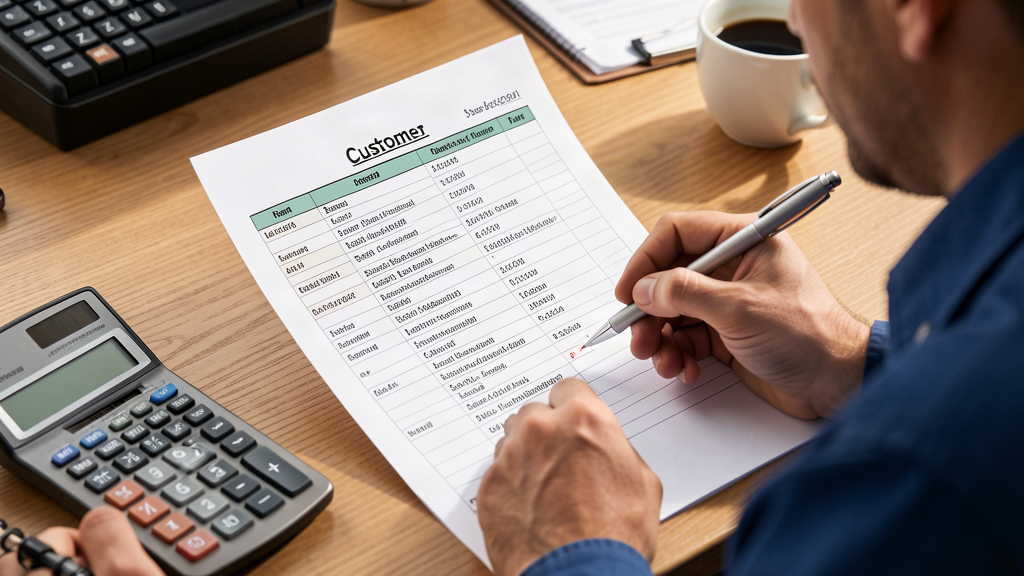
This scenario is more common than most trade owners realize. The U.S. Bureau of Labor Statistics reports that 21% of small business owners are 65 or older, and roughly 2.5 million small businesses changed hands between 2020 and 2024 as boomer owners retired. In home-service trades, the retirement wave is even more concentrated because the average owner-operator is older than the broader small-business population.
The call usually comes with urgency. The seller has health issues, a spouse pushing retirement, or a lease expiring. They want a quick close, and they prefer a buyer they know over a stranger from out of town. That preference gives you leverage on price and terms, but it also means you have less time for due diligence than a traditional acquisition.
What Does It Cost to Buy Book of Business Trade Competitor Routes?
Trade business customer lists sell for a wide range. The most common valuation method is a multiple of annual recurring revenue (ARR) for subscription-style services like pool maintenance, lawn care, and pest control. One-time service businesses like plumbing repairs, electrical panel upgrades, and roof replacements use a different metric: a multiple of the total customer count or annual revenue.
Recurring revenue customer lists
For recurring service routes, the market standard is 0.75x to 1.5x annual recurring revenue. A pool service route with $120,000 in annual recurring revenue typically sells for $90,000 to $180,000. Lawn care routes trade slightly lower, at 0.6x to 1.2x ARR, because customer churn is higher. Pest control routes trade at the premium end, 1.0x to 1.8x ARR, because annual contracts create stickier retention.
One-time service customer lists
For one-time service businesses, the valuation shifts to per-customer cost. A plumbing customer list with 400 active contacts and 150 service calls per year might sell for $75 to $200 per customer, depending on call frequency and average ticket size. An HVAC list with maintenance agreement customers commands more, $150 to $400 per customer, because maintenance contracts create recurring touchpoints.
The seller asking $85,000 for 180 recurring accounts plus 400 one-time contacts is at the low end of the range, which suggests either a motivated seller or a route with retention problems. You need to find out which before writing a check.
How to Value a Customer List: Recurring vs One-Time Revenue
The biggest mistake trade owners make in these deals is treating all customers as equal. They are not. A recurring lawn care customer paying $45 per week is worth 10x a one-time plumbing repair customer who called once in 2023.
Start by separating the list into two buckets. For recurring customers, calculate the average monthly revenue per account and multiply by 12 to get the annual recurring revenue. Then apply a churn assumption. According to data from Jobber's 2024 home-service industry report, the average annual customer churn rate for home-service businesses is 18-22%. Use 25% to be conservative.
For the 180 recurring accounts in our example: if the average account pays $55 per visit, twice per month, that is $1,320 per year per customer. Total ARR is $237,600. After 25% first-year churn, you keep 135 accounts generating $178,200 in year one. At a 1.0x multiple, that is worth $178,200, well above the $85,000 asking price.
But the 400 one-time customers are worth less than they look. A one-time customer who called 18 months ago has roughly a 12-15% chance of calling again, according to ServiceTitan's customer retention benchmarks. At a $320 average ticket, the expected revenue per one-time customer is $38 to $48. The whole list is worth maybe $16,000 in realistic near-term revenue.
The Organic Build: What $30K in Marketing Actually Gets You
Before you write the $85,000 check, you need to know what the same money would buy if you spent it on organic growth. This is the opportunity cost, and most owners skip this calculation entirely.
Where $30K in marketing spend goes
Here is what $30,000 in marketing spend typically produces for a home-service trade business, based on industry averages from Google's Local Services Ads data and Angi's 2024 contractor report:
Google Local Service Ads ($12,000/year): At an average cost of $25-60 per lead in most home-service trades, $12,000 generates 200-480 leads. With a 30% booking rate, that is 60-144 new customers. At a $300 average ticket, you gross $18,000-$43,200 in new revenue.
Door hangers and yard signs ($4,000/year): Door hangers cost $0.15-0.35 each including distribution. A 2% response rate on 15,000 hangers produces 300 leads. At a 40% booking rate, that is 120 new customers. One-time revenue of $36,000, and roughly 20% convert to recurring accounts.
SEO and website optimization ($10,000/year): Slow but compounding. A decent local SEO program produces 15-30 organic leads per month after 6-9 months. By month 12, you might see 200-360 organic leads for the year, with a 35% booking rate yielding 70-126 customers.
Referral program ($4,000/year): A simple $25 referral credit to existing customers generates 40-80 referred new customers per year for a business with 150+ active accounts. These are the highest-retention customers you can acquire.
Total organic investment: $30,000. Total new customers: 290-610. Compare that to buying the competitor's list: $85,000 for 180 recurring (135 after churn) plus 400 one-time contacts (48 realistic near-term). The organic path produces 2-4x more customers for less than half the cost. But it takes 12-18 months, and the acquisition gives you day-one revenue.
One thing to consider: if you spend the same energy on marketing that you would spend on integrating an acquired business, those organic numbers improve. And leads that come in through your own marketing cost less to serve because they already know your brand. When you cannot answer every inbound call yourself, an AI receptionist can capture the lead source and schedule the job, so your marketing spend does not go to waste. A human answering service or a dedicated CSR are the other options, each with different cost structures.
The Hidden Costs of Acquisition Nobody Talks About
The sticker price is the floor, not the ceiling. Every acquisition has costs that do not appear in the seller's pitch. Here are the five that catch trade owners off guard:
1. Truck and equipment duplication. If the seller has two service trucks and $40,000 in equipment, do you need it? If you do, that is additional cost. If you do not, you are selling used equipment at 30-40 cents on the dollar. Budget $8,000-15,000 in either direction.
2. Transition labor. For the first 60-90 days, you need the seller on-site to introduce you to customers. Pay them $1,500-2,500 per week for this period. If they refuse to do an introduction tour, cut your offer by 30% because retention will crater without the handoff.
3. Software and scheduling migration. Moving 180 recurring accounts from the seller's scheduling system to yours is not a weekend job. If you use different software, expect 40-60 hours of admin work. If you need to hire a VA or pay overtime, that is $1,500-3,000.
4. Price alignment. The seller was charging $45 per visit. You charge $65. You cannot raise prices on day one without losing customers. Plan a 12-month ramp: increase 10-15% at the 6-month mark and another 10% at 12 months. Some customers leave. Budget for 8-12% additional churn from price increases.
5. Legal and accounting. An asset purchase agreement, a non-compete from the seller, and a CPA review of the seller's books will run $3,000-7,000. Skip the non-compete and the seller opens back up in 6 months, or worse, sells the same list to your other competitor.
A 4-Question Framework: When to Buy vs When to Build
After running the numbers on dozens of these deals, the decision usually comes down to four questions. If you answer yes to three or more, buy. If you answer yes to two or fewer, build organically.
Question 1: Is the seller's route geographically dense? If 80% of the 180 accounts are within a 5-mile radius of your existing route, the acquisition adds density that cuts drive time and fuel costs. Density is the single highest-value feature of a purchased route. If the accounts are scattered across a 20-mile area, you are buying a gas bill.
Question 2: Can you finance the purchase without draining operating cash? If the $85,000 comes from an SBA Express loan at 11% over 7 years, your monthly payment is about $1,640. If the acquired route generates $4,000-5,000 in monthly gross profit, the deal pays for itself. If you are pulling $85,000 out of working capital, you cannot absorb a bad month.
Question 3: Will the seller stay for a 90-day transition? The seller's presence during the handoff is the single biggest predictor of retention. Customers who meet the new owner while the old owner is still on-site retain at 85-90%. Customers who get a letter in the mail retain at 50-60%. The U.S. Small Business Administration reports that acquisition retention rates correlate directly with transition quality.
Question 4: Are you buying recurring revenue or a name? If 70% of the purchase price is backed by recurring contracts, you are buying predictable cash flow. If 70% is backed by a customer list of one-time callers, you are buying a marketing asset with a half-life. The former is worth a premium. The latter is worth a fraction of the asking price.
What Happens in the First 90 Days After You Sign
The deal closes on a Friday. Here is what the first 90 days should look like if you want to keep 80% or more of the acquired customers.
Days 1-14: Ride along with the seller on every recurring route. Introduce yourself in person. Bring a printed letter with your contact info, insurance proof, and a commitment to maintain the same service standard. Do not raise prices. Do not change the schedule. Do not rebrand the truck yet.
Days 15-45: Start taking the calls yourself. The seller steps back to a consulting role, available by phone but not on-site. Call every recurring customer to confirm their next appointment. Ask if they have any concerns about the transition. Document every complaint. Fix the first three complaints before the first month is up.
Days 46-90: Begin migrating scheduling to your software. Send the first price increase letter to the 20% of customers you identified as "safe" to raise (those who have been with the seller for 3+ years and pay above market already). Review your retention numbers at day 90. If you are below 75% retention, the deal underperformed and you need to diagnose why before month six.
Six months in, revisit the math. Compare the actual retained revenue against your projections. If you projected $178,000 in year-one revenue and you are tracking at $140,000, you overpaid but the deal still cash-flows. If you are tracking below $110,000, the acquisition was a mistake. File it as a lesson and adjust your pricing or marketing strategy to recover the gap.
This guide is published by Heyfield, which makes an AI phone receptionist for home-service trade businesses. If you ever cannot take the call, that is what we do. See pricing. The rest of our trade-business resources are free at heyfield.app/blog.
Frequently Asked Questions
How much should I pay for a competitor's customer list?+
Recurring service routes typically sell for 0.75x to 1.5x annual recurring revenue. One-time service customer lists sell for $75 to $400 per customer depending on call frequency, ticket size, and whether maintenance agreements are included.
What is the difference between buying recurring vs one-time customers?+
Recurring customers (pool, lawn, pest control) have predictable annual revenue and sell at a revenue multiple. One-time customers (plumbing repairs, electrical work) have a 12-15% recall rate and are worth far less per customer. Always value them separately.
How many customers stay after an acquisition?+
With a 90-day seller transition including in-person introductions, 85-90% of recurring customers typically stay. Without the transition, retention drops to 50-60%. Apply a 25% first-year churn assumption as a baseline when valuing the deal.
Should I finance the purchase or pay cash from the business?+
An SBA Express loan at 11% over 7 years keeps your working capital intact. If the acquired route generates enough monthly gross profit to cover the $1,640 payment, financing is safer than draining operating cash. Never pull more than 30% of your cash reserves for an acquisition.
What happens if the seller refuses to do a transition period?+
Cut your offer by 30% or walk away. Without the seller introducing you to customers in person, expect 40-50% churn in the first year. A transition period of 60-90 days with the seller on-site is the single biggest predictor of retention.
Is buying a competitor's route better than spending the same money on marketing?+
It depends on timeline and route density. Buying gives you day-one revenue and geographic density. Building organically with $30,000 in Google LSA, door hangers, SEO, and referrals produces 2-4x more customers for less money, but takes 12-18 months. If the route is geographically dense and the seller will transition, buy. If not, build.
What legal documents do I need to buy a customer list?+
You need an asset purchase agreement, a non-compete clause from the seller (minimum 2 years), a bill of sale for any equipment, and a CPA review of the seller's books. Budget $3,000-7,000 for legal and accounting. Never skip the non-compete.
When should I raise prices on acquired customers?+
Wait at least 6 months before any increase. Start with a 10-15% increase on the 20% of customers who have been with the seller for 3+ years and already pay above market. Budget for 8-12% additional churn from price increases over the first 12 months.
Ready to stop missing calls?
Try Heyfield free for 7 days. Your AI receptionist answers every call, collects customer details, and texts you the summary.
Keep Reading
Locksmiths: Your Most Valuable Calls Come After Midnight
Locksmiths lose $3,000+ every month to missed after-hours calls. Here's what that's costing you — and the simple fix.
ReadDeck Builders: Stop Losing $90K Every Spring
Deck builders miss 2-3 quote calls a week during peak season. Here's the real revenue cost—and how to fix it without hiring a receptionist.
Read