Deck Install Pricing Per Square Foot 2026: PT Cedar Composite

Meric Karpat · Founder & CEO
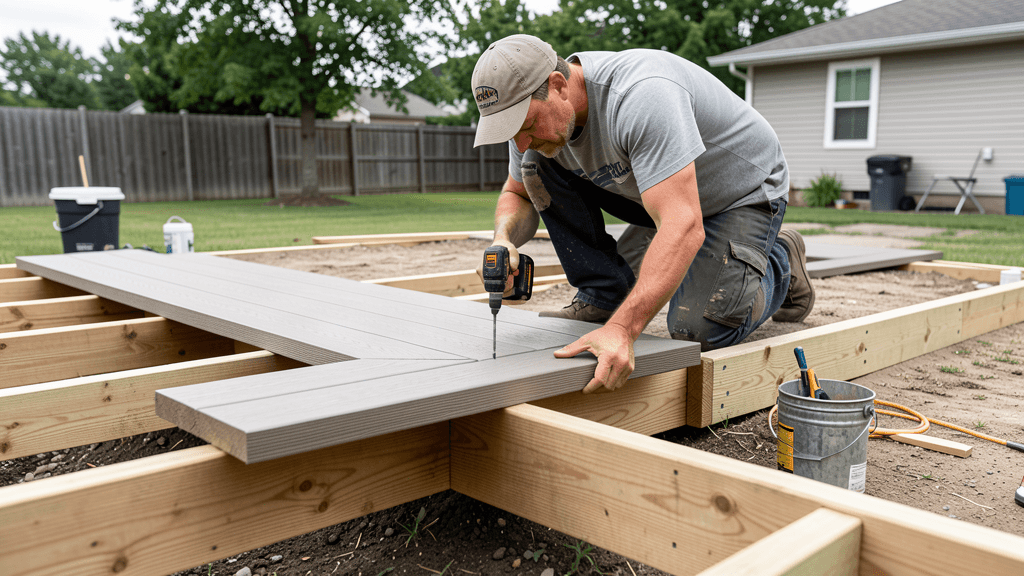
A deck builder in Columbus takes his first real composite job in the spring of 2026. He has framed pressure-treated decks for eight years and always charged $35 per square foot, installed. The homeowner picked TimberTech Azek, wants cable railing on a 14-foot elevation, and the lot has a 3-foot slope to a drainage swale. He sends the quote at his usual $35. By the second day of framing he is $2,400 under on materials alone and realizes the footing holes hit groundwater. He finishes the job and loses roughly $3,100.
Deck install pricing per square foot 2026 is what sank that job, not craftsmanship. The going rate tables circulating online tell a homeowner what a deck costs. They do not tell a builder how to set a price that survives the job. This is the operator-side version of that conversation: the cost stack, the footing and code variables that move labor hours, and the margin math that separates a $35 quote from one that holds.
Here is a framework built from the four variables that actually swing a deck quote: material tier, footing depth and soil, railing system, and elevation or access. The numbers below are 2026 ranges drawn from contractor benchmarks and the IRC R507 footing table, not consumer averages.
Deck Install Pricing Per Square Foot 2026: Set Your Base Rate From the Cost Stack
The single number people quote, "$35 to $75 a square foot," is a composite of three stacks. Pull them apart before you set a base rate. Materials run $8 to $30 per square foot installed depending on tier: pressure-treated southern yellow pine at the low end, cedar in the middle, capped polymer composite like Azek at the top. Labor runs $12 to $25 per square foot for a crew of two, and that is before anything difficult. Overhead and profit, the line most builders guess at, should be 18 to 28 percent of materials plus labor, not a flat add-on.
Set your base rate by adding the three stacks, not by surveying what the market advertises. A pressure-treated deck at $8 material, $14 labor, and 22 percent overhead lands near $27 per square foot and is fairly priced. The same framing under Azek boards at $30 material pushes the floor to $53 before you touch a railing. Quoting a flat $35 across materials is how the Columbus builder went underwater on the first material order.
What Pressure-Treated, Cedar, and Composite Actually Cost You Per Square Foot
Each material tier carries a hidden labor or waste cost the per-board price hides. Pressure-treated pine is cheap at roughly $2.50 per square foot in boards, but it shrinks, cups, and needs a 5 to 8 percent waste factor on a diagonal layout. Cedar runs $5 to $7 per square foot and burns through blades faster, adding tool cost and roughly 10 percent more fastener spend.
Composite and capped polymer sit at $9 to $17 per square foot in material but cut your sealing labor to zero and carry only a 3 percent waste factor. The trade-off builders miss: composite often requires narrower joist spacing, 12 inches on center versus 16, which adds 25 percent more joists and 8 to 12 labor hours on a 200-square-foot deck. That joist cost is not in any consumer calculator and is the single most common source of underbidding on first composite jobs.
Footing Depth and Soil: The IRC R507 Variable That Breaks Quotes
Footings are where the deck install pricing per square foot 2026 conversation collapses for first-time builders. The IRC R507 table requires footings to extend below frost depth, which ranges from 12 inches in southern states to 48 inches and deeper in the upper Midwest and mountain West, a depth range the North American Deck and Railing Association tracks in its regional footing guidance for builders. A 12-inch sonotube is a one-bag hole. A 48-inch hole in clay with groundwater is three hours of digging and two bags, per hole.
Run the footing math before you commit to a square-foot number
A 12-by-16 deck needs six to eight footings. At 12-inch depth in sandy soil that is a half-day. At 42-inch depth in wet clay it is two days with a power auger rental, and the auger rental is $95 a day. That difference, roughly $1,200 in labor and equipment on a 192-square-foot deck, is $6.25 per square foot that vanishes from margin if you quoted a regional average. Always walk the lot, probe for soil type, and check the local frost depth on the building department site before sending a square-foot number.
Permit and inspection cost by jurisdiction
Permit fees run $200 to $600 for a residential deck depending on valuation, and most jurisdictions require a footing inspection before you pour and a final before you close. Build two inspection windows into your timeline, not one. Missed footing inspections are the leading cause of deck change orders, because the inspector can require deeper holes after the fact and you eat the rework.
Railing Systems: Where the Square-Foot Model Stops Working
Railings are priced per linear foot, not per square foot, and they distort the average every consumer guide quotes. Pressure-treated wood rail runs $25 to $45 per linear foot installed. Aluminum runs $70 to $120. Cable railing runs $90 to $180 per linear foot, and stainless cable on a coastal job creeps higher. A 14-by-16 deck with 44 linear feet of railing adds $1,100 to $7,900 to the job, none of which shows up in a $35-per-square-foot quote.
Quote railing as a separate line item, not a rolled-up number
The rule: quote the deck frame and surface by the square foot, then quote railing as a separate line item by the linear foot. Giving a homeowner one rolled-up number is how you end up donating a $4,000 cable rail. Itemize it on the estimate, show the linear-foot count, and let the customer choose the tier. That single change protects margin on roughly one in three deck jobs and gives the homeowner a visible lever to manage cost.
Elevation, Access, and Slope: Labor Hours the Calculator Cannot See
A ground-level deck on flat dirt is the easiest bid you will ever write. A 14-foot elevation on a slope with a drainage swale is a different job entirely. Each foot of elevation adds a beam, more post length, bracing, and roughly 4 to 6 labor hours per 100 square foot of footprint. Access matters too: a backyard with no side gate means every board gets carried through the house, adding 15 to 20 percent to framing labor.
Quote these as named adders, not absorbed costs. A 3-foot slope should carry a "site prep and grading" line of $400 to $900. Poor access carries a "material handling" line of $300 to $600. Naming them does two things: it protects your effective hourly rate, and it gives the homeowner a lever to lower the price by improving access or grading the site themselves. Builders who absorb these costs silently work for $45 an hour by the end of the job.
The Margin Check and the 6-Month Recalibration Cadence
After every deck job, run a three-line margin check: actual materials divided by quoted materials, actual labor hours divided by quoted hours, and final revenue minus actual cost divided by revenue. A healthy deck operation holds 22 to 30 percent gross margin. Below 18 percent you are pricing for volume you do not have, and the next composite job will sink you.
Recalibrate your base rate every six months or whenever lumber futures move more than 10 percent, which in 2026 has happened twice. Track your bid-to-actual variance on a single spreadsheet: quote, actual cost, variance percent. After three jobs the pattern tells you which variable you consistently underprice, whether footing depth, railing, or composite joist spacing, and you adjust that line before the next quote. The builders who hold margin are not the ones with the highest square-foot number. They are the ones who know which line of the quote keeps leaking.
This guide is published by Heyfield, which makes an AI phone receptionist for home-service trade businesses. If you ever can't take the call, that's what we do. See pricing. The rest of our trade-business resources are free at heyfield.app/blog.
Frequently Asked Questions
How do I set a base rate for deck install pricing per square foot 2026?+
Add the three cost stacks separately: materials ($8 to $30 per square foot by tier), labor ($12 to $25 for a two-person crew), and overhead-plus-profit at 18 to 28 percent of materials plus labor. Never quote a flat market average across material tiers.
Why does composite decking cost more to install than the board price suggests?+
Composite and capped polymer often need 12-inch joist spacing instead of 16, which adds 25 percent more joists and 8 to 12 labor hours on a 200-square-foot deck. That joist cost is not in consumer calculators and is the most common underbid on first composite jobs.
What frost depth should I use for deck footings?+
Check the local building department, because IRC R507 requires footings below frost depth, which ranges from 12 inches in southern states to 48 inches and deeper in the upper Midwest. A 42-inch wet-clay hole can add $1,200 in labor and auger rental on a 192-square-foot deck.
Should I quote deck railing per square foot or per linear foot?+
Per linear foot. Pressure-treated rail runs $25 to $45 installed, aluminum $70 to $120, and cable $90 to $180. Itemize railing as a separate line on the estimate so a $4,000 cable rail does not get absorbed into a rolled-up square-foot number.
How often should I recalibrate my deck pricing book?+
Every six months, or whenever lumber futures move more than 10 percent. Track bid-to-actual variance on each job, and after three jobs the pattern shows which line you consistently underprice, typically footing depth, railing, or composite joist spacing.
What gross margin should a healthy deck operation hold?+
Target 22 to 30 percent gross margin. Below 18 percent you are pricing for volume you do not have, and a single composite job with footing surprises can erase a season of profit.
How do I price deck elevation, slope, and poor access?+
Quote them as named adders. A 3-foot slope carries a site-prep line of $400 to $900, and poor access carries a material-handling line of $300 to $600. Absorbing these costs silently drops your effective rate toward $45 an hour.
What permits and inspections does a residential deck require?+
Most jurisdictions require a permit ($200 to $600), a footing inspection before you pour, and a final before close. Build two inspection windows into your timeline, because a missed footing inspection can force deeper holes and rework you eat.
Ready to stop missing calls?
Try Heyfield free for 7 days. Your AI receptionist answers every call, collects customer details, and texts you the summary.
Keep Reading
Locksmiths: Your Most Valuable Calls Come After Midnight
Locksmiths lose $3,000+ every month to missed after-hours calls. Here's what that's costing you — and the simple fix.
ReadDeck Builders: Stop Losing $90K Every Spring
Deck builders miss 2-3 quote calls a week during peak season. Here's the real revenue cost—and how to fix it without hiring a receptionist.
Read