Emergency AC Repair Calls: Capturing Every Heatwave Booking

Meric Karpat · Founder & CEO
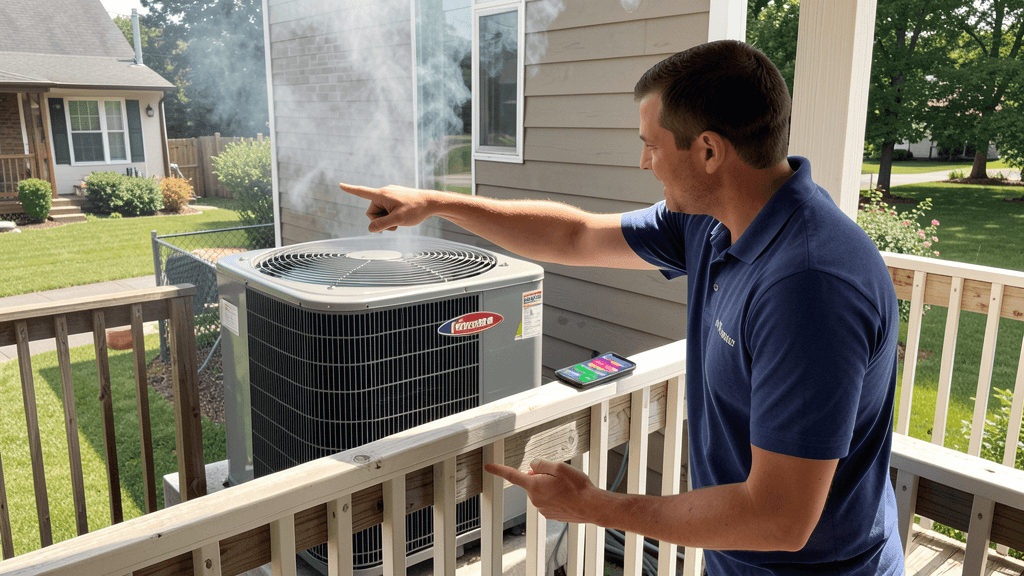
During a July heatwave, emergency AC repair calls can triple overnight. The U.S. Department of Energy reports that 88% of U.S. homes use air conditioning, and when temperatures exceed 95 degrees for three consecutive days, service requests spike by as much as 400% according to ACCA industry benchmarks. A 2024 CallRail survey found that 62% of calls to small businesses during peak hours go unanswered, and a Bentley University study reported that 80% of callers who reach voicemail hang up without leaving a message. For an HVAC shop charging $250-$450 per emergency visit, every missed call is a lost booking that the homeowner makes to the next shop on the list.
If you run a 2-4 person HVAC shop, you are likely the one answering the phone, dispatching techs, and running calls yourself. During a heatwave, you cannot do all three. This guide breaks down your four real options for capturing every emergency cooling call, with honest cost comparisons and a clear framework for which option fits your shop right now.
What Happens to Emergency AC Repair Calls During a Heatwave
A typical HVAC shop in a mid-size metro market handles 15-25 service calls per week during normal summer conditions. When a heatwave pushes temperatures above 95 degrees for 3+ days, that volume can jump to 40-60 calls per week. The ACCA reports that residential cooling service requests peak between 2:00 PM and 8:00 PM, which is exactly when your techs are already on roofs and under units.
The math is straightforward. If your average emergency visit generates $325 in revenue (diagnostic fee plus one common repair like a capacitor or contactor replacement), and you miss 8 calls during a 3-day heatwave, that is $2,600 in lost revenue for that single event. Most markets experience 4-6 heatwaves per cooling season, putting the annual missed-call cost between $10,000 and $15,600 for a shop that does nothing differently.
Your Four Options for Handling the Call Spike
Here is an honest comparison of the four ways HVAC shops manage call volume during peak periods. Each has real trade-offs.
OptionCost BasisTypical Monthly CostBest ForMain Drawback Voicemail / let it ring$0$0Shops with no after-hours demand80% of callers hang up (Bentley University) Hire a part-time CSRHourly wage + payroll tax$1,800-$3,200/moShops doing $500K+/yr with consistent volumeOnly covers set hours; training and management overhead Human answering servicePer-minute or per-call$200-$800/mo (usage-based)Shops needing after-hours coverage onlyScripted operators can't book or triage HVAC-specific calls AI phone receptionistFlat monthly + per-minute overage$49-$199/moShops that want 24/7 booking and triage without hiringRequires initial setup and call-flow configurationVoicemail: The Default That Costs You the Most
Sending emergency cooling calls to voicemail is the most expensive "free" option you have. The Bentley University study found that 80% of callers who reach voicemail hang up without leaving a message. For an urgent AC breakdown, the stakes are even higher: a homeowner with a 92-degree house and a non-functional condenser is not going to leave a message and wait. They are going to call the next HVAC company on Google.
Voicemail works fine for non-urgent scheduling during normal business hours. It does not work for urgent repair calls during a heatwave.
Part-Time CSR: The Most Control, Highest Fixed Cost
Hiring a dedicated customer service representative to answer phones and schedule calls gives you the most control over how each service request is handled. A trained CSR can triage by urgency, book the right tech, and upsell maintenance plans. The Bureau of Labor Statistics reports that the median wage for customer service representatives is $18.36 per hour, which translates to roughly $3,200 per month with payroll taxes and benefits for a full-time hire, or $1,800-$2,200 for a part-time role covering peak afternoon hours.
The trade-off: a CSR only works the hours you schedule them. If your heatwave call spike runs from 6 AM to 10 PM and your CSR works 9-5, you still miss early morning and evening calls. You also take on hiring, training, and management work that pulls you away from the field.
Human Answering Service: After-Hours Coverage, Limited Booking
A traditional HVAC answering service like AnswerForce, PATLive, or Ruby Receptionist charges $1.50-$3.00 per minute of call time, or offer packages starting around $200-$500 per month for a bucket of minutes. They answer your phone 24/7 with a live human who follows your script, takes a message, and forwards urgent calls to your cell.
For after-hours emergency repair coverage, a human answering service is better than voicemail. But answering service operators are not HVAC dispatchers. They cannot tell a capacitor failure from a refrigerant leak, they cannot check your tech's calendar, and they cannot book the appointment. They take a message and forward it. During a heatwave with 40+ calls in a week, you may pay $300-$600 in per-minute charges and still spend your evenings calling back homeowners who already called the next shop.
AI Phone Receptionist: 24/7 Booking at $49-$199/mo
An AI receptionist for HVAC like Heyfield answers every call 24/7, triages by urgency (a complete system failure goes to the front of the queue), books the appointment directly into your calendar, and quotes your diagnostic fee upfront so the homeowner knows what to expect. Pricing is flat monthly with per-minute overage:
Starter ($49/mo): 150 minutes included, $0.25/min overage. Fits a solo shop that gets 5-10 after-hours calls per week.
Pro ($99/mo): 400 minutes included, $0.20/min overage. The most common plan for 2-4 person HVAC shops handling heatwave volume.
Business ($199/mo): 800 minutes included, $0.15/min overage. Fits shops with 5+ techs and high call volume across multiple service areas.
There is no per-call charge, so a heatwave that triples your call volume does not triple your bill. The 7-day free trial requires no credit card, so you can run it through one heatwave and compare results before committing.
When to Choose Each Option
Not every option fits every shop. Here is a plain decision framework based on your shop's stage:
Choose voicemail only if: you operate in a market with no real heatwave pressure, you have a single tech, and your call volume is under 10 per week. Even then, you are leaving money on the table.
Choose a part-time CSR if: your shop does $500,000+ in annual revenue, you have consistent year-round call volume (not just summer spikes), and you want someone who can also handle invoicing, follow-ups, and warranty calls during slow hours. Budget $1,800-$2,200/mo for a part-time role.
Choose a human answering service if: your primary gap is overnight and weekend coverage, you are comfortable returning calls yourself, and you do not need the answering service to book appointments. Budget $200-$500/mo depending on call volume.
Choose an AI phone receptionist if: you want every emergency AC repair call answered and booked 24/7 without hiring, your call volume is unpredictable (heatwaves create spikes you cannot staff for), and you want flat monthly pricing instead of per-minute charges. Budget $49-$199/mo.
Emergency AC Repair Pricing: What to Charge
Capturing the call is only half the battle. If your emergency AC repair pricing is too low, you fill your schedule with unprofitable runs. If it is too high, the homeowner calls the next shop.
According to ACCA's pricing benchmarks, the typical AC diagnostic fee and repair structure in 2026 is:
Diagnostic/after-hours emergency repair fee: $89-$150 (higher end for nights, weekends, and holidays)
Common repairs during a service call:
- Capacitor replacement: $120-$250 (parts $15-$40, labor 30-45 min)
- Contactor replacement: $100-$200 (parts $20-$35, labor 20-30 min)
- Refrigerant recharge (R-410A): $150-$400 depending on system size and leak severity
- Condenser fan motor: $300-$600 (parts $80-$150, labor 45-60 min)
- Compressor replacement: $1,200-$2,800 (major repair, often triggers system replacement discussion)
The EPA's finalized HFC phasedown rules (January 2026) have pushed R-410A pricing up significantly, so refrigerant-related repairs are at the higher end of those ranges this season. Factor that into your quotes.
A good rule: your after-hours diagnostic fee should be 1.5x your standard fee, and you should collect it upfront or at the door, not bill it. Homeowners who are unwilling to pay a $125 after-hours diagnostic fee for urgent cooling repair are generally not worth the dispatch cost during a heatwave.
Building a Heatwave Call Protocol
Whatever option you choose for answering calls, you need a written protocol for how urgent cooling service requests are handled during a heatwave. Without one, your techs waste time on triage and you lose efficiency.
1. Triage script: Define what counts as a true emergency (no cooling at all, household with elderly or infants, indoor temp above 85 degrees) versus urgent-but-next-day (partial cooling, odd noises, intermittent operation). Your answering solution, whether human or AI, needs this script.
2. Geographic routing: During a heatwave, batch calls by zip code. A tech driving across your entire metro area for individual calls will complete 4-5 jobs per day instead of 8-10. Cluster your dispatch by region.
3. Upfront pricing disclosure: Quote the diagnostic fee on the call. This filters out price shoppers and sets expectations before the tech arrives. Your answering solution should state the fee automatically.
4. Follow-up scheduling: Every emergency visit should generate two calendar entries: the urgent repair and a follow-up maintenance call within 14 days. This converts emergency calls into recurring revenue.
Tracking What You Actually Capture
Most HVAC shops cannot tell you their answer rate for emergency AC repair calls. They know how many jobs they completed but not how many calls came in. Without that number, you cannot measure whether your answering solution is working.
At minimum, track these three numbers during heatwave weeks:
Call volume: total incoming calls per day, including missed ones. If your phone system or AI receptionist provides call logs, use them. If not, start with your phone bill's call detail records.
Answer rate: percentage of calls answered by a human or AI, not sent to voicemail. Target 95%+ during heatwaves.
Booking rate: percentage of answered calls that result in a scheduled visit. If your answer rate is high but booking rate is low, your script or triage needs adjustment.
A shop that goes from 70% answer rate to 95% answer rate during a heatwave captures roughly 10 additional service calls per week. At $325 average revenue per call, that is $3,250 per heatwave week in recovered revenue.
Next Steps: Review After Every Heatwave
Do not wait until next spring to evaluate your call handling. After each heatwave event, pull your call logs and compare:
How many urgent cooling calls came in during the heatwave?
How many were answered?
How many were booked?
What was your average response time (call to tech on-site)?
Did any booked calls get delayed more than 4 hours?
If you missed more than 5 calls during a single heatwave, your current solution is not scaling. Revisit the comparison table above and consider what changes before the next heatwave hits. The cooling season runs May through September in most markets, and heatwaves cluster in July and August. You will likely face 2-3 more before the season ends.
Heyfield makes an AI phone receptionist for home-service trade businesses that answers every call, books appointments, and triages emergencies 24/7. Plans start at $49/mo with a 7-day free trial and no credit card required. See pricing. More trade-business resources at heyfield.app/blog.
Frequently Asked Questions
How much does an AI receptionist cost for an HVAC business?+
Heyfield's AI phone receptionist ranges from $49/mo (Starter, 150 minutes) to $199/mo (Business, 800 minutes), with per-minute overage rates of $0.15-$0.25. There are no per-call charges, so heatwave call spikes do not inflate your bill. A 7-day free trial requires no credit card.
What is the average revenue per emergency AC repair call?+
The average emergency visit generates roughly $250-$450 in revenue, including the diagnostic fee and one common repair like a capacitor or contactor replacement. Major repairs like compressor replacements run $1,200-$2,800.
How many calls does an HVAC shop miss during a heatwave?+
A typical 2-4 person HVAC shop misses 5-12 calls during a 3-day heatwave if calls go to voicemail. With 80% of callers hanging up on voicemail (Bentley University study), that translates to $1,300-$3,900 in lost revenue per heatwave event.
Should I hire a CSR or use an answering service for my HVAC shop?+
Hire a CSR if your shop does $500K+/yr and has consistent year-round volume. Use an answering service if you mainly need overnight coverage and are comfortable calling customers back. Use an AI receptionist if you want 24/7 booking without per-minute charges or hiring overhead.
What should I charge for an after-hours AC diagnostic fee?+
The typical after-hours diagnostic fee is $89-$150, roughly 1.5x your standard fee. ACCA benchmarks suggest charging higher for nights, weekends, and holidays. Collect the fee at the door, not as a bill, to filter out price shoppers.
How does the R-410A phaseout affect emergency repair pricing?+
The EPA's HFC phasedown rules (effective January 2026) have driven R-410A refrigerant costs up significantly. Refrigerant recharge repairs that were $150-$250 now run $200-$400 depending on system size and leak severity. Factor this into your emergency quotes.
Can an AI receptionist book appointments directly into my calendar?+
Yes. Heyfield's AI receptionist checks your tech's availability and books urgent service calls directly into your scheduling system. It also quotes your diagnostic fee upfront and triages by urgency, so complete system failures get priority over partial-cooling calls.
How do I track my call answer rate during a heatwave?+
Pull call detail records from your phone system or AI receptionist dashboard. Track total incoming calls, answer rate (target 95%+), and booking rate (percentage of answered calls that result in a scheduled visit). Compare these numbers after each heatwave to measure improvement.
Ready to stop missing calls?
Try Heyfield free for 7 days. Your AI receptionist answers every call, collects customer details, and texts you the summary.
Keep Reading
Appliance Repair Techs: Stop Losing Jobs to Voicemail
Solo appliance repair techs miss 10–15 jobs a month to voicemail. Here's the real cost — and how to fix it for $49/month.
ReadDeck Builders: Stop Losing $90K Every Spring
Deck builders miss 2-3 quote calls a week during peak season. Here's the real revenue cost—and how to fix it without hiring a receptionist.
Read