Exterior Painting Pricing Per Square Foot: Setting Your Rate

Meric Karpat · Founder & CEO
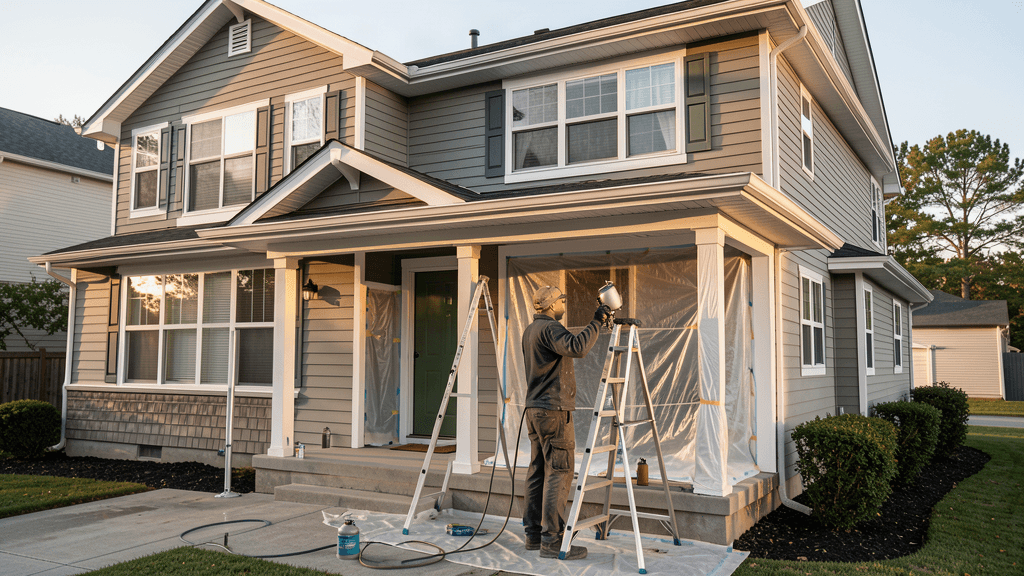
A two-painter crew in suburban Nashville lands a 2,400-square-foot ranch in early June. The homeowner has three bids. Yours is the middle one. You quoted $2.20 per square foot of siding, the low bid came in at $1.65, and the high bid is $3.40. The homeowner picks the low bid. Two months later the paint is already peeling off the south wall because the low bidder power-washed for nine minutes, skipped the caulk, and sprayed a single coat of builder-grade latex over chalky aluminum.
Exterior painting pricing per square foot is the number that decides whether you make money on that ranch or subsidize the homeowner's repaint in 2031. The per-square-foot model is fast, it is scannable, and customers understand it. But the number is meaningless if it is not built on your real cost stack, your crew's actual production rate, and the prep your specific substrate demands. This guide is written for the operator setting the rate, not the homeowner shopping for one.
Here is a working framework for building a per-square-foot price that survives a real job, from measuring paintable surface the right way to choosing between ladder and spray production, to the six-month check that tells you whether your number was right.
How to Measure Paintable Surface for Exterior Painting Pricing Per Square Foot
The most common mistake is pricing off floor area instead of paintable siding area. A 2,400-square-foot ranch and a 2,400-square-foot two-story have wildly different siding square footage. The ranch spreads low and wide; the two-story stacks the same living space into half the footprint but adds gables, dormers, and a second band of trim.
Measure the perimeter at the siding, multiply by wall height, then subtract windows and doors (roughly 15 percent of wall area on a typical home). Add gable ends as triangles. The result is your paintable square footage. On that 2,400-square-foot ranch, paintable siding usually lands between 2,000 and 2,600 square feet. On the two-story of the same floor area, expect 2,800 to 3,400. If you bid both at "2,400 times your rate," you underprice the two-story every time.
Keep a field card that records perimeter, wall height, siding type, and story count for every walk. After twenty jobs you will have a local rule of thumb that is more accurate than any national calculator because it reflects the housing stock in your zip code.
The Cost Stack Behind a Per-Square-Foot Rate
A per-square-foot number that ignores cost is a guess. The stack has four layers and you should know each one for your crew before you ever quote.
Material
Premium exterior latex covers roughly 350 to 400 square feet per gallon on smooth siding and 250 to 300 on textured surfaces like rough-sawn cedar or stucco. At $55 to $75 per gallon for a quality 100-percent acrylic, your material runs $0.14 to $0.28 per square foot for one coat. Two coats roughly double that. Primer, caulk, masking paper, and tarps add $0.03 to $0.06 per foot. The Painting and Decorating Contractors Association publishes production and material guidance that contractors use to benchmark these figures.
Labor
This is the layer most operators undercount. A two-person crew rolling and brushing from ladders typically completes 250 to 400 square feet of finished siding per labor hour, including setup and cleanup. Spraying doubles the application speed but adds masking time and a second person to back-roll. The U.S. Bureau of Labor Statistics reports painters' median wage near $24 per hour; loaded with payroll taxes, workers' comp, and overhead, your fully burdened labor cost is closer to $38 to $45 per hour per painter.
Equipment and Vehicle
Sprayer rental or depreciation, ladders, scaffolding for anything over 22 feet, fuel, and the van that got you there. Allocate $0.04 to $0.08 per square foot. If you bought a $1,400 airless sprayer and run it 200 days a year, it is not free on bid day.
Margin
After material, labor, and equipment, the remainder is gross margin. It covers marketing, office time, estimating the jobs you do not win, and profit. A healthy residential repaint target is 35 to 45 percent gross margin. Below 30 percent, one callback eats your quarter.
Ladder and Brush vs Airless Spray: Production Rates That Change Your Number
Spray is not automatically faster end to end. A sprayer lays paint at 1,000 to 2,000 square feet per hour, but you spend one to three hours masking windows, doors, patios, and landscaping on a typical home, plus a second person back-rolling so the coating bonds. Net production for a two-person spray crew on a clean, maskable surface is often 600 to 900 finished square feet per hour. A ladder-and-brush crew on the same wall runs 250 to 400.
Spray wins on large, flat, unobstructed siding like vinyl or smooth stucco. It loses on homes with heavy trim, brick accents, dense landscaping, or tight setbacks where masking takes longer than painting. Build two rates: a spray rate and a brush rate, and pick at walk-through based on what is actually in front of you.
Prep Variability: Where Per-Square-Foot Bids Go Sideways
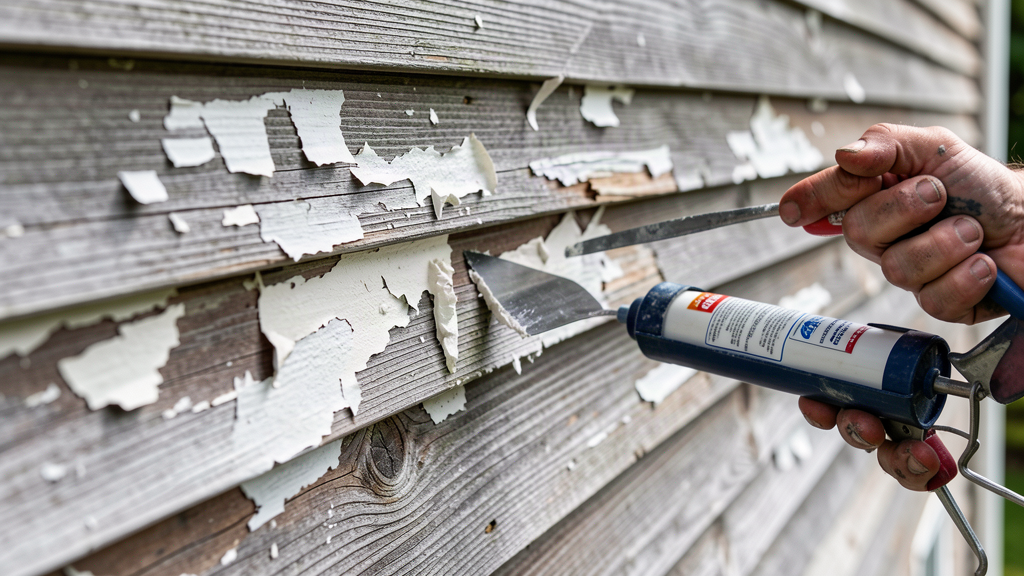
Prep is the single largest source of margin loss in exterior work, and it varies more than any other input. A clean vinyl wall needs a rinse. A south-facing wall with failing caulk, peeling flakes, and chalky oxidation needs scraping, spot priming, re-caulking joints, and a full bonding primer. The prep on the second wall can consume more labor hours than the paint application itself.
Build prep as a separate line in your head even if you fold it into the square-foot price. Track it as a ratio: prep labor hours divided by application labor hours. On a maintenance repaint of a well-kept home that ratio is 0.4. On a neglected weathered wall it climbs to 1.2 or higher. If your quoted rate assumed 0.4 and the job runs 1.1, you gave away a third of your labor budget. Walk every wall and score it clean, moderate, or heavy before you commit a number.
Residential vs Commercial Exterior Quoting Guardrails
The blogwatch gap this season is painters bidding their first post-construction or commercial exterior with no guardrails. A commercial repaint looks like a big residential job, but the economics invert. Commercial property managers expect a line-item proposal, a W-9, and a certificate of insurance listing them as additional insured. They pay on net-30 or net-45, not on completion. Your square-foot rate should be lower on volume, but your working-capital cost is higher because you carry labor and material for six weeks before the check arrives.
Set three guardrails before you bid commercial: a minimum job size that justifies the paperwork overhead, a payment-terms surcharge baked into the rate to cover the cash carry, and an insurance check confirming your general liability covers the building type. If your residential rate is $2.20 per foot, a first commercial bid at $1.85 with net-45 terms can net you less than the residential job once you account for the float and the admin time.
Building Your Local Rate Sheet
National averages are a starting point, not a bid. Your rate sheet should be local and updated twice a year. List your cost per square foot for each siding type you actually paint: smooth wood, cedar, vinyl, stucco, aluminum, brick. Track the production rate your crew achieved, not the one the manufacturer printed. Track the prep ratio. Track the real material cost from your supplier, including the discount they gave you last quarter.
After each job, log the quoted square-foot price, the actual hours, the actual material, and the realized gross margin. Ten jobs in, you will see which siding type you consistently underprice. That is the line item to raise next season. The contractors who keep this log stop guessing at bid day and start bidding from evidence.
When to Revisit Your Rate: A Six-Month Check
Paint prices moved roughly 6 to 9 percent over the last two years, and labor has climbed with it. A rate set in March can be underwater by September if your supplier passes through a mid-year increase. Run a six-month check: pull your last ten completed exteriors, compare quoted margin to realized margin, and re-price your material layer at current supplier cost. If realized margin drifted below 32 percent on more than three of ten jobs, your base rate is too low for the work you are actually winning.
Raise the rate on the siding type where you lost the most, not across the board. A blanket increase pushes you out of the work where you were already competitive. A targeted increase keeps you winning the jobs you price well and stops subsidizing the ones you do not. That is how a per-square-foot model stays profitable across a whole season rather than for one good bid.
This guide is published by Heyfield, which makes an AI phone receptionist for home-service trade businesses. If you ever can't take the call, that's what we do. See pricing. The rest of our trade-business resources are free at heyfield.app/blog.
Frequently Asked Questions
How do I calculate exterior painting pricing per square foot for my crew?+
Measure paintable siding area (perimeter times wall height minus openings, plus gables), then add your material cost per foot, your fully burdened labor cost at your crew's actual production rate, equipment, and a 35 to 45 percent gross margin. National averages are a starting point only.
How much paintable surface does a 2,400-square-foot house have?+
A single-story ranch of that size typically has 2,000 to 2,600 square feet of paintable siding; a two-story of the same floor area runs 2,800 to 3,400 because of stacked walls, gables, and extra trim. Always measure siding, not floor area.
Is airless spray faster than brushing and rolling for exteriors?+
Spray applies paint two to four times faster, but masking and back-rolling cut the net advantage. On large flat unobstructed siding spray wins; on homes with heavy trim, brick, or dense landscaping, brush and roll is often faster end to end.
How much prep time should I budget on an exterior repaint?+
Track prep labor hours as a ratio to application hours. A well-maintained home runs about 0.4; a neglected weathered wall can hit 1.1 or higher. Walk each wall and score it clean, moderate, or heavy before quoting so prep does not eat your margin.
Should I charge less per square foot for commercial exterior work?+
Volume can lower the base rate, but commercial jobs carry net-30 to net-45 payment terms, additional-insured requirements, and more paperwork. Build a payment-terms surcharge into the rate so the cash carry does not erase the volume savings.
What gross margin should a residential exterior repaint target?+
Aim for 35 to 45 percent gross margin after material, burdened labor, and equipment. Below 30 percent, a single callback can wipe out a quarter's profit on that job.
How often should I update my exterior painting rate sheet?+
Review it every six months. Pull your last ten exteriors, compare quoted margin to realized margin, and re-price your material layer at current supplier cost. Raise rates on the siding type where you lost the most, not across the board.
What insurance does a painter need to bid commercial exterior work?+
General liability that covers the building type, with the property manager listed as additional insured on a certificate. Verify coverage before bidding; commercial managers usually require the COI with the proposal or W-9.
Ready to stop missing calls?
Try Heyfield free for 7 days. Your AI receptionist answers every call, collects customer details, and texts you the summary.
Keep Reading
Locksmiths: Your Most Valuable Calls Come After Midnight
Locksmiths lose $3,000+ every month to missed after-hours calls. Here's what that's costing you — and the simple fix.
ReadDeck Builders: Stop Losing $90K Every Spring
Deck builders miss 2-3 quote calls a week during peak season. Here's the real revenue cost—and how to fix it without hiring a receptionist.
Read