Garage Door Spring Replacement Pricing: An Operator Playbook

Meric Karpat · Founder & CEO
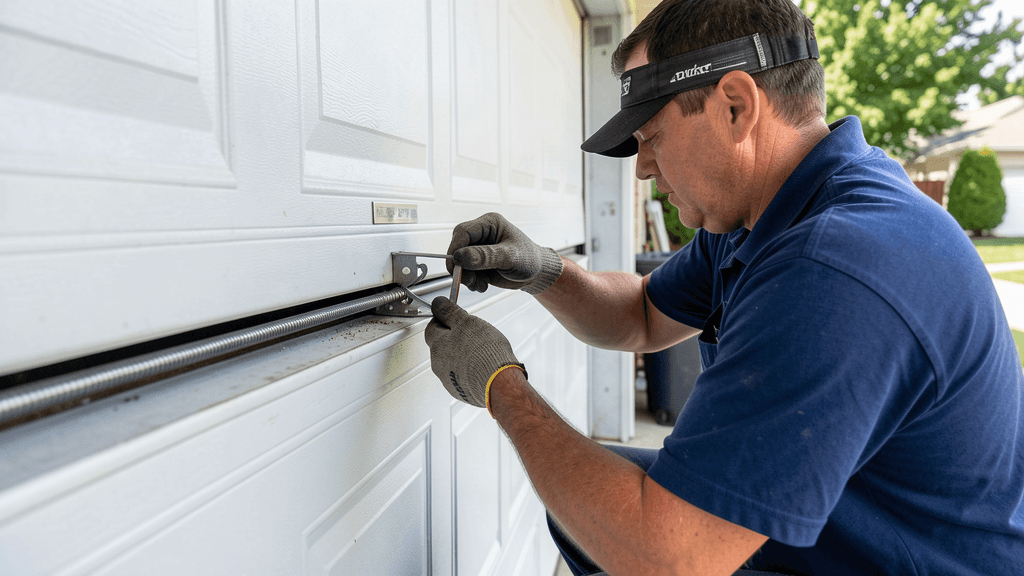
A garage door tech in Phoenix gets a call at 7:15 AM on a Tuesday. The customer says the door came crashing down overnight and the spring snapped. The tech knows the job: replace one torsion spring, wind it, test the balance. He also knows his supplier charges $42 for a galvanized torsion spring rated for 15,000 cycles. The question is what to charge the customer, and how to present it without the line items looking like a shakedown.
Garage door spring replacement pricing is the single most common job in this trade, and the one where operators leave the most margin on the table. Most techs inherit a number from the guy who trained them and never revisit it. The result is a pricing structure that ignores material cost swings, lumps labor into the spring cost, and makes the service call fee feel like a surcharge bolted on top.
Here is a framework for pricing spring replacements that covers your real costs, bundles the service call cleanly, and gives you a defensible number when a customer asks why it costs what it costs.
Garage Door Spring Replacement Pricing Starts With the Cost Stack
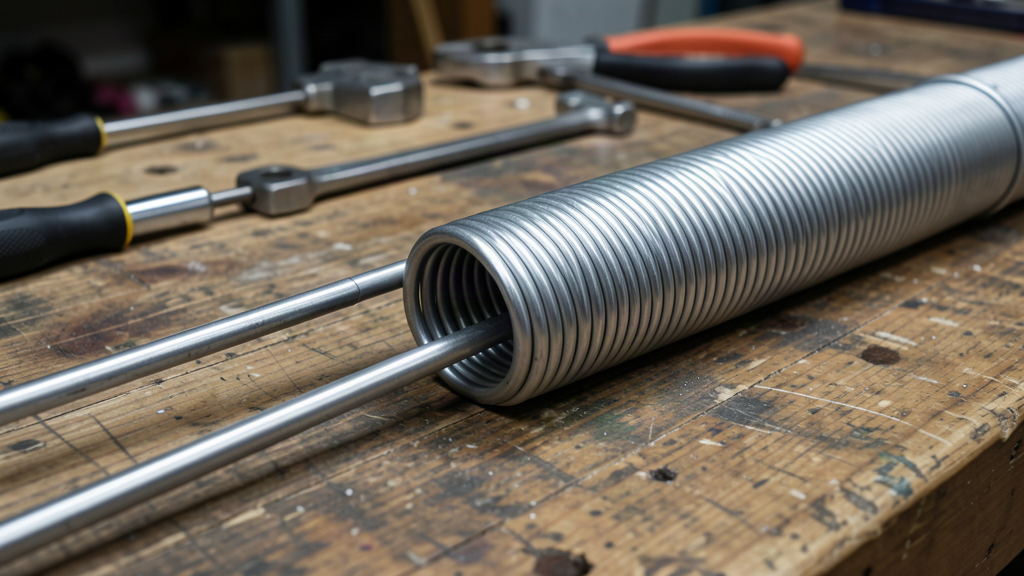
Before you set a price, you need to know what the job actually costs you. Not just the spring. The full stack.
Take a standard residential torsion spring replacement on a 16x7 steel door. Your direct costs look like this: the spring itself at $38-$55 wholesale depending on wire size and cycle rating. Winding bars and safety gear you already own, but their replacement cost amortizes at about $2 per job. Fuel to and from the job site, averaged at $8-$12 in a typical service radius. Twenty to forty minutes of shop time including travel, diagnosis, and paperwork. If you pay yourself $45 per hour, that is $15-$30 in labor. Add $3-$5 for workers compensation and liability insurance proration. Your true cost per spring replacement lands between $66 and $102 before you add a single dollar of profit.
If you are charging $150 flat and calling it done, you are netting $48-$84 per job. That is sustainable only if you run four to five spring calls a day with zero callbacks. According to the International Door Association (IDEA), the median independent operator completes 2.1 spring replacements per day in a typical market. At that volume, $48 per job in profit nets you about $2,400 per week before overhead. It works, but barely.
Torsion vs Extension Springs: What Each One Costs You
The spring type changes your cost stack and your pricing floor. Torsion springs and extension springs are not interchangeable in pricing, and treating them the same is a common margin killer.
Torsion Spring Economics
Torsion springs cost more wholesale ($38-$55) but last longer. A standard oil-tempered torsion spring rated for 10,000 cycles will open and close a door roughly 27 times per day for a year. A galvanized spring rated for 15,000 cycles extends that to about 14 months. A high-cycle spring rated for 25,000-30,000 cycles can run 2-3 years in a typical household. The Door and Access Systems Manufacturers Association (DASMA) publishes cycle rating standards that manufacturers stamp on the spring cone. You should be quoting the cycle rating to the customer, not just the price.
Extension Spring Margins
Extension springs are cheaper wholesale ($12-$22 each) but they come in pairs and have shorter lifespans. You always replace both sides. Your material cost is comparable to a single torsion spring ($24-$44), but the job is faster and less technical. The market price for extension spring replacement runs $130-$200, which means your margin percentage is actually higher than torsion, even though the ticket is lower. Do not discount extension spring work to match torsion pricing. They are different jobs with different risk profiles.
How to Bundle the Spring With a Service Call Without Looking Greedy
The seed of this problem: your spring costs $42, your service call is $85, and the customer is looking at a $227 invoice wondering why a $42 part costs $227. The instinct is to drop the service call fee and roll everything into one number. That is a mistake, because the service call fee is what anchors the customer to your time value. Without it, every future quote starts from zero.
Itemized vs Flat-Quote Invoicing
There are two workable approaches. The first is itemized: "$85 service call and diagnosis, $142 spring replacement including installation and balancing." The customer sees two lines and understands that diagnosis is a separate service from the repair. The second is flat-quote: "$227 to get your door working again, including the spring, installation, and a 90-day warranty." Both work. The mistake is the hybrid: listing the spring at retail, the labor separately, and the service call on top. Three line items feel like nickel-and-diming.
Pick one method and use it on every job. If you itemize, keep it to two lines. If you flat-quote, spell out what is included so the customer can comparison-shop on scope, not just price. The flat-quote method tends to win on Yelp and Google reviews because customers perceive it as more transparent, even though the itemized method is technically more detailed.
Paired Spring Replacement: When Upselling Is Honest Work
When one torsion spring breaks, the other is statistically near failure. Torsion springs on the same door were installed at the same time, cycle at the same rate, and experience the same temperature and humidity conditions. If one failed at 10,000 cycles, the other is likely at 9,500-10,000 cycles and will fail within weeks to months.
The honest upsell is paired replacement. The cost to the customer for a second spring on the same visit is incremental: you are already on site, the door is already disassembled, and the second spring adds 15-20 minutes of labor. Price the second spring at 60-70% of the first. If your single-spring replacement is $227, paired replacement should be $310-$340. The customer saves a second service call fee and a second diagnostic. You make more margin on a single visit. Everyone wins.
The key is how you present it. Do not say "you should probably replace both." Say: "Your springs were installed together and have the same cycle count. The surviving one is past its rated lifespan. I can replace just the broken one today for $227, or both for $340. If you do just the one, expect to call me back within three to six months for the other side, and that will be another full service call." Present the math, let the customer decide. According to IDEA member surveys, roughly 60% of customers choose paired replacement when the logic is presented this way.
Regional Pricing Comps: Where to Anchor Your Rates
Consumer pricing sites like Angi and This Old House publish national averages for spring replacement ranging from $150 to $350. Those numbers blend urban and rural markets, include big franchise operations with marketing overhead, and reflect retail pricing, not operator economics. Use them as a sanity check, not as your pricing guide.
Your anchor should be your local market. Call three competitors as a customer and ask for a spring replacement quote. Note whether they charge a separate service call fee, whether they quote torsion and extension differently, and what warranty they offer. You will typically find one of three patterns in a midsize market: a low-price operator at $120-$150 with no service call fee and no warranty, a mid-market operator at $200-$280 with itemized billing and a 90-day warranty, and a premium operator at $300-$400 with flat pricing, a 1-year warranty, and same-day service. Position yourself in the mid-market tier unless you have a structural reason to be at the top or bottom.
Building a Pricing Sheet Your Tech Can Quote From
If you are still pricing spring replacements by feel, you are leaving money on the table every time a tech quotes lower than you would. A one-page pricing sheet eliminates guesswork and speeds up the in-home quoting process.
Your sheet should list: torsion spring single replacement (with and without service call), torsion paired replacement, extension spring pair replacement, emergency after-hours multiplier (1.5x or 2x), and cycle upgrade pricing for high-cycle springs. Include your warranty terms on the same page. Hand it to your tech or laminate it for the truck. When a tech can quote without calling you, you close more jobs on the first visit and stop losing customers to "let me call you back with a price."
Revisit the sheet every six months. Spring wholesale prices move with steel commodity indices. If your supplier raised torsion spring prices by 15% and you did not adjust your retail price, your margin quietly eroded. Check the steel index, check your supplier invoice, and adjust. A 6-month cadence catches most material swings before they eat a quarter of profit.
This guide is published by Heyfield, which makes an AI phone receptionist for home-service trade businesses. If you ever can't take the call, that's what we do. See pricing. The rest of our trade-business resources are free at heyfield.app/blog.
Frequently Asked Questions
How much should I charge for a garage door spring replacement?+
Most independent operators charge $200-$280 for a single torsion spring replacement including labor, with a separate $85-$120 service call fee. Paired replacement typically runs $310-$340. Extension spring pairs run $130-$200.
Should I replace both garage door springs at the same time?+
Yes, in most cases. Springs on the same door were installed together and cycle at the same rate. If one broke, the other is near failure. Pricing the second spring at 60-70% of the first reflects the incremental labor and saves the customer a second service call.
What is the wholesale cost of a garage door torsion spring?+
Standard oil-tempered torsion springs cost $38-$55 wholesale depending on wire size and cycle rating. Galvanized springs run slightly higher. High-cycle springs rated for 25,000-30,000 cycles can cost $60-$80 wholesale.
How do I bundle a service call with a spring replacement without seeming greedy?+
Use either a two-line itemized invoice (service call + spring replacement) or a single flat-quote price that includes everything. Avoid three line items that itemize the part, labor, and call separately, which feels like nickel-and-diming.
What cycle rating should I quote for a garage door spring?+
Standard torsion springs are rated for 10,000-15,000 cycles by DASMA standards. At 27 daily cycles (a typical household), a 10,000-cycle spring lasts about one year and a 15,000-cycle spring about 14 months. High-cycle springs rated for 25,000-30,000 cycles last 2-3 years.
How often should I revisit my spring replacement pricing?+
Review your pricing sheet every six months. Spring prices track steel commodity indices, and a 15% wholesale increase quietly erodes your margin if you do not adjust retail. Check your supplier invoice and the steel index at each review.
Should I charge differently for torsion vs extension springs?+
Yes. Torsion springs cost more wholesale and require more technical skill to install safely. Extension springs are cheaper but always replaced in pairs. Price them separately based on their actual cost stacks, not as interchangeable services.
What should an emergency after-hours spring call cost?+
Most operators apply a 1.5x to 2x multiplier to their standard spring replacement price for after-hours or same-day emergency calls. This covers the opportunity cost of pulling a tech off a scheduled route and the premium customers expect to pay for urgent service.
Ready to stop missing calls?
Try Heyfield free for 7 days. Your AI receptionist answers every call, collects customer details, and texts you the summary.
Keep Reading
Locksmiths: Your Most Valuable Calls Come After Midnight
Locksmiths lose $3,000+ every month to missed after-hours calls. Here's what that's costing you — and the simple fix.
ReadDeck Builders: Stop Losing $90K Every Spring
Deck builders miss 2-3 quote calls a week during peak season. Here's the real revenue cost—and how to fix it without hiring a receptionist.
Read