Google Local Service Ads vs Angi Trade Business: Real CPL Math

Meric Karpat · Founder & CEO
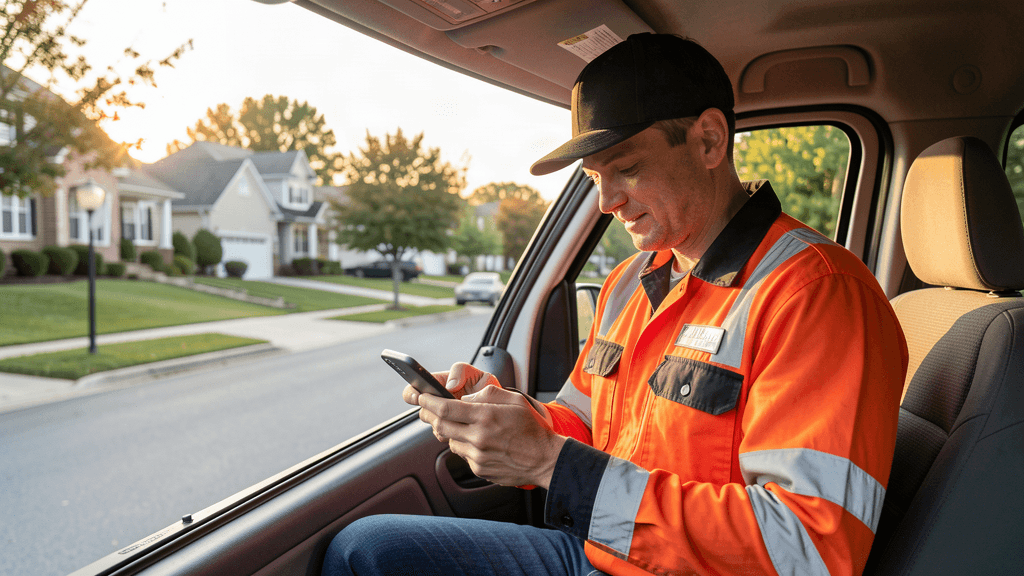
A solo HVAC tech in Charlotte spent $800 on Angi leads in March 2026. He got 14 leads, booked 3 jobs, and grossed $4,200 in revenue. The next month he switched to Google Local Service Ads. He spent $650, got 9 leads, booked 5 jobs, and grossed $7,800. Same city, same trade, same skill level. The difference was not the quality of his work. It was the economics of the channel.
If you are deciding between google local service ads vs angi trade business spending, the comparison that matters is not cost per lead. It is cost per booked job. That number changes by trade, by market, and by shop size. This post breaks down the real math so you can stop guessing.
Google Local Service Ads vs Angi Trade Business: Which Channel Actually Converts
Every marketing agency that writes about this topic has a horse in the race. They want to manage your Google Ads, or they want to build your Angi profile, or they want to sell you SEO. This post does none of those things. Here is what the numbers actually look like when you track cost per booked job instead of cost per lead.
The core difference is lead exclusivity. Google Local Service Ads (LSA) sends each lead to one contractor. Angi, in its standard pay-per-lead model, sends the same lead to up to four contractors. You are not buying a lead. You are buying a race against three other shops, and the first one to call wins. That single structural difference explains most of the conversion gap between the two platforms.
What Google Local Service Ads Actually Cost a Trade Business
Google LSA uses a pay-per-lead model. You set a weekly budget, Google charges you only when a lead comes through, and you can pause anytime. The cost per lead varies by trade and metro area. Based on data from Local SEO Guide's 2025 LSA benchmark report and Google's own advertiser documentation, here are the ranges trades actually see:
HVAC: $35 to $85 per lead. Emergency repair leads trend higher ($65-85); maintenance and tune-up leads trend lower ($35-50).
Plumbing: $40 to $90 per lead. Emergency calls and water heater replacements sit at the top; drain cleaning and fixture installs at the bottom.
Electrical: $35 to $75 per lead. Panel upgrades and EV charger installs cost more per lead but book at higher rates.
Roofing: $50 to $120 per lead. Storm damage and full replacements are the expensive end; inspection and repair leads are cheaper.
Before you can run LSA, Google requires a background check (typically $30 to $75 depending on your state), license verification, and proof of insurance. The onboarding process takes 2 to 4 weeks. This barrier filters out unlicensed operators, which is part of why LSA leads convert better. The homeowner sees a Google Screened badge and trusts the lead.
What Angi Actually Costs (The Shared-Lead Math Nobody Shows You)
Angi Pricing Models
Angi offers two main pricing paths. Pay-per-lead costs $15 to $150 per lead depending on trade and project size. A small plumbing repair lead might cost $15 to $30. A kitchen remodel lead might cost $80 to $150. Angi Ads (the platform formerly known as HomeAdvisor) uses fixed-price leads that are shared with up to four contractors.
Angi also offers "exclusive" leads at 2.5 to 3 times the shared lead price. A $45 shared plumbing lead becomes $110 to $135 as an exclusive. The problem: Angi's exclusivity is not always airtight. Contractors report receiving the same "exclusive" lead that was also sent through HomeAdvisor's older matching system. The Angi pricing page discloses this in fine print, but most contractors do not read it until after they have spent $500 on shared leads.
The Shared-Lead Problem
Here is the math that Angi's sales reps do not walk you through. If a shared lead costs $45 and goes to 4 contractors, your cost per exclusive lead is not $45. It is $180, because you are competing against 3 other shops for the same phone number. According to a 2024 Inc.com study on lead response times, leads contacted within 5 minutes convert at 8 times the rate of leads contacted after 10 minutes. If you are not the first to call, you are paying $45 for a lead that already booked with someone else.
The Surge Agency, a trades-focused marketing firm, published a cost-per-booked-job analysis in 2026 that put numbers on this. Across 120 contractor accounts, Angi shared leads had a 12 to 22 percent book rate depending on trade. LSA leads had a 40 to 55 percent book rate. The lead price was cheaper on Angi. The booked job was cheaper on LSA.
Cost Per Booked Job: The Real Comparison
Trade-Specific CPL Data
The only metric that matters is what you pay to book a job, not what you pay for a lead. Here is the comparison using mid-range CPL estimates and the book rates from the Surge Agency study:
HVAC: LSA at $55 per lead, 55 percent book rate = $100 per booked job. Angi shared at $35 per lead, 20 percent book rate = $175 per booked job.
Plumbing: LSA at $65 per lead, 50 percent book rate = $130 per booked job. Angi shared at $40 per lead, 18 percent book rate = $222 per booked job.
Roofing: LSA at $85 per lead, 40 percent book rate = $212 per booked job. Angi shared at $70 per lead, 12 percent book rate = $583 per booked job.
Why LSA Converts Better
Three reasons. First, the Google Screened badge. The homeowner sees that Google verified your license, insurance, and background. That trust matters when a stranger is about to let you into their house. Second, lead exclusivity. You are not racing three other shops. Third, search intent. An LSA lead comes from someone who typed "AC repair near me" into Google. An Angi lead may come from someone browsing a directory with no urgency. The intent level is different, and it shows in the book rate.
When Angi Still Beats Google Local Service Ads
LSA is not available for every trade. Google's category list excludes handyman services, junk removal, pressure washing, and several other trades in many markets. If your trade is not on the LSA list, Angi may be your only paid lead option.
Angi also wins for project-based work. A homeowner planning a $30,000 kitchen remodel browses Angi for ideas, reads reviews, and shortlists contractors. That is a different buying pattern than someone Googling "plumber near me" at 9 PM on a Tuesday. For remodeling, decking, and larger project work, Angi's directory model matches the homeowner's research behavior better than LSA's intent-based model.
New businesses benefit from Angi's lower barrier to entry. LSA ranks advertisers partly by review count and recency. A shop with 3 Google reviews will struggle to win LSA impressions against a competitor with 80 reviews. Angi does not weight external reviews the same way. You can buy Angi leads on day one. The Pixie Builds comparison frames this as a bridge strategy: use Angi to build reviews and case studies, then transition to LSA once your Google profile is stronger.
How to Decide Based on Your Shop Size
Solo Operator (Under $250K/Year)
Start with LSA if your trade qualifies. Budget $300 to $500 per month. Set a weekly cap so a busy week does not drain your budget before Friday. You cannot afford to compete on shared Angi leads because your response time will suffer when you are on a job. If LSA is not available for your trade, use Angi exclusive leads only. Skip shared leads entirely. The math does not work for a solo operator paying $45 to race three other shops.
2-4 Tech Shop ($250K to $750K)
Run LSA as your primary channel at roughly 60 percent of lead budget. Use Angi exclusive leads for project work at 30 percent. Set aside 10 percent for Google Ads retargeting to capture homeowners who visited your site but did not book. Track cost per booked job weekly. If any channel exceeds $300 per booked job for two consecutive weeks, pause it and reallocate.
$750K+ Shop
Diversify across LSA, Angi, Google Ads, and owned SEO. No single channel should generate more than 40 percent of your leads. The risk of depending on one platform was made clear in 2024 when Google paused LSA for 72 hours during a policy update, and contractors who relied on it exclusively went three days with zero new leads. Assign someone on your team to manage lead response within 5 minutes across all channels. That can be a dedicated CSR, a human answering service, or an AI receptionist like Heyfield that captures and qualifies inbound calls so no lead ages past 5 minutes. The channel you choose to generate the lead matters less than the system you build to respond to it.
Re-evaluate your cost per booked job quarterly. Rotate budget toward the channel with the lowest real cost per booked job. The numbers shift as competition in your market changes, so treat this as a 6-month rolling review, not a one-time decision.
Frequently Asked Questions
How much does Google Local Service Ads cost per lead for HVAC?+
Google LSA charges $35 to $85 per HVAC lead depending on your metro area and the job type. Emergency repair leads trend toward the higher end ($65-85), while maintenance and tune-up leads cost less ($35-50). You set a weekly budget and only pay when a lead comes through.
Why are Angi shared leads cheaper but more expensive per booked job?+
Angi shared leads cost $15-150 per lead, but the same lead goes to up to 4 contractors. If you pay $45 for a shared lead and 3 other shops also got it, your effective cost per exclusive lead is $180. With book rates of 12-22 percent on shared leads, your cost per booked job runs 40-80 percent higher than LSA despite the lower per-lead price.
Can I run Google LSA and Angi at the same time?+
Yes, but track cost per booked job on each channel separately. Running both can cannibalize your budget if one channel consistently underperforms. For 2-4 person shops, a common split is 60 percent LSA, 30 percent Angi exclusive, and 10 percent Google Ads retargeting. Kill any channel above $300 per booked job for two consecutive weeks.
What trades does Google Local Service Ads not support?+
Google LSA excludes handyman services, junk removal, pressure washing, and several other trades in many markets. Check Google's eligible categories list for your state. If your trade is not listed, Angi exclusive leads or Google Ads are your main paid lead options.
How long does Google LSA onboarding take?+
Google requires a background check ($30-75), license verification, and proof of insurance before you can go live. The full onboarding process takes 2 to 4 weeks. This barrier filters out unlicensed operators, which is part of why LSA leads convert at higher rates.
Should a new trade business start with LSA or Angi?+
If your trade qualifies for LSA, start there. If LSA requires reviews to rank well and you have fewer than 10 Google reviews, use Angi exclusive leads first to build reviews and case studies, then transition to LSA. This bridge strategy gets you leads on day one while you build the Google profile LSA rewards.
What is the Google Screened badge and does it matter?+
The Google Screened badge appears on your LSA listing after Google verifies your license, insurance, and background check. Homeowners see it as a trust signal. It matters because it increases your click-through rate and book rate compared to unverified listings. The screening costs $30-75 and takes 2-4 weeks.
How do I dispute a bad lead on Google LSA or Angi?+
Google LSA lets you dispute leads directly in the dashboard within 30 days. Credits are typically issued for disconnected numbers, wrong trade requests, or duplicate leads. Angi's dispute process is more manual: you submit a form, and credits are issued at Angi's discretion. Contractors report a 60-70 percent dispute success rate on LSA versus 30-40 percent on Angi.
Ready to stop missing calls?
Try Heyfield free for 7 days. Your AI receptionist answers every call, collects customer details, and texts you the summary.
Keep Reading
Locksmiths: Your Most Valuable Calls Come After Midnight
Locksmiths lose $3,000+ every month to missed after-hours calls. Here's what that's costing you — and the simple fix.
ReadDeck Builders: Stop Losing $90K Every Spring
Deck builders miss 2-3 quote calls a week during peak season. Here's the real revenue cost—and how to fix it without hiring a receptionist.
Read