Junk Removal Truckload Pricing 2026: The Operator Math

Meric Karpat · Founder & CEO
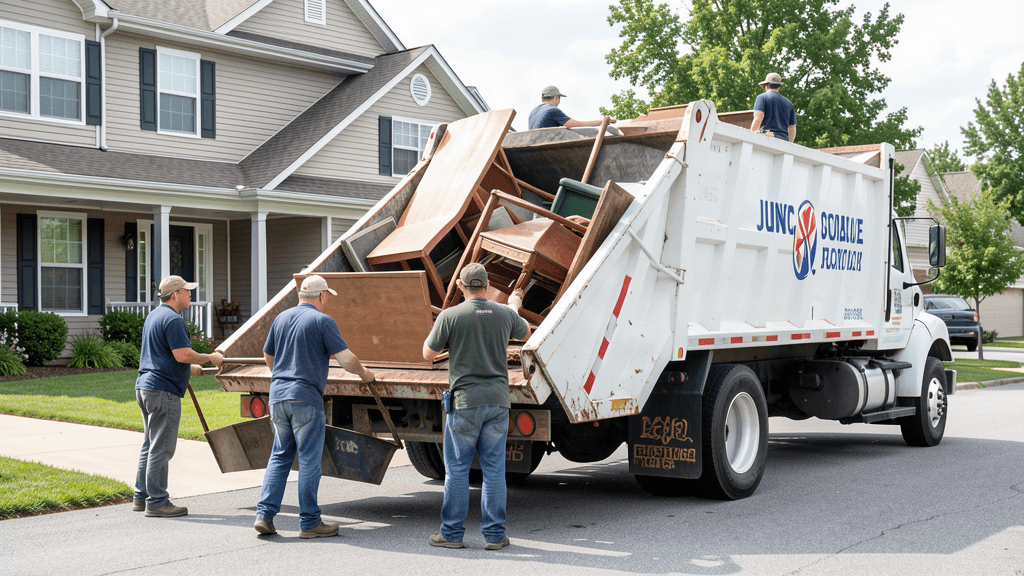
A solo operator in Raleigh runs a 12-foot dump trailer behind a half-ton pickup. He charges $300 for what he calls a "full load" and $150 for a "half." He got those numbers from a consumer pricing website three years ago. His landfill raised its tipping fee from $42 to $58 per ton in that time. He has not adjusted his prices. He is working the same number of jobs for less money than he made in 2024.
If you run a junk removal business, junk removal truckload pricing 2026 needs to start from your costs, not from what a consumer calculator says the market average is. Every pricing guide ranking on Google right now is written for the homeowner. None of them tell you how to build a pricing book that protects your margin when disposal fees rise, fuel spikes, or a job turns out to be heavier than it looked in the photos.
Here is a framework for setting truckload prices based on what each load actually costs you to haul and dump, with real numbers from operators running one to three trucks in mid-size US markets.
Why junk removal truckload pricing 2026 needs a cost-first approach
The consumer-facing guides break pricing into per-item lists: sofa $90, mattress $70, refrigerator $65. That works for the customer trying to budget. It does not work for you. Per-item pricing ignores the two variables that actually eat your margin: weight at the scale and time on the job.
A quarter-truck load of old furniture weighs 600 pounds. A quarter-truck load of construction drywall and tile weighs 2,400 pounds. Same volume, four times the disposal cost. If you charge $150 for both, one of those jobs lost you money at the landfill.
Volume-based tier pricing fixes this. You quote by how much of the truck the junk fills, then adjust for weight and access difficulty. The tiers give customers a mental model they can understand (quarter, half, three-quarter, full). The weight adjustment protects your disposal margin. The access difficulty line item covers stairs, elevators, and long carries.
The Four Truckload Tiers and What to Charge for Each
Your pricing book should have four tiers tied to the physical volume of your truck. A standard 15-yard dump trailer (the most common size for solo and two-truck operators) breaks down like this:
Quarter truck (3.75 yards): $130 to $180. A few pieces of furniture, a pile of boxes, a mattress set. One person, 30 minutes on-site.
Half truck (7.5 yards): $250 to $350. A single garage cleanout, a one-bedroom apartment's worth of furniture. Two people, 60 to 90 minutes.
Three-quarter truck (11.25 yards): $380 to $480. A full house cleanout minus the heavy appliances, or a medium construction debris load. Two people, 2 to 3 hours.
Full truck (15 yards): $500 to $650. Complete house cleanout, large construction debris load, or estate clearance. Two people, 3 to 4 hours plus dump time.
These ranges reflect what operators in Raleigh, Nashville, Columbus, and Phoenix are charging in 2026. Your numbers will vary based on your local disposal costs and market density. The point is to build the tiers from your cost stack, then apply a margin target.
Per-Cubic-Yard Cost: What Each Load Actually Costs You
Before you set a single price, calculate what it costs you to move one cubic yard of junk from a driveway to a landfill or transfer station. Four cost categories make up the stack:
Disposal: $35 to $65 per ton at the scale, depending on your region and whether you use a transfer station or go direct to a landfill. A 15-yard truck averages 2.5 to 3 tons per full load.
Fuel: $0.65 to $0.85 per mile, including the round trip to the dump. A typical job involves 15 miles to the customer, 12 miles to the dump, 15 miles back. That is 42 miles at roughly $0.75 per mile, or $31.50 in fuel per job.
Labor: $17 to $22 per hour per person. A half-truck job with two people for 90 minutes costs $51 to $66 in labor. A full-truck job with two people for 4 hours costs $136 to $176.
Truck and overhead: Truck payment, insurance, dump-trailer depreciation, phone, and marketing. Operators running one truck typically carry $1,200 to $1,800 per month in fixed costs. Spread across 20 to 30 jobs per month, that is $40 to $90 per job.
Residential vs Commercial vs Construction Debris
Residential junk (furniture, appliances, household clutter) is light and bulky. A full truck might weigh 1.5 tons. Disposal cost is lower, but the job takes longer because you are carrying items from inside the house.
Commercial junk (office furniture, retail fixtures) is denser. A full truck might weigh 2.5 tons. Disposal cost is moderate, and access is usually easier (loading dock, freight elevator, ground floor).
Construction debris (drywall, tile, concrete, lumber) is heavy. A full truck can hit 3.5 tons. Disposal cost is your biggest variable here. Many operators charge a 15 to 25 percent surcharge on construction debris loads to cover the weight gap, and they tell the customer that upfront.
Disposal Fee Variation by Region: What Landfills Actually Charge
Disposal fees are the single biggest variable in your cost stack, and they vary by more than 100 percent depending on where you operate. Waste Business Journal, which tracks landfill pricing nationally, reported an average US tipping fee of approximately $58 per ton in 2025, up from $52 in 2023. But that average hides a wide range.
Tipping Fees in Major Metro Markets
In the Northeast (Boston, New York, Philadelphia), landfill space is scarce and tipping fees run $70 to $90 per ton. In the South (Atlanta, Nashville, Raleigh), fees are $35 to $50 per ton. On the West Coast (Seattle, Portland, Sacramento), fees sit at $65 to $85 per ton, and some counties require separation of recyclables with surcharges for mixed loads.
Rural areas often have cheaper fees ($25 to $40 per ton) but longer drives, which eats the savings in fuel and time. Transfer stations in metro areas charge 10 to 20 percent more than direct landfill access but save you 30 to 45 minutes per trip. You need to know the exact fee at every facility within a 30-mile radius of your service area and update that number every six months.
If your local landfill raised fees from $42 to $58 per ton (a 38 percent increase) and you are still charging 2023 prices, a full-truck job that used to cost $126 in disposal now costs $174. That is $48 less in your pocket per full load, across 20 loads per month, which is $960 per month gone.
Hazmat Surcharge Triggers: When to Stop Loading and Add a Fee
Some items cost more to dispose of than your standard per-ton rate. You need to identify them before loading, not at the scale when the attendant turns you away. The EPA's Renovation, Repair, and Painting (RRP) Rule requires certification for disturbing lead-based paint in pre-1978 homes. If a job involves demolishing painted walls or trim in a house built before 1978, you may need a certified renovator on site, and the debris may require special handling.
Items That Require a Surcharge vs Items You Refuse
Surcharge items ($50 to $150 each): Tires (most landfills charge $5 to $15 per tire, and some limit quantities), refrigerators and AC units (Freon recovery certification required, $25 to $50 disposal), paint and solvents (household hazardous waste facility only, $30 to $60 per container), batteries ($10 to $20 each at recyclers), propane tanks ($15 to $25 each).
Refuse entirely: Asbestos-containing materials (requires a licensed abatement contractor, not a junk hauler), biological and medical waste, unlabeled chemical containers, transformers and capacitors (PCB risk), fuel tanks that have not been cut open and cleaned.
The surcharge should cover your disposal cost plus a markup for the extra handling and documentation. Tell the customer about surcharges during the phone quote, not when you are standing in their driveway. A surprise $150 tire fee on a $300 job creates a bad review.
Margin Math: Revenue Minus Disposal, Fuel, and Labor per Load
Here is a worked example for a half-truck residential cleanout in a mid-size Southern market with $48 per ton tipping fees:
Revenue: $300 (half-truck tier)
Disposal: $72 (1.5 tons at $48/ton)
Fuel: $24 (32 miles round trip at $0.75/mile)
Labor: $60 (two people, 90 minutes, $20/hr each)
Truck/overhead: $55 (allocated monthly fixed cost)
Gross profit: $89 (30 percent margin)
Now a full-truck construction debris load in the same market:
Revenue: $575 (full-truck tier plus 15 percent debris surcharge)
Disposal: $168 (3.5 tons at $48/ton)
Fuel: $36 (48 miles at $0.75/mile)
Labor: $160 (two people, 4 hours at $20/hr each)
Truck/overhead: $55
Gross profit: $156 (27 percent margin)
The construction job brings in more dollars but a tighter margin because weight drives disposal cost faster than volume drives revenue. This is why you need a debris surcharge, not just a volume tier. If you discount a full truck to $450 to win the job, your margin drops to 18 percent. One bad tire or a surprise mattress behind the drywall, and you are at break-even.
When to Raise Your Truckload Prices: Reading Landfill Fee Schedules
Call or visit every disposal facility you use and ask for their current fee schedule. Do this every six months. Most landfills raise tipping fees 3 to 5 percent annually, and some implement larger increases when they approach capacity or face new state regulations. The Bureau of Labor Statistics reports that the Consumer Price Index for waste collection services rose 4.2 percent year-over-year through July 2026.
When your disposal cost per ton increases by more than 5 percent, raise your tier prices by the corresponding dollar amount. If your landfill goes from $48 to $54 per ton and your average full load is 3 tons, your disposal cost went up $18 per load. Raise your full-truck price by $20 to $25 to maintain margin and cover the rounding.
Keep a one-page pricing sheet with the date, the tipping fee at each facility, and your current tier prices. When a customer asks why your prices went up, you can point to the landfill fee increase by name and date. That builds more trust than saying "market rates have changed."
This guide is published by Heyfield, which makes an AI phone receptionist for home-service trade businesses. If you ever can't take the call, that's what we do. See pricing. The rest of our trade-business resources are free at heyfield.app/blog.
Frequently Asked Questions
How often should I recalibrate my junk removal pricing book?+
Review your landfill fee schedule every six months and adjust tier prices whenever disposal costs rise more than 5 percent. Most landfills increase tipping fees 3 to 5 percent annually, so a yearly review at minimum is necessary to maintain margin.
Should I charge by volume or by weight for junk removal?+
Use volume-based tiers (quarter, half, three-quarter, full truck) for customer quoting since they are easy to understand, but apply a weight surcharge for construction debris and dense materials. Volume alone will underprice heavy loads that cost more at the scale.
What is the minimum charge for a junk removal job?+
Most solo operators set a $100 to $130 minimum, which covers fuel, labor for one hour, and disposal for a small load. Anything below that threshold does not cover your fixed costs per job, including truck overhead and drive time.
How do I estimate truckload size on-site quickly?+
Carry a measuring tape and mark your truck's quarter, half, and three-quarter fill lines on the inside wall with paint. Walk the customer's pile, estimate total volume in cubic yards, and match it to the nearest tier. With practice you can eyeball a pile within half a yard in under two minutes.
Do I need a special license to haul hazardous waste?+
Standard junk removal does not require a hazardous waste hauling license, but certain items like refrigerants (EPA Section 608 certification), lead-based paint debris (RRP certification), and asbestos require specific credentials. When in doubt, refuse the item and refer the customer to a licensed abatement contractor.
How much does disposal cost per ton at a landfill?+
The US average tipping fee in 2025 was approximately $58 per ton according to Waste Business Journal, but regional variation is significant. Southern states average $35 to $50 per ton, while the Northeast runs $70 to $90 per ton. Check your local facilities for exact rates.
Should I offer discounts for repeat junk removal customers?+
A 10 percent repeat-customer discount is common and defensible if your base margin is above 30 percent. Avoid discounting below your cost-per-job floor. A better approach for repeat work is a flat $25 to $50 discount on full-truck loads only, which preserves margin on smaller jobs where costs are proportionally higher.
Can I pass fuel cost increases directly to my customers?+
Build a fuel adjustment into your base pricing rather than adding a separate fuel surcharge line item. Customers respond better to a clear tier price than to a surprise surcharge. If fuel spikes more than 20 percent in a short period, add a temporary fuel surcharge with a stated expiration date.
Ready to stop missing calls?
Try Heyfield free for 7 days. Your AI receptionist answers every call, collects customer details, and texts you the summary.
Keep Reading
Locksmiths: Your Most Valuable Calls Come After Midnight
Locksmiths lose $3,000+ every month to missed after-hours calls. Here's what that's costing you — and the simple fix.
ReadDeck Builders: Stop Losing $90K Every Spring
Deck builders miss 2-3 quote calls a week during peak season. Here's the real revenue cost—and how to fix it without hiring a receptionist.
Read