Lawn Care: Every Missed Call Costs You $300/Month Forever

Meric Karpat · Founder & CEO
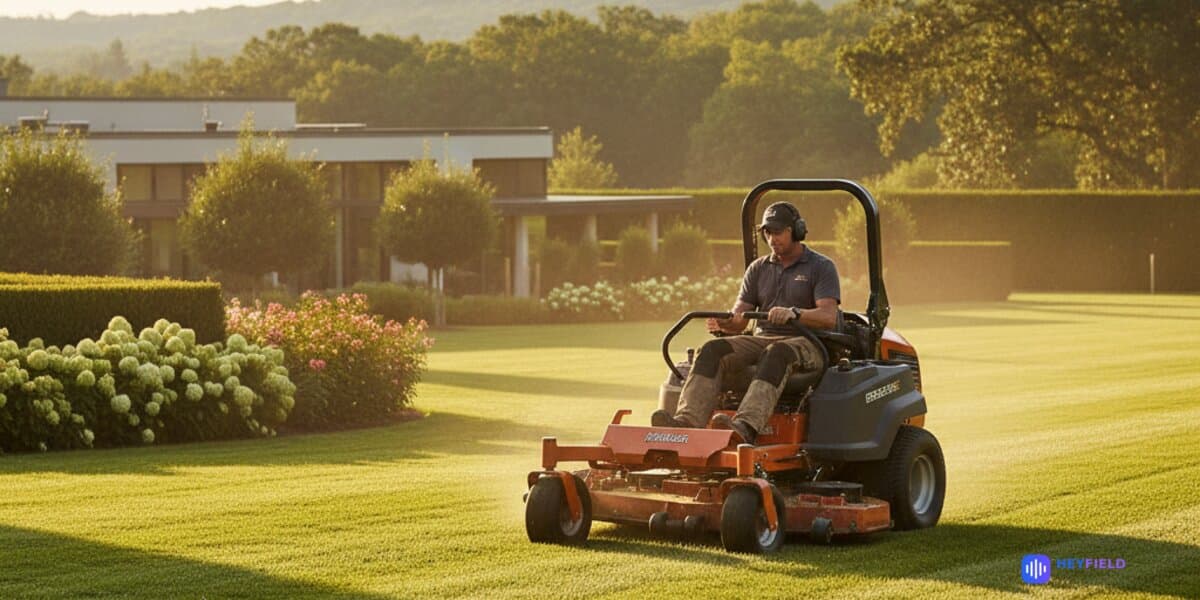
You're on row 14 of the backyard when the phone rings. The mower drowns it out. They hang up after four rings.
That wasn't just a missed call. That was a new customer — someone who searched "lawn care near me," found your number, and dialed ready to hire. Instead of booking with you, they scrolled to the next listing.
That company answered. They got the job. They got the monthly contract. They got the referrals.
The Real Cost of a Missed Call in Lawn Care
Most trades lose one job when they miss a call. Landscapers lose a recurring revenue stream.
Unlike a roofing job or a one-time repair, lawn care is a subscription. A new customer doesn't call you for a single visit — they call you every season, year after year. When you miss that first call, you're not losing $200. You're losing $200 per month for the next two years.
Here's the calculator moment:
- Average recurring lawn care contract: $150–$250/month
- Active season (most markets): 7–8 months/year
- Average customer retention: 2+ years
- Lifetime value of one customer: $2,100–$4,000
Now apply that to your missed call rate:
- 3 missed calls/week × 26 peak weeks = 78 missed calls per year
- Conservative close rate on answered calls: 25%
- Potential new recurring clients lost: ~20 per year
- Average lifetime value: $3,000
- Total recurring revenue walking out the door: $60,000/year
And it compounds. The 20 clients you didn't land this year aren't calling back next season — they're locked into a contract with whoever answered first.
Why Landscapers Miss More Calls Than Almost Any Other Trade
You spend your day outside. Your phone is in your pocket or in the truck. A commercial mower, a leaf blower, or a line trimmer is running 10 feet away. You can't hear the ring. And even if you feel the vibration, stopping mid-edge on a commercial property or mid-row on a residential lot isn't always an option.
Here's what a typical landscaper's morning looks like:
- 7:00 AM — Load up, head to property 1
- 7:45 AM — Mower running, missed call #1
- 9:20 AM — Blower on for cleanup, missed call #2
- 10:30 AM — Deep in hedge trimming, missed call #3
- 12:00 PM — Check phone over lunch. Three voicemails. Two already called a competitor.
You call back around noon. One answers. One doesn't. The third already booked someone else an hour ago.
A Harvard Business Review study found that calling back a lead within 5 minutes makes you 9× more likely to convert them than waiting an hour. For lawn care, "an hour later" means they're already signed up with your competitor.
Your Booking Season Is Longer Than You Think. You're Bleeding Through All of It.
Homeowners wake up, look at their yards, and start calling. The clients you lock in during your booking windows set your revenue for the entire year.
Spring green-up gets the attention, but the calls keep coming through summer drought stress, fall leaf cleanup, and late-season aeration and overseeding. Every week you're missing 3–5 calls during any of those windows, you're not just losing this season — you're losing next season too.
Booking-season revenue opportunity (conservative math):
- 26-week active season (spring green-up through fall cleanup)
- 4 missed calls/week = 104 missed calls
- 25% conversion = 26 new recurring clients
- 26 clients × $200/month × 8 months = $41,600 in year-one revenue
- Year 2 at 80% retention: another $33,280
That's nearly $75,000 across two years. Gone because the phone rang while the mower — or the leaf blower — was running.
Hiring Someone Isn't the Fix
The obvious move — pay someone to answer the phone — sounds simple until you price it out.
A part-time office helper costs $15–$18/hour. At 25 hours a week, that's $23,000–$28,000/year. And that's assuming they're always available, always professional, and cover evenings and weekends when a third of your inbound calls come in.
There's also the seasonal problem: your January call volume is a fraction of your peak months. You'd be paying full-price for a phone that barely rings half the year.
And even a solid receptionist can't answer when they're on another call, at lunch, or off on a Friday afternoon — right when a homeowner decides they want their yard done this weekend.
How an AI Receptionist Works for Lawn Care
An answering service for lawn care picks up every call — on the first ring, every time, including nights and weekends.
When a homeowner calls, a professional voice greets them, gathers the key details (name, address, what services they need, best time for a quote), and sends you a text summary immediately. By the time you finish the property you're on, you have a warm lead waiting — not a cold voicemail you're hoping to return before they disappear.
What it handles:
- New inquiries — name, address, service type, quote request
- Estimate scheduling — takes time preferences, confirms with you
- Existing client calls — service day questions, schedule changes, add-on requests
- After-hours calls — Friday evening, Saturday morning, Sunday afternoon
You stay focused on the job. The call gets answered. The lead stays warm.
The First-to-Answer Advantage in a Crowded Market
In most suburban markets, there are 8–15 lawn care companies within a few miles of any given homeowner. When someone searches and starts calling, they're often calling 2–3 companies to see who responds first.
The one that answers a live call — not voicemail, not "press 1 for service" — wins the conversation and usually the job. Price rarely comes into it at that stage. Whoever felt professional and available got the booking.
An AI receptionist puts you in that position on every call, automatically, without you having to stop the mower.
Real Impact: Numbers to Expect
Based on typical conversion rates for lawn care businesses that switch from voicemail to live answering:
- Missed call rate drops from 40–60% of inbound calls to near zero
- New recurring client acquisition increases proportionally to answered calls
- One additional recurring client per month ($200/mo) = $1,600 in added season revenue
- That's 32× the cost of Heyfield's base plan — from a single recovered client
(Estimated based on industry conversion benchmarks. Individual results depend on market, pricing, and service area.)
Your Next Booking Window Is Open Right Now
Homeowners are calling this week — right now, while you're running routes. In spring it's green-up and weekly mowing. In summer it's drought stress and irrigation calls. In fall it's leaf cleanup, aeration, and overseeding before the first freeze. Every one of those is a recurring client who will pay someone else $200 a month for the next two years.
Every call that goes to voicemail is one of those clients lost.
Heyfield answers every call from the first ring, gathers the lead details, and texts you instantly. Setup takes 10 minutes.
Stop losing $300-a-month clients to a mower. Start your free trial at heyfield.app/pricing.
Frequently Asked Questions
How much does a lawn care answering service cost?+
Heyfield starts at $49 per month with no setup fees or contracts. For a lawn care company where a single recurring customer pays $200 per month for 8 months every year, one captured spring lead pays for over 32 years of service. Compare that to a part-time receptionist at $15–$18 per hour who still can't cover evenings or weekends when homeowners are actually planning their yards.
Can I keep my existing business phone number?+
Yes. You forward your current number to Heyfield when you're on a route or running equipment, and disable forwarding when you're available. Your customers always dial the same number. Most lawn care operators set conditional forwarding so it routes automatically after two rings or during route hours when your mower is drowning out everything and your hands are on the controls.
What if the AI mishears a customer say 'core aeration' or 'overseeding'?+
Heyfield is trained on lawn care terminology including services, seasons, and property types. It repeats key details like mowing versus fertilization, residential versus commercial, and one-time cleanup versus recurring contract back for confirmation. You review the full text summary before calling back, so no misheard service request ever sends your crew with a spreader when the customer actually wanted a full renovation with sod installation.
Does it answer calls after hours and on weekends?+
Yes. Homeowners walk their yard Friday evening, notice bare patches, and call immediately. Or they wake up Saturday, see the neighbor's lush lawn, and want the same. Heyfield answers at 7 PM or Sunday morning, captures their property details and service needs, and texts you instantly. You follow up on your schedule without losing the lead to a competitor who picked up while you were off duty.
Can it handle the spring rush when every homeowner calls at once for seasonal contracts?+
Yes. Heyfield scales automatically so your March-through-May surge—when every customer who ignored their yard all winter suddenly wants fertilization, aeration, and weekly mowing before Memorial Day—gets the same professional response as a quiet October leaf cleanup. There's no scrambling to hire seasonal office help, no watching leads go cold because your one helper is already on three lines, and no losing a $1,600 annual contract to the company that answered while you were edging a commercial property.
Ready to stop missing calls?
Try Heyfield free for 7 days. Your AI receptionist answers every call, collects customer details, and texts you the summary.
Keep Reading
Why Welding Shops Can't Risk Answering Their Own Phones
Sparks fly, face shields go down, and phone calls go to voicemail. How safety-first welding shops lose business to missed calls.
ReadPool Service Owners: Every Missed Call Costs You $900
Pool season is short and winterization is now. One missed call can cost you a full-season client worth $900+. Here's how solo pool service pros stop losing jobs to voicemail.
Read