Pest Control Commercial vs Residential Pricing 4 Contract Models

Meric Karpat · Founder & CEO
Pest Control Commercial vs Residential Pricing: What the Contract Has to Cover
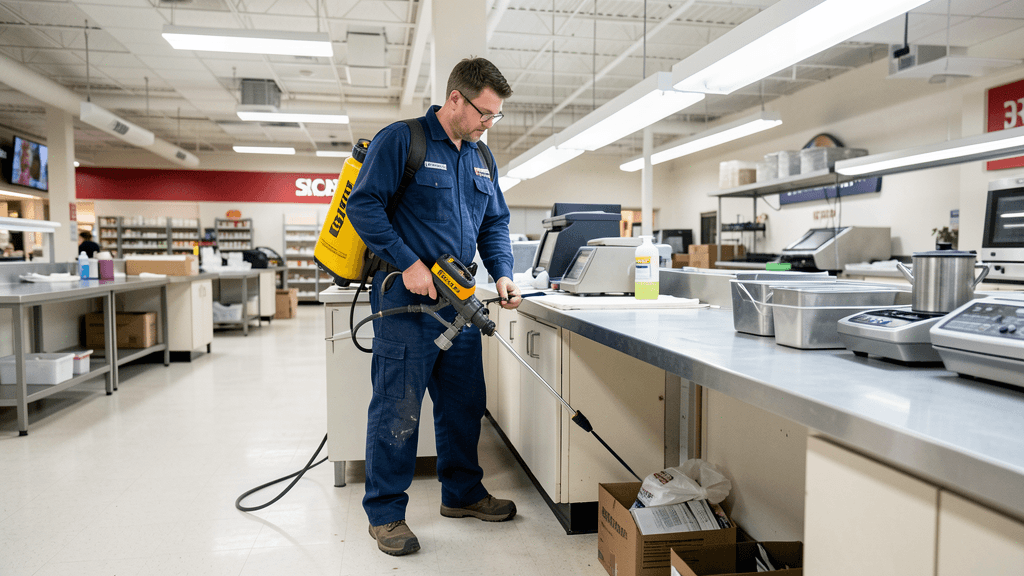
A solo pest control operator in Tampa runs 31 residential accounts in a typical week. He prices them by house size and pest: $120 initial on a 1,800-square-foot home, then $45 a quarter on the recurring barrier. The math is clean. Then a property manager calls about a 14,000-square-foot strip-mall food court with three restaurants, a hair salon, and a storage room. The manager wants one number, monthly, that covers everything. He quotes $185 a month using his residential instinct, gets the account, and by month four he is driving 22 miles round-trip at 5:30 AM, writing a food-safety log for each restaurant, and netting less per hour than on a house. This is the trap that pest control commercial vs residential pricing sets for operators moving from residential into commercial work.
The difference is not square footage. A 14,000-square-foot food court and a 14,000-square-foot warehouse carry different pest pressure, different documentation demands, and different liability. The residential price model breaks the moment a property manager asks for a single monthly number, because that number has to absorb three things your residential quarterly never had to: after-hours service windows, written food-safety and integrated pest management records, and the callbacks that a restaurant inspector can trigger overnight. Price the account on residential instinct and the contract quietly loses money every month.
Here is a framework that fixes it: four contract structures, a real cost stack, and the compliance hours most operators forget to bill. Use it to quote the food court, the warehouse, or the apartment building so the number covers what the work actually costs you.
The Four Contract Structures That Protect Your Margin
Residential work is almost always priced by the visit or the season. Commercial work holds up better when you pick a contract structure that matches how the account generates risk and revenue. Each structure below handles a different kind of account, and choosing the wrong one is the most common reason a commercial account pays less than your residential route.
Per-Square-Foot Retainer
Best for large, low-pressure footprints: warehouses, distribution centers, storage buildings. You quote a per-square-foot rate on an annualized retainer, billed monthly. A common band in published commercial pricing runs roughly $0.05 to $0.12 per square foot per month depending on region and pest pressure, which puts a 20,000-square-foot warehouse around $1,000 to $2,400 a month at the top of the market. The structure protects margin because the number scales with the building, not with your gut on the first walk-through. Build in a written escalation clause for material cost increases so a chemical price spike does not eat the year.
Per-Device Monitoring
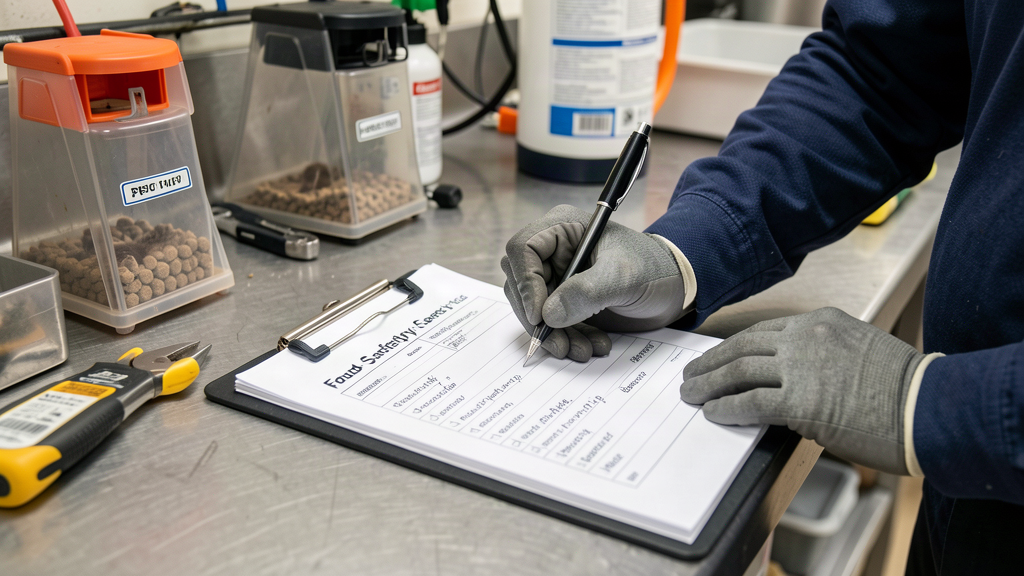
Best for food service and accounts regulated by auditors. You charge per monitoring device installed and serviced: each exterior rodent bait station, each interior insect monitor, each fly light. A strip-mall food court with 18 devices at a per-device monthly rate of $9 to $14 lands around $160 to $250 a month on devices alone, plus an initial setup fee. The advantage is transparency: the property manager sees exactly what they are paying for, and an inspector audit maps cleanly to your invoice. Add a clause that new devices added mid-contract are billed from install date, not from the next cycle.
Flat Monthly Retainer
Best for offices, small retail, and accounts with predictable low pressure. One monthly fee covers scheduled visits, covered pests, and callbacks up to a cap. Set the cap. A flat $150 a month with unlimited callbacks sounds simple until a tenant brings bedbugs in a suitcase and you are back four times in one month at no charge. Write a callback threshold into the contract: unlimited callbacks for covered pests, but a defined visit cap or a separate per-visit fee for pests outside the covered list. The flat retainer is clean for the customer and safe for you only with that cap written down.
Per-Visit With Compliance Documentation
Best for accounts that want flexibility but still need documented service: apartment buildings, property-managed portfolios, one-off commercial accounts. You bill per scheduled visit, but the invoice line includes the documentation time: the service log, the product application record, the trending report. A reasonable commercial visit in published market data lands around $150 to $250 per visit, with large-warehouse anchor accounts closer to $250 per visit. The structure works when you treat the paperwork as billable labor, not overhead. Most operators hand the documentation away for free and wonder why the account pays $38 an hour all-in.
What Commercial Actually Costs You Per Hour
Before you set a price, know what an hour of your time costs. The Bureau of Labor Statistics reports a median annual wage of $45,250 for pest control workers as of May 2025, which is roughly $21.75 an hour in median wages. That is the wage, not your cost. Your loaded cost per field hour includes wages plus workers comp, vehicle, chemical, insurance, and the overhead that keeps the business open. For a solo or two-person shop, a realistic loaded field-hour cost lands between $55 and $75 once you account for the truck, the insurance, and the time you are not billing. If your commercial visit nets less than $55 an hour after drive time, the account is paying you less than your residential route.
Run the math on the food court. Two scheduled visits a month at 5:30 AM, 22 miles round-trip, plus a food-safety log for each of three restaurants. Call it 90 minutes of drive and service per visit, plus 30 minutes of documentation. Three hours of loaded time a month at $65 an hour is $195 of cost before a drop of chemical. If you quoted $185 a month, the account costs you money every month it renews. The four contract structures above exist so you quote $185 because the math says $185, not because it sounds close to your residential quarterly.
After-Hours, Food-Safety, and ESG Compliance Time You Keep Forgetting to Bill
Three cost categories quietly drain commercial accounts, and residential pricing has none of them. They are the reason a commercial number that looks fine on the quote goes negative by month six.
After-Hours Surcharge Math
Restaurants and retail often cannot be serviced during open hours. A 5:30 AM or 11 PM service window means overtime, disrupted route density, and a truck running outside your efficient loop. Add an after-hours surcharge rather than absorbing it: a flat $35 to $60 per after-hours visit, or a 25 to 40 percent uplift on the visit rate, written into the contract. Without it, the early-morning food court visit is paid at the same rate as a daytime house call that sits on a dense residential route.
Food-Safety and IPM Documentation
A food-service account is not just a service visit; it is a paper trail. Integrated Pest Management records, product application logs, device maps, and trending reports are what an auditor or health inspector checks. That documentation is labor, often 20 to 40 minutes per visit on a multi-tenant food court, and most operators write it for free because it does not feel like billable field time. It is. Put documentation time in the contract as an included line on a per-visit structure or folded into the per-device rate, and the account stops subsidizing the paperwork. The Environmental Protection Agency requires commercial applicators to keep application records, and many states mandate retention periods; treat that labor as part of the price, not a favor.
When the Commercial Account Is Not Worth It
Not every commercial account deserves your lowest rate. Three signals tell you to walk or to raise the price sharply. First, the property manager demands one flat number but will not define the callback scope, which means unlimited free revisits. Second, the account requires certification or equipment you do not hold, such as food-processing facility credentials or restricted-use product licensing, and the ramp cost is not recoverable in year one. Third, the route is isolated: a single commercial stop 30 miles from anything else on your route costs you the density that makes residential profitable.
The honest answer is sometimes that the account belongs to a larger regional operator with the certifications and the route density to absorb it. Saying no to a $185-a-month account that costs you $195 to service is not lost revenue; it is margin you kept. Run the cost stack first, quote the structure that fits, and if the number that makes the account profitable is twice what the manager expected, that is information, not a failed sale.
Setting Your First Commercial Rate and Revisiting It in Six Months
For your first commercial account, pick the structure that matches the building type and quote from the cost stack up, not from a residential number down. A warehouse gets a per-square-foot retainer with an escalation clause. A food court gets per-device monitoring plus an after-hours surcharge and billed documentation. An apartment building gets per-visit with compliance documentation written into the invoice. Price the first account to learn from it: track your actual hours, drive miles, and documentation time for six months, then revisit the rate at renewal.
The six-month revisit is where commercial accounts are won or lost. If your tracked cost is running 15 percent above the quoted rate, raise the rate at renewal with the data in hand, or convert the structure: a flat retainer that absorbed too many callbacks becomes per-visit. A per-square-foot retainer that ignored an after-hours window gets the surcharge added. The operators who make commercial work pay are the ones who quote from the cost stack, bill the compliance time, and adjust at the six-month mark instead of renewing a losing number out of habit.
Frequently Asked Questions
How do I price commercial pest control per square foot?+
Use a per-square-foot monthly retainer for large low-pressure footprints like warehouses. Published commercial bands run roughly $0.05 to $0.12 per square foot per month by region and pest pressure, with an escalation clause for material cost increases so a chemical price spike does not eat the year.
What is the difference between commercial and residential pest control pricing?+
The difference is not square footage. Commercial pricing has to absorb after-hours service windows, written food-safety and integrated pest management records, and inspector-triggered callbacks that residential quarterly work never carries. Price on residential instinct and the commercial contract quietly loses money monthly.
How much should I charge per pest control visit on a commercial account?+
A reasonable commercial visit lands around $150 to $250 per visit in published market data, with large-warehouse anchor accounts closer to $250. Bill the documentation time as part of the visit rather than giving the service log and application record away for free.
Should I add an after-hours surcharge for restaurant pest control?+
Yes. Service before opening or after close means overtime and disrupted route density. Add a flat $35 to $60 per after-hours visit or a 25 to 40 percent uplift on the visit rate, written into the contract, so the early-morning food court visit is not paid at the same rate as a daytime house call.
What contract structure works best for a food-service account?+
Per-device monitoring fits food service because auditor inspections map cleanly to your invoice. Charge per rodent station, insect monitor, and fly light, with a clause that devices added mid-contract bill from install date, plus a separate after-hours surcharge and billed documentation time.
When is a commercial pest control account not worth taking?+
Walk or raise the price sharply when the property manager will not define callback scope, when the account needs certifications you do not hold, or when the stop is isolated from your route density. A $185 account that costs $195 to service is margin lost, not revenue gained.
How often should I revisit a commercial pest control rate?+
Track actual hours, drive miles, and documentation time for six months, then revisit the rate at renewal. If tracked cost runs 15 percent above the quoted rate, raise the rate with the data or convert the structure, such as turning a flat retainer that absorbed too many callbacks into per-visit.
Do I have to keep pest control application records for commercial accounts?+
Yes. The Environmental Protection Agency requires commercial applicators to keep application records, and many states mandate retention periods. Treat the 20 to 40 minutes of documentation per visit as billable labor folded into the per-visit or per-device price, not free overhead.
Ready to stop missing calls?
Try Heyfield free for 7 days. Your AI receptionist answers every call, collects customer details, and texts you the summary.
Keep Reading
Locksmiths: Your Most Valuable Calls Come After Midnight
Locksmiths lose $3,000+ every month to missed after-hours calls. Here's what that's costing you — and the simple fix.
ReadDeck Builders: Stop Losing $90K Every Spring
Deck builders miss 2-3 quote calls a week during peak season. Here's the real revenue cost—and how to fix it without hiring a receptionist.
Read