Pool Liner Replacement Quote: 6 Measurements That End Guessing

Meric Karpat · Founder & CEO
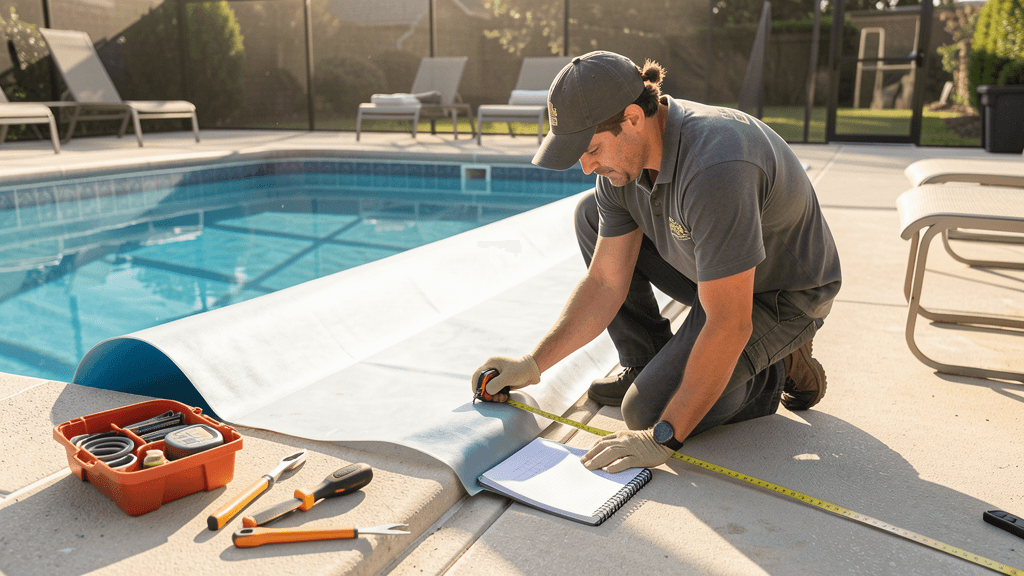
A pool service tech in central Florida gets a text on a Monday morning with four photos of a wrinkled, fading vinyl liner and the question every pool owner asks first: what does this cost? The honest answer is that nobody can price it from four photos. The tech has quoted liner replacements by pool length and a 20 mil material guess for three seasons, and that habit has cost him two callbacks for hidden wall damage and one job where the pattern repeat burned $380 of extra material he ate.
A pool liner replacement quote only becomes accurate after six measurements the homeowner cannot take and the calculator websites will never ask for. Every consumer cost page on the first page of search results spits a $3,000 to $6,000 range and moves on; none of them tell the operator how to build that number without losing money on a shallow-end curve or a stair gasket the supplier upcharges. This is the operator-side framework.
Why a pool liner replacement quote fails when you skip the wall measurement
The wall height is the measurement that sinks more quotes than any other. A standard 16x32 rectangular inground pool reads as 16x32 on every calculator, but the wall height varies from 42 inches to 54 inches depending on the dig and the manufacturer, and the liner is cut to wall height plus the floor allowance. Quote a 42-inch wall as a 48-inch wall and the liner comes up 6 inches short on the wall, every time.
Measure the wall from the bottom of the liner track at the top of the wall down to where the wall meets the floor break. Do not measure from the deck. Do not trust the pool builder's spec sheet from 14 years ago, because backfill settles and the floor break shifts. A fiberglass-step insert, a steel wall, and a polymer wall each sit differently in the track, and the gasket detail at the step changes your floor cut by as much as 4 inches. Write the wall height to the half-inch on the measurement sheet before you leave the backyard.
The six measurements that turn a $2K guess into a $4K accurate quote
Carry a 100-foot fiberglass tape, a notepad with a pool-shape template, and a depth rod. The six numbers below are the minimum a supplier needs to cut a custom liner that fits on the first drop.
1. Wall height to the half-inch. The single most expensive number to get wrong. A 6-inch error on a 16x32 pool wastes roughly 32 linear feet of material, which at a $12-per-foot wholesale cut rate is $384 gone before you install a screw.
2. Floor slope and shallow-end depth. Measure the shallow-end floor depth from the wall track to the floor at the shallowest point, then the depth at the break line where the floor drops. The slope ratio changes the floor pattern cut. A hopper-bottom pool, a sport-bottom pool, and a flat-bottom pool each quote differently even at identical surface dimensions.
3. Bottom track or floor pad condition. Inspect the floor under the existing liner for pitting, vermiculite loss, and metal wall rust at the base. The Pool and Hot Tub Alliance publishes vinyl liner installation tolerances that reference a clean, smooth substrate; a floor that needs a quarter-inch vermiculite resurfacing adds $1.20 to $1.80 per square foot of pool floor before the new liner goes in.
4. Step and swimout gasket detail. Count the steps, note whether they are steel, plastic, or fiberglass, and photograph the existing gasket. A step gasket kit runs $45 to $120 wholesale and a corner-step gasket costs more than a straight-step gasket. Skipping this detail on the quote is how you eat the kit cost yourself.
5. Liner pattern repeat and wall roll direction. Tile-border patterns and floor tile patterns have a repeat dimension. A pattern that must line up across the floor and up the wall forces extra material. Ask the supplier for the pattern repeat sheet before you order; a 6-inch repeat on a 16x32 floor can add a full extra linear foot of wall material.
6. Water and disposal scope. Decide on the quote whether you pump down, fully drain, or work with the water in. A full drain and a 20,000-gallon pump-out adds two labor hours and a disposal fee in municipalities that do not allow pool water into the storm drain. The EPA's guidance on pool discharge is that dechlorinated pool water may go to the sanitary sewer in most jurisdictions but not the storm system; you have to know your local rule or you quote the drain cheap and pay the dump fee.
Material, labor, and supplier markup: build the number bottom-up
Once the six measurements are on the sheet, build the quote in three stacks rather than pulling a number from a calculator. The material stack is the liner itself, ordered to the custom cut. A 20 mil standard inground vinyl liner runs roughly $1,400 to $2,200 wholesale for a 16x32 pool, and a 28 mil upgrade adds 30 to 40 percent to the material line. Add the gasket kit, the track adhesive, and the vacuum pump consumables as line items, not as overhead.
The labor stack is two people for one day on a straightforward rectangular pool and two people for a day and a half on a freeform or L-shaped pool. The Bureau of Labor Statistics reports a national median of about $24 per hour for pool service technicians, so a two-person crew at a $45 loaded hourly rate for 10 hours is $450 in direct labor; price it at $90 to $120 per hour to the customer to cover truck time, the second trip for the install, and the callback risk.
The supplier markup is where most operators leave money on the table. A standard practice is to mark the custom-cut liner 25 to 35 percent over wholesale, and to mark gaskets and consumables at 50 percent because the sourcing time is invisible to the customer. A 16x32 job at $1,800 wholesale material, $450 labor, $200 in gaskets and consumables, and a 30 percent material markup lands at roughly $3,400 before tax. That is the real number a consumer calculator cannot give you.
Hidden damage factors that turn a clean quote into a loss
Three hidden conditions blow the quote between the measure and the install, and each one needs a written exclusion on the estimate so you can re-quote without an argument.
Wall corrosion under the track
Steel walls corrode at the waterline and at the base where moisture sits. If the track is pitted more than an eighth inch deep, the wall panel may need a patch plate or a panel replacement, which is a separate line item. Flag it on the estimate as "wall condition to be confirmed at drain" and quote the liner on the assumption the wall is sound; if it is not, issue a change order before you set the liner.
Floor pitting and vermiculite resurfacing
A pitted vermiculite floor does not hold the new liner flat and shortens liner life. Resurfacing a 16x32 floor runs $600 to $1,000 in material and labor, and it is never included in a calculator quote. Build the resurface as an allowance line so the customer sees the number before you start.
Plumbing and fitting replacements
The return fittings, the main drain cover, and the skimmer faceplate all come out during a liner change, and the gaskets behind them are single-use. A cracked skimmer faceplate is a $90 part and 45 minutes of labor that the calculator pages never list. Quote the fitting gaskets as included and the faceplates as "inspect and replace as needed" with a unit price, so the customer has already agreed to the number before you find the crack.
How to present the pool liner replacement quote so the customer says yes
Present the quote in three tiers on a single page: a standard 20 mil liner at the base number, a 28 mil upgrade at the premium, and a 20 mil with the floor resurface allowance as the protected-option middle. The middle tier exists to anchor the customer to the higher number and to give them a defensible reason to choose the premium. The customer who picks the middle is the one who would have picked the low bid from a competitor if you had offered only one number.
State the warranty in material terms. A 20 mil liner carries a 15-year prorated manufacturer warranty that is worth almost nothing after year five, and the labor warranty is yours to define. Offer a two-year labor warranty on the install and a one-year warranty against the hidden damage exclusions, and put both in writing on the estimate. A written labor warranty is the cheapest closing tool in the pool service trade, and it is the one thing the calculator websites cannot offer.
Scheduling the job without a cash-flow gap
A liner replacement has a cash-flow trap that catches operators every spring. The custom-cut liner takes 10 to 14 days from the supplier, and you cannot schedule the install until the liner arrives. Collect 50 percent at the measure visit to cover the material order, and collect the balance on the day the liner drops in the track. A tech who orders the liner on a handshake and shows up to install two weeks later to a customer who has spent the budget elsewhere is the standard story in this trade.
Stack three or four liner replacements in a two-week window in late spring so the supplier runs your cuts together and your crew stays in liner mode. The labor efficiency on the second liner job in a week is 20 to 30 percent higher than the first because the crew has the track tools out and the vacuum pump staged. A pool service operator in the Sun Belt who books four liners in May instead of one a month from May to August banks the margin four weeks earlier and cuts the windshield time in half.
What to revisit every six months on your liner pricing
Review the wholesale liner price sheet every six months, because vinyl resin pricing moves with the petrochemical index and a 20 mil sheet that cost $1,400 in January can cost $1,650 by July. Re-quote the base number on the estimate template twice a year and do not carry a 2024 material cost into a 2026 quote. Recheck the local storm-drain and sanitary-sewer discharge rule once a year with the municipality, because the disposal fee is a fixed cost you either pass through or eat.
Track the callback rate on liner jobs by month. A callback rate above 8 percent on liner installs means the wall measurement or the floor inspection step is being rushed, not that the customer is difficult. Re-train the measurement step before you raise the price, because raising the price on a job that comes back does not fix the leak. The six measurements are the quote, and the quote is only as good as the half-inch on the wall height.
This guide is published by Heyfield, which makes an AI phone receptionist for home-service trade businesses. If you ever can't take the call, that's what we do. See pricing. The rest of our trade-business resources are free at heyfield.app/blog.
Frequently Asked Questions
How often should I recalibrate my pool liner wholesale pricing?+
Review the wholesale liner price sheet every six months. Vinyl resin pricing tracks the petrochemical index, so a 20 mil sheet can move $250 between January and July. Re-quote the base number on your estimate template twice a year and never carry a prior-year material cost into a current-year quote.
20 mil vs 28 mil liner for a quote: which should I default to?+
Default the base quote to a 20 mil standard inground liner and offer the 28 mil upgrade as the premium tier. A 28 mil liner adds 30 to 40 percent to the material line and suits pools with heavy use or rough-floor conditions. Present both on a three-tier estimate so the customer anchors to the higher number.
What licenses do I need to replace pool liners in Florida?+
Florida requires a residential pool/spa contractor license (RP) or a swimming pool/spa servicing contractor license (SP) for liner replacements that go beyond cosmetic service. Check your local county, because some municipalities add a separate drain-and-discharge permit. Always confirm the local storm-drain and sanitary-sewer discharge rule before you quote the pump-out.
How do I quote a liner on a freeform or L-shaped pool?+
Measure the same six numbers but budget labor for two people for a day and a half instead of one day. Freeform and L-shaped pools add curve measurements that change the floor pattern cut, and the pattern repeat forces extra wall material. Add a 15 percent complexity factor to the material line and quote the labor at the higher day-and-a-half rate.
What is the standard markup on a custom-cut pool liner?+
Mark the custom-cut liner 25 to 35 percent over wholesale, and mark gaskets and consumables at 50 percent because the sourcing time is invisible to the customer. A 16x32 job at $1,800 wholesale material with a 30 percent markup lands around $3,400 before tax once labor and gaskets are stacked in.
Should I collect a deposit before ordering a custom liner?+
Yes. Collect 50 percent at the measure visit to cover the material order, because the custom-cut liner takes 10 to 14 days from the supplier and cannot be returned. Collect the balance on the day the liner drops in the track. A handshake order on a custom cut is the most common way operators lose the job to a customer who spent the budget elsewhere.
What hidden damage should I exclude on a liner replacement estimate?+
Exclude wall corrosion under the track, floor pitting that needs vermiculite resurfacing, and cracked skimmer or return faceplates. Flag each as an allowance line or a 'confirm at drain' item with a unit price, then issue a change order before you set the liner if the damage is found.
Does Heyfield work with pool service businesses?+
Heyfield makes an AI phone receptionist used by home-service trades including pool service. If you are on a job and cannot take the call, it captures the lead source and books the estimate. It is one option alongside a human answering service or a dedicated CSR.
Ready to stop missing calls?
Try Heyfield free for 7 days. Your AI receptionist answers every call, collects customer details, and texts you the summary.
Keep Reading
Locksmiths: Your Most Valuable Calls Come After Midnight
Locksmiths lose $3,000+ every month to missed after-hours calls. Here's what that's costing you — and the simple fix.
ReadDeck Builders: Stop Losing $90K Every Spring
Deck builders miss 2-3 quote calls a week during peak season. Here's the real revenue cost—and how to fix it without hiring a receptionist.
Read