Security Companies: Stop Losing $124K a Year to Missed Calls

Meric Karpat · Founder & CEO
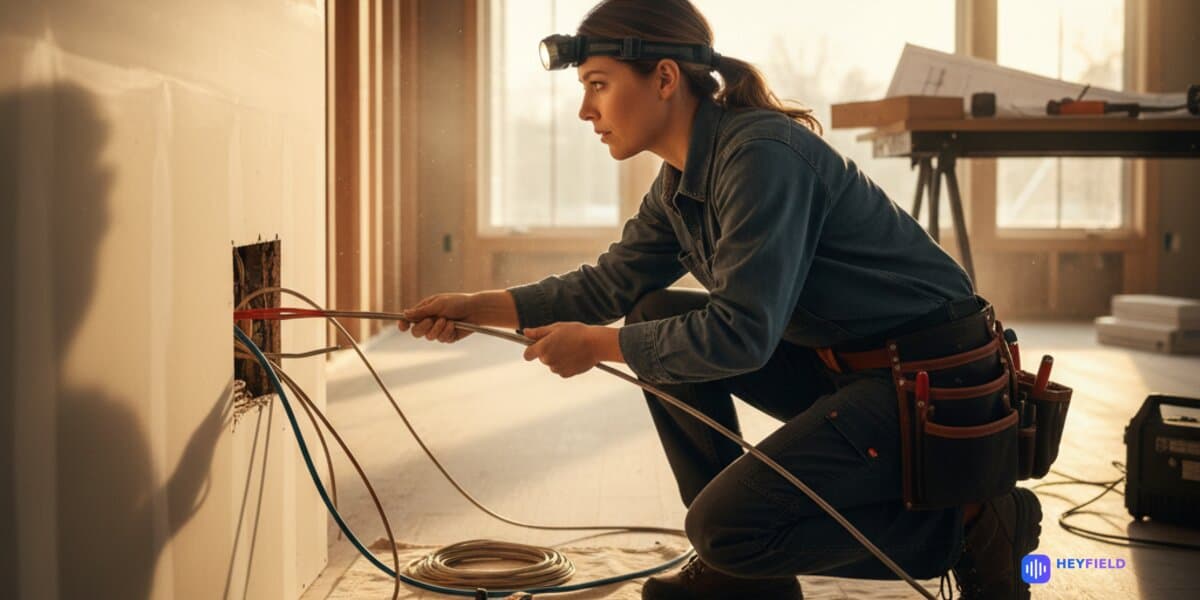
You're in a crawl space, fishing wire under a homeowner's floor for a motion sensor. Your phone rings. Both hands are occupied. You're in a tight spot with no room to move. Getting out takes five minutes.
By the time you call back, the person on the other end has already booked your competitor.
That's how security companies lose jobs — not to cheaper prices or better reviews. To whoever picks up the phone first.
Why Missed Calls Cost Security Companies More Than Any Other Trade
Security system customers don't wait. They're calling because something scared them — a break-in down the street, a new baby, an upcoming vacation. That fear has a short half-life.
When they don't get an answer, they don't leave a voicemail and patiently wait. They call the next company on the list.
Here's what that looks like for a typical residential security company:
- Missed calls per week: 3–4
- Average installation job: $800–$1,500
- Close rate on answered calls: ~30%
- Weekly install revenue lost: $720–$1,800
- Annual install revenue lost: $37,000–$93,000
And that number only counts the install. It completely ignores monitoring contracts — which is where the real money lives.
How Much Does a Missed Call Actually Cost a Security Installer?
Most security installers think about missed calls as lost install jobs. Wrong frame.
Think about what a security customer is actually worth over their lifetime with your company:
- Installation: $1,000–$1,500 (cameras, panel, labor)
- Monthly monitoring: $35–$50/mo
- Average monitoring contract length: 3 years
- Monitoring revenue per customer: $1,260–$1,800
- Total customer lifetime value: $2,260–$3,300
Now run the math on missed calls.
If you miss 3 calls per week and close 30% of the ones you answer:
3 missed calls/week × 30% close rate × $2,640 avg LTV × 52 weeks = $123,552/year in lost lifetime revenue.
Even at half that rate — 1 missed close per month — you're leaving $31,680 per year on the table. Every year. Because of unanswered calls.
Why Security Installers Can't Just Answer Their Phones
Here's the part that makes this hard: your job physically prevents you from answering.
You're threading conduit through walls. You're programming a 32-zone alarm panel. You're pulling Category 6 through a finished ceiling. You're on a 20-foot ladder mounting a PTZ camera at a commercial property.
None of those tasks have a safe pause button. You can't put down a wire fish tape mid-pull. You can't step away from a live panel mid-programming. And if you're on a commercial install with a general contractor waiting on you, stopping to take a sales call is a fast way to lose that contract too.
Even when you're not mid-install, you're probably driving. Or at the supply house. Or troubleshooting a customer's false-alarm issue remotely.
The phone rings. You can't answer. It's not a discipline problem — it's the job.
The Hiring Math Doesn't Work Either
The obvious solution — hire a receptionist — breaks down fast when you run the numbers.
- Entry-level admin/receptionist: $38,000–$52,000/year
- Benefits, payroll taxes, training: add another 20–30%
- Total cost: $46,000–$67,000/year
- They still won't answer at 9pm when a homeowner's alarm is beeping
For a small security company doing 8–15 installs a month, that hire doesn't pencil. You'd need to convert 20–30 extra customers per year just to break even on the salary — before accounting for managing another employee.
So most small security installers do nothing. The calls go to voicemail. Most voicemails don't get returned the same day. Most same-day leads book with whoever called back fastest.
AI Answering vs Traditional Call Centers for Security Companies
You might be looking at traditional live-agent answering services — the kind that charge $1.50–$2.50 per minute and route your calls to a random operator reading from a script. Those services have been around for decades. They work, sort of. But they have three problems that hit security companies especially hard.
First, they don't know your trade. A generic call center operator doesn't know the difference between a PTZ camera and a doorbell camera. They can't ask whether the customer wants hardwired or wireless. They take a message and hope you call back. Your lead goes cold.
Second, they cost by the minute. A 7-minute intake call at $2/minute is $14. If you get 30 calls a month, that's $420 — before you've closed a single job. And that's on top of the base monthly fee most services charge.
Third, they can't text you a structured summary. You get a vague message: "Someone called about cameras." No address, no budget, no timeline. You still have to call back and start from scratch.
An AI answering service trades per-minute billing for a flat monthly fee. It's trained on security system terminology — camera types, panel zones, access control, monitoring protocols. And it sends you a structured text summary with the caller's name, address, what they want, budget range, and availability — within seconds of the call ending. You call back already knowing what the job is.
What Happens When You Answer Every Call
The solution isn't hiring. It's building a system that handles first contact automatically — one that answers every call within two rings, speaks naturally with the customer, collects their information, and texts you a summary so you can follow up when you're out of the crawl space.
Here's what the call flow looks like in practice:
- Customer calls your business at 7:42pm — you're finishing up paperwork
- The AI answers in 2 rings with your company name and a professional greeting
- Customer explains they want cameras after a neighbor's break-in
- The AI collects name, address, what they want, budget range, and availability
- You get a text: New lead — Mike, 3-bed in Frisco. Wants 4 outdoor cams + doorbell. Budget around $1,200. Free Sat morning.
- You call Mike back Saturday. He's expecting your call. You close the job.
Mike never felt ignored. You didn't interrupt an install to take a sales call. The lead didn't go cold overnight.
After-Hours Is Where Security Companies Win — or Lose
Here's something unique about security customers: their urgency spikes at night.
A homeowner hears about a neighborhood break-in at 9pm. They open Google and search for home security installation nearby. They call the first company with decent reviews. If you don't answer, they move to the next one. Whoever picks up gets the job.
Your competitors with after-hours coverage are systematically capturing the highest-urgency leads — customers who sign monitoring contracts without negotiating price, because their primary motivation is safety, not savings.
An AI receptionist that handles calls 24/7 costs $49/month. One after-hours install with monitoring is worth $2,600+. The first after-hours call you capture pays for 53 months of the service.
The First-Responder Advantage in Home Security
Home security is a comparison-shopping category. Customers call 2–3 companies. They hire whoever responds fastest — not the cheapest, not the most established. The fastest.
Studies on home service leads show that responding within 5 minutes increases close rate by 300–400% compared to calling back after an hour. For security leads — where fear is the purchase driver — that gap is even wider.
When the system answers immediately and captures full lead details, you can call back within minutes with all the context you need. Your competitors are still playing phone tag.
The Numbers One More Time
- Heyfield cost: $49/month ($588/year)
- One extra closed install from an after-hours lead: $1,000–$1,500
- Add monitoring contract: $1,440 over 3 years
- Net gain from one customer: $1,852–$2,352
One extra customer per month — just one — generates $22,000–$28,000 in lifetime revenue. That's a 37× return on the cost of the service.
You're already doing the hard work. You're climbing attics, pulling wire, programming panels. Stop letting unanswered calls give that work to your competition.
Stop Losing Security Contracts to Voicemail
Heyfield answers your calls 24/7, collects lead details, and texts you immediately — so you can finish the job you're on and follow up when you're ready. No contracts. Cancel anytime.
See how it works at heyfield.app/pricing. The first call it captures probably pays for itself.
Frequently Asked Questions
How much does a security company answering service cost?+
Heyfield starts at $49 per month with no contracts or setup fees. For a security installer where one customer is worth $2,200–$3,300 including monitoring contracts, a single captured after-hours lead pays for over four years of service. Compare that to hiring a receptionist at $46,000–$67,000 annually who still goes home at 5 PM.
Can I keep my existing business phone number?+
Yes. You forward your current business number to Heyfield when you're on an install or unavailable, and take calls normally when you're free. Your customers always dial the same number. Most security companies set conditional forwarding so it only routes to Heyfield after two rings or during specific hours.
What if the AI mishears a customer asking about 'PTZ cameras' or '32-zone panels'?+
Heyfield is trained on security system terminology including camera types, panel zones, access control, and monitoring protocols. It repeats technical details back for confirmation and sends you a complete text summary. You review everything before calling back, so a misheard spec never reaches your quote or install plan without verification.
Does it answer calls after hours and on weekends?+
Yes, and that's where security companies win or lose the most. Homeowners hear about a neighborhood break-in at 9 PM and call immediately. Heyfield answers at any hour, captures their fear-driven urgency, and texts you instantly. Your competitors without 24/7 coverage send those high-value leads straight to voicemail.
Can it handle emergency calls from existing customers whose alarms are going off?+
Heyfield can triage existing customer calls by asking if it's a new install inquiry or a service issue with an active system. For alarm emergencies, it captures the customer's name, address, and nature of the problem, then escalates based on your instructions—whether that's texting you immediately, routing to your monitoring partner, or flagging it as urgent in your summary so you call back within minutes.
Ready to stop missing calls?
Try Heyfield free for 7 days. Your AI receptionist answers every call, collects customer details, and texts you the summary.
Keep Reading
Why Welding Shops Can't Risk Answering Their Own Phones
Sparks fly, face shields go down, and phone calls go to voicemail. How safety-first welding shops lose business to missed calls.
ReadPool Service Owners: Every Missed Call Costs You $900
Pool season is short and winterization is now. One missed call can cost you a full-season client worth $900+. Here's how solo pool service pros stop losing jobs to voicemail.
Read