Service Vehicle Truck vs Van vs SUV: A 6-Test Framework

Meric Karpat · Founder & CEO

A solo electrician in Denver spent $52,000 on a loaded Ford Transit Connect in 2024. Eighteen months later he traded it for a used F-150 with a service cap and put $6,000 back in his pocket. The van was too small for the conduit runs and breaker panels he was hauling, and the low roof meant he could not stand inside during winter calls. He lost $14,000 in depreciation on a vehicle that did not fit his work.
The service vehicle truck vs van vs suv decision is the single most expensive equipment choice most trade businesses make. It locks in $40,000 to $70,000 in costs over five years and shapes how customers see your business before you knock on the door. Yet most owners make the call based on gut feel or what the last guy at the supply house recommended.
Here is a framework for making that decision with real numbers instead of parking-lot opinions. It covers six tests, trade-specific guidance, and total cost of ownership math so you can decide once and stop second-guessing.
Service vehicle truck vs van vs suv: which fits your trade?
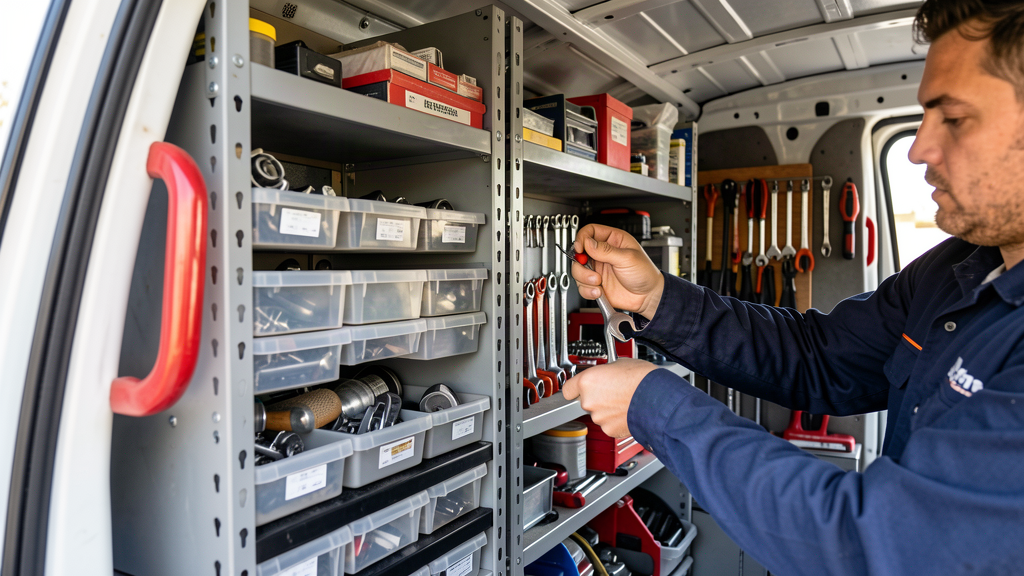
Every top result for this question frames it as a binary: truck or van. That is wrong. A significant number of solo operators and two-tech shops run SUVs, and for certain trades, an SUV is not a compromise. It is the correct answer. The question is not which vehicle type is best. It is which one passes the tests your trade demands.
The three options are not interchangeable. A pickup with a service body hauls loose material and tall equipment but leaves everything exposed to weather unless you add a cap. A cargo van encloses everything and gives you a mobile workshop but limits payload height and makes a statement about professionalism that some trades benefit from and others do not. An SUV seats crew comfortably, handles winter roads well, and works for trades with minimal cargo, but it sacrifices volume and payload for comfort and image.
The 6-test framework: cargo, climate, image, mileage, parking, and growth
Run each test before you sign a purchase order or lease. Score each vehicle 1-3 per test. The one with the highest total wins. If two tie, the tiebreaker is always total cost of ownership from the next section.
Test 1: Cargo volume and shape. List your five largest pieces of equipment. Measure their longest dimension. A 10-foot length of PVC pipe does not fit in a standard cargo van. A 32-inch breaker panel door does not lay flat in an SUV. A ladder rack on a pickup handles pipe and conduit that no enclosed vehicle can swallow. Score the vehicle that carries your top five items without creative stacking.
Test 2: Climate and weather exposure. If you work in a region where temperatures drop below 20 degrees Fahrenheit for three months or more, enclosed space matters. Vans let you assemble parts standing up. Trucks with caps do not. SUVs give you a warm cabin but limited cargo access. In Phoenix or Miami, an open truck bed with a tonneau cover may be fine year-round. According to NOAA climate data, 24 states experience average January lows below 20 degrees, meaning enclosed cargo is a structural need, not a luxury, for nearly half the country.
Test 3: Image and customer perception. A plumber pulling up in a wrapped Transit van looks like a business. A plumber pulling up in a personal SUV with a magnetic sign looks like a guy with a side job. Fair or not, customers form an opinion in the three seconds between when you park and when you knock. Vans win image for residential service calls. Trucks win for roofing, landscaping, and tree work where customers expect a bed. SUVs work when the trade itself signals competence, like a home inspector or a low-voltage tech.
Test 4: Mileage and fuel cost. A Ford Transit 250 cargo van gets 15-18 mpg combined. A Ford F-150 with the 2.7L EcoBoost gets 20-22 mpg. A Toyota 4Runner gets 17-19 mpg but runs on regular gas and holds resale better. Over 20,000 miles per year, the difference between 15 and 22 mpg is roughly 4,200 gallons versus 3,030 gallons. At $3.50 per gallon (the AAA national average as of August 2026), that is $4,060 per year, or $20,300 over five years.
Test 5: Parking and jobsite access. Vans are 79-87 inches wide and 100-125 inches tall. They do not fit in residential garages, some drive-throughs, or low-clearance parking decks. Trucks are 80-96 inches wide with mirrors and fit most standard spaces. SUVs park anywhere a personal vehicle does. If you do 80% of your work in dense urban neighborhoods or downtown commercial districts, a van may cost you 10 minutes per jobsite finding parking. Over a year, that is 80+ hours of lost productivity.
Test 6: Growth headroom. If you plan to add a second tech within 18 months, the vehicle needs to carry two people and their gear. A standard cargo van seats two. An extended van seats three. A crew cab truck seats five to six but sacrifices bed length. An SUV seats five to seven but has minimal cargo behind the second row. Buy for the crew you will have in two years, not the one you have today, but do not overspend on headroom you may never use.
What each vehicle actually costs to run over 5 years
Total cost of ownership includes purchase price, depreciation, fuel, insurance, maintenance, and upfit. These ranges reflect 2026 market data from Kelley Blue Book and Edmunds true cost to own calculations, adjusted for trade-business use patterns.
Truck (pickup with service body or cap)
A new midsize pickup (Ford Ranger, Toyota Tacoma) with a service cap runs $38,000 to $46,000. A full-size pickup (F-150, Silverado 1500) with a service body runs $48,000 to $62,000. Over five years at 20,000 miles per year: depreciation averages 42%, fuel runs $15,000 to $18,000, insurance $6,500 to $9,000, maintenance $4,000 to $7,000, and upfit $3,000 to $8,000. Five-year total: $55,000 to $78,000. Trucks hold resale value better than vans, recovering 50-58% of original purchase price at year five versus 38-45% for cargo vans, per KBB residual data.
Van (Transit, Sprinter, ProMaster)
A new Ford Transit 250 medium-roof cargo van runs $44,000 to $52,000. A Mercedes Sprinter runs $52,000 to $68,000. A Ram ProMaster runs $42,000 to $50,000. Over five years at 20,000 miles per year: depreciation is steeper at 55-62%, fuel runs $18,000 to $21,000 (lower mpg), insurance $7,000 to $10,000, maintenance $5,000 to $9,000 (Sprinter diesel maintenance is notably higher), and upfit $4,000 to $10,000 for shelving and partitions. Five-year total: $62,000 to $88,000. Vans cost more to run but the enclosed workspace can save 30-60 minutes per day in assembly time, according to a 2025 benchmark study by Work Truck magazine.
SUV (for solo operators in specific trades)
A new Toyota 4Runner runs $42,000 to $52,000. A Chevy Tahoe runs $54,000 to $66,000. Over five years at 20,000 miles per year: depreciation is moderate at 45-50%, fuel runs $17,000 to $20,000, insurance $6,500 to $8,500, maintenance $3,500 to $6,000, and upfit is minimal at $500 to $2,000 (roof rack, cargo divider). Five-year total: $52,000 to $70,000. SUVs make sense for home inspectors, low-voltage installers, pest control techs with backpack sprayers, and solo handymen doing small repairs. They make no sense for plumbers, roofers, or anyone hauling pipe, lumber, or ladders.
Which trades fit which vehicle: a trade-by-trade breakdown
Plumbing: Van or truck with cap. You haul pipe sections, water heaters, and fittings. A Transit medium-roof lets you stand inside to cut and thread pipe. A truck with a ladder rack handles long PVC runs. SUV fails Test 1.
HVAC: Van. You carry refrigerant recovery units, gauges, coil cleaners, and replacement parts. The van is a rolling workshop where you can stage the next call's parts. Sprinter high-roof is the industry standard for residential HVAC.
Electrical: Van or truck with service body. Conduit comes in 10-foot sticks, so a ladder rack on a truck is often the better choice. If you do mostly residential service (panels, outlets, fixtures), a Transit Connect or Metris is plenty. BLS reports electricians earn a median of $62,150 annually, meaning the vehicle cost as a percentage of revenue is lower than for lower-margin trades. Choose based on cargo shape, not cost pressure.
Roofing: Truck. No discussion. You need a bed for tear-off debris, shingle bundles, and underlayment rolls. A dump insert or trailer completes the setup. Vans do not work for roofing.
Landscaping: Truck with trailer. The truck pulls the trailer, the trailer holds mowers and blowers. A van is wrong. An SUV is wrong unless you do design-only work with a sub crew.
Pest control: SUV or small van. Backpack sprayers, bait stations, and a ladder fit in a 4Runner or Tahoe. The SUV doubles as a personal vehicle, which matters for solo operators. A wrapped SUV looks professional for residential door-to-door work.
Home inspection: SUV. You carry a ladder, moisture meter, gas detector, and a tablet. That fits in any SUV with the seats folded. No tradesperson needs a van or truck for this work, and an SUV signals neutrality rather than a specific trade.
The solo operator's dilemma: one vehicle for work and life
If you are solo, your service vehicle is also your personal vehicle 70% of the time. A cargo van with your company logo on the side is awkward at the grocery store and impossible on a date night. A truck with a service body is loud and rides rough. An SUV is the only option that does not force you to own two vehicles.
The math matters here. If you buy a van for work and a car for life, you are paying two insurance policies, two registrations, two maintenance schedules, and two depreciation curves. That is $8,000 to $12,000 per year in overhead that a single SUV eliminates. For a solo operator grossing $120,000, that is 7-10% of revenue spent on vehicle duplication.
The tradeoff is capacity. You will turn down jobs that require hauling large equipment. You will rent a truck from Home Depot for $29 an hour when a job needs one. If those rentals happen fewer than 20 times per year, the SUV plus rental strategy beats the two-vehicle strategy by $5,000 or more annually.
For solo operators, the vehicle decision intersects with how you handle incoming customer calls. If you are under a house running a drain line, you cannot answer the phone. The options are a human answering service ($200-$500 per month), a dedicated CSR if you can justify the salary, or an AI receptionist like Heyfield that captures the caller's name, job type, and urgency for $49-$199 per month. Each one protects leads that would otherwise go unanswered and likely to a competitor. Pick the one that fits your call volume and budget.
When a mixed fleet makes sense (and when it does not)
A two-tech shop where one person does residential service calls and the other does commercial installs does not need two identical vehicles. The residential tech runs a van for the workshop-on-wheels advantage. The commercial tech runs a truck for material hauling. This is the mixed fleet model, and it works when the two roles have genuinely different cargo profiles.
It does not work when the second vehicle is bought for image or because the owner wants a newer truck. If both techs do the same work, buy the same vehicle. Maintenance, parts, and insurance all simplify. A fleet of one van and one truck costs more to maintain than two vans because you cannot share filters, tires, or upfit components.
The rule: mixed fleets make sense when the work is mixed. Same work, same vehicle. This seems obvious, but owners buy the second vehicle emotionally more often than they admit.
6-month revisit: signs you picked wrong
Give the vehicle six months before you evaluate. That is enough time to see it across seasons, job types, and weather. Track three signals:
Signal 1: Rental frequency. If you are renting a truck or trailer more than twice per month, your vehicle lacks the cargo profile your work demands. Either trade up or commit to a rental budget line item.
Signal 2: Assembly time. Time how long it takes to stage parts for a typical call. If you are spending more than 15 minutes loading and organizing gear in the field because the vehicle lacks shelving or interior access, a van would pay for itself in saved time within 18 months for most trades.
Signal 3: Customer comments. If customers mention the vehicle, they noticed it. Positive comments (your van looks clean, that truck is set up well) confirm the image test. Negative comments or confused looks mean the vehicle does not match the trade expectation. One comment is anecdotal. Three in six months is a pattern.
If two of three signals point wrong at the six-month mark, start planning the trade. Waiting a full year to confirm costs more in lost productivity and fuel than the depreciation hit from trading early. The goal is not to be right the first time. It is to recognize quickly when you are not and correct before the cost compounds.
This guide is published by Heyfield, which makes an AI phone receptionist for home-service trade businesses. If you ever can't take the call, that's what we do. See pricing. The rest of our trade-business resources are free at heyfield.app/blog.
Frequently Asked Questions
Is a cargo van or pickup truck better for a solo plumber?+
A cargo van is usually better for a solo plumber because it encloses fittings, water heaters, and tools in a weatherproof mobile workshop. A pickup with a service cap works if you regularly haul long pipe runs that exceed the van's interior length, but you lose the standing workspace.
How much does a service vehicle cost over five years for a trade business?+
Total cost of ownership over five years ranges from $52,000 for an SUV to $88,000 for a fully upfitted Sprinter van, including depreciation, fuel, insurance, maintenance, and upfit. Trucks typically run $55,000 to $78,000 over the same period at 20,000 miles per year.
Can an SUV work as a service vehicle for a home-service trade?+
Yes, for trades with minimal cargo requirements like home inspection, pest control, and low-voltage installation. An SUV fails for plumbing, roofing, landscaping, or any trade that hauls pipe, lumber, ladders, or large equipment. The advantage is avoiding the cost of owning a separate personal vehicle.
What is the fuel cost difference between a van and a truck for a trade business?+
At 20,000 miles per year and $3.50 per gallon, a van getting 15 mpg costs about $4,666 annually in fuel while a truck getting 22 mpg costs about $3,182. Over five years the difference is roughly $7,400, which is significant for a business grossing under $200,000.
Should I lease or buy my service vehicle?+
Leasing works if you want predictable monthly costs and plan to replace the vehicle every three to four years, but commercial leases carry mileage caps that trade businesses often exceed. Buying used (2-3 years old) typically has the lowest total cost of ownership when you keep the vehicle for 6-8 years.
When does a mixed fleet of trucks and vans make sense?+
A mixed fleet makes sense when your techs do different types of work with different cargo profiles, such as one doing residential service calls in a van and another doing commercial installs in a truck. If both techs do the same work, buy the same vehicle to simplify maintenance, parts, and insurance.
How do I know I picked the wrong service vehicle?+
Track three signals over six months: rental frequency (renting a truck more than twice a month means your vehicle lacks capacity), assembly time (spending 15+ minutes staging parts because the vehicle has no shelving), and customer comments (three or more unprompted comments about the vehicle in six months is a pattern).
Does the vehicle I drive affect how customers perceive my trade business?+
Yes. Customers form an impression in the seconds between when you park and when you knock on the door. A wrapped cargo van signals an established business for residential service. A pickup with a service body signals competence for roofing and landscaping. An SUV with a magnetic sign can look like a side job rather than a real business.
Ready to stop missing calls?
Try Heyfield free for 7 days. Your AI receptionist answers every call, collects customer details, and texts you the summary.
Keep Reading
Locksmiths: Your Most Valuable Calls Come After Midnight
Locksmiths lose $3,000+ every month to missed after-hours calls. Here's what that's costing you — and the simple fix.
ReadDeck Builders: Stop Losing $90K Every Spring
Deck builders miss 2-3 quote calls a week during peak season. Here's the real revenue cost—and how to fix it without hiring a receptionist.
Read