Tree Removal Pricing Formula Per Foot: Species Access Disposal

Meric Karpat · Founder & CEO
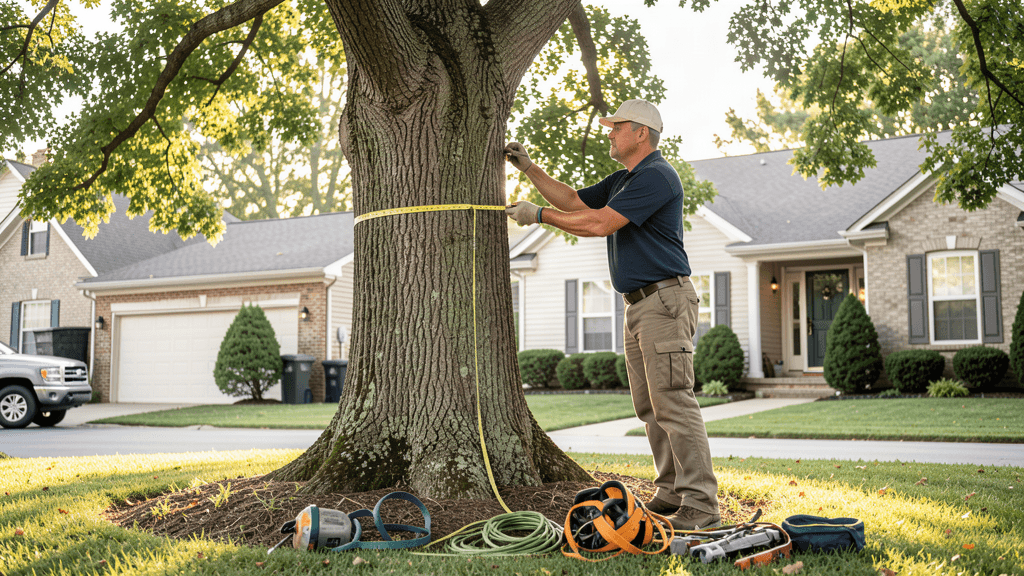
You are standing in a homeowner's front yard looking at a 70-foot red oak that needs to come down. The trunk forks at 25 feet. The canopy extends over the neighbor's fence. Your climber is going to spend four hours on this tree, and you need to write a quote before you leave the property. This is where a tree removal pricing formula per foot saves you from guessing and from leaving money on the table.
The per-foot method is not a single number. It is a base rate adjusted by three variables: species, access, and disposal. Get those three right and your quotes land within 5 percent of your actual cost on nearly every job. Get them wrong and you are either losing bids to cheaper operators or winning jobs that eat your crew's margin.
The U.S. Bureau of Labor Statistics reports that tree trimmers and pruners earn a median wage of $25.17 per hour as of 2024, with the top 10 percent earning over $41 per hour. Your fully loaded crew cost, including workers' comp at the tree-care rate of 15-22 percent of payroll, puts a two-person crew at $85-110 per hour before fuel, equipment depreciation, or insurance. The per-foot formula is how you convert that cost structure into a quote the customer can understand.
The Base Tree Removal Pricing Formula Per Foot Explained
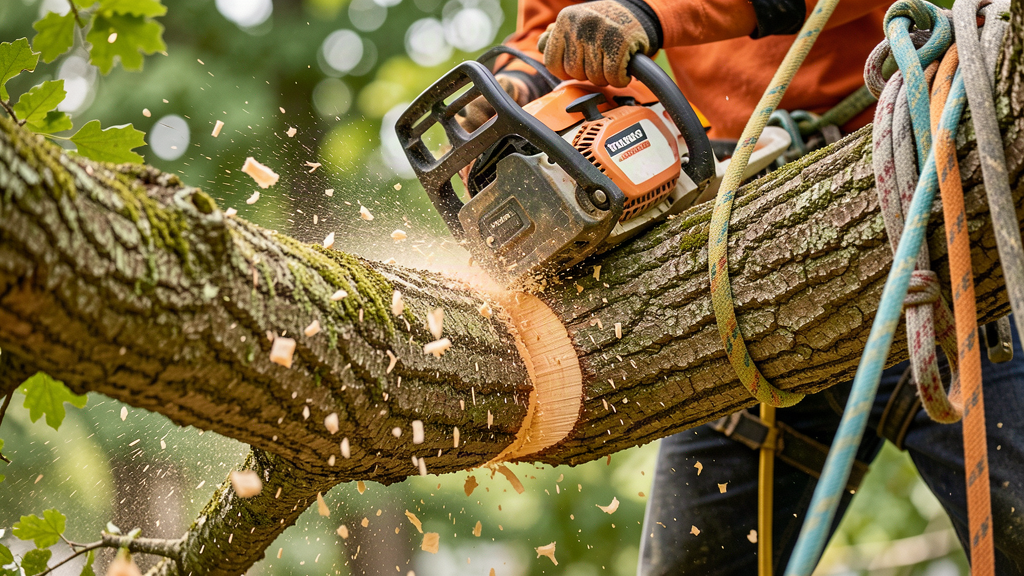
Start with a base rate of $12 to $15 per foot of height for a straightforward removal: tree in the front yard, drive-up access, no structures within 15 feet, soft to medium hardwood. A 60-foot pine at $12 per foot gives you a $720 base. A 60-foot oak at $15 per foot gives you a $900 base. That base covers your crew time, chipper, dump truck, fuel, and a standard profit margin.
The full formula looks like this:
(height x per-foot base rate) x species multiplier x access surcharge + disposal fees = quote
The base rate assumes ideal conditions. Every job deviates from ideal in at least one variable. The formula is how you account for that deviation consistently across every estimate instead of adjusting by gut feel.
Species Multipliers: Why an Oak Costs More Than a Pine Per Foot
Species drives labor time more than any other factor. A 70-foot pine drops in 90 minutes with a three-person crew. A 70-foot oak with a 36-inch trunk diameter takes four hours with the same crew. The wood density, branch structure, and trunk circumference all change the production rate. According to the Tree Care Industry Association, hardwood removals average 2.3 times the labor hours of comparable softwood removals when access and height are equal.
Softwoods: Pine, Cedar, Spruce (0.8 to 0.9 multiplier)
Softwoods cut fast, chip clean, and weigh less per cubic foot. A 50-foot pine at $12 per foot with a 0.8 multiplier gives you a $480 removal. Softwoods are where low-bid competitors make their money because the jobs are quick. Your edge is showing up with proper insurance and a crew that does not drop limbs on fences.
Hardwoods: Oak, Maple, Hickory (1.2 to 1.5 multiplier)
Hardwoods eat chain bars, fill the chipper faster, and require more cuts per section. A 70-foot red oak at $15 per foot with a 1.3 multiplier gives you a $1,365 removal before access and disposal. The fork in the example tree adds 0.1 to the multiplier because each leader needs separate rigging. Hickory is the densest common hardwood in residential work and sits at the top of the range at 1.5.
Hazard Trees: Dead Standing, Split Trunk, Leaning (1.5 to 2.0 multiplier)
A dead oak has no give in the branches. Every piece drops like a telephone pole. Your climber cannot trust the canopy for rigging points and has to use spurs on a brittle trunk. The Tree Care Industry Association's Tree Care Academy documents that hazard tree removals account for 60 percent of tree care fatalities despite representing under 15 percent of total jobs. Price the risk. A 50-foot dead oak at $15 per foot with a 1.8 multiplier gives you $1,350, which is what a 90-foot live pine would cost at base rate.
Access Surcharge Tiers: When Backyard vs Front Yard Changes the Price
Access determines how long the job takes and what equipment you need. A tree 20 feet from the driveway with a clear drop zone is a different production rate than the same tree 80 feet into a backyard through a 36-inch gate. Build four access tiers into your quoting process so you apply the surcharge consistently.
Tier 1: Front yard, drive-up access (1.0x). The chipper and dump truck park within 30 feet of the tree. Brush goes straight from the tree to the chipper. No carry-out, no gate navigation. This is your base rate scenario.
Tier 2: Side gate, 36+ inch clearance (1.15x). The chipper stays in the front. Brush gets dragged through a gate to the chipper. A 70-foot oak at $1,365 with Tier 2 access becomes $1,570. The 15 percent surcharge covers the extra 45-60 minutes of drag time on a job that would otherwise take four hours.
Tier 3: Backyard, carry-out 50 to 100 feet (1.3x). No gate access for the chipper. Every piece of brush and every log section gets carried by hand or wheelbarrow to the truck out front. A $1,365 oak becomes $1,775. This is where two-person crews lose money if they quoted at Tier 1.
Tier 4: Crane required, no ground access (1.6 to 2.0x). The tree is over a house, pool, or power line with no safe drop zone. A crane lifts sections over the obstruction. This tier triggers the crane line item (covered next) in addition to the access surcharge. A $1,365 oak at Tier 4 (1.8x) becomes $2,457 before the crane day rate.
Equipment Tiers and When to Add a Crane Line Item
Equipment decisions sit on top of the per-foot formula. The formula covers your standard crew setup: climber, ground person, chipper, and dump truck. When the job requires a bucket truck or a crane, those become separate line items, not multipliers on the per-foot rate.
Bucket truck: If you own one, the day rate is already in your overhead. If you rent, add $350-500 per day as a line item. Bucket trucks cut climber time in half on straight-trunk trees over 50 feet, but they cannot reach a backyard tree through a gate. Use them on Tier 1 and Tier 2 jobs only.
Crane: A 70-ton crane costs $800-1,200 per day plus travel. The crane operator is an additional $300-450 per day. Pass the full cost through to the customer as a line item. Do not absorb crane cost into your per-foot rate because it destroys the formula's consistency across jobs. The crane line item is also where the customer needs to see the number broken out on the quote so they understand why a backyard oak costs $3,400.
Chipper and dump truck: These are built into your base rate. If you are running a 12-inch chipper and a 16-foot dump, your disposal cycle is one dump trip per 40-foot hardwood. If you are running a 9-inch chipper, plan two trips. The difference is 90 minutes of drive time that your base rate needs to cover. The National Wood Chip Average from the Arbor Day Foundation's utility arboriculture data puts hardwood chip volume at 1.8 times softwood per foot of height, which is why the species multiplier matters for disposal too.
Disposal Fees: The Line Item Most Tree Services Underprice
Disposal is where tree services consistently lose margin. You quoted $900 for a 60-foot oak, spent four hours on the job, and then drove 45 minutes round-trip to the transfer station and paid a $65 dump fee. That 90 minutes of drive time plus the dump fee is 18 percent of your gross that was not in the quote.
Transfer station fees: Municipal green waste facilities charge $35-85 per load depending on truck size and municipality. Commercial accounts sometimes get a lower per-ton rate, but you need to call ahead and weigh in. Add the dump fee as a line item on every quote. The customer expects to see it, and it stops you from eating the cost.
Log disposal vs firewood: Hardwood logs have a secondary market. A 70-foot oak yields 3-5 cords of firewood if you split and season it. At $250 per cord, that is $750-1,250 in revenue that offsets disposal costs. If you sell firewood, credit the log value against the disposal line item and pass the savings to the customer. If you do not sell firewood, the logs go to the dump and the full disposal fee applies.
Stump grinding: Price stump grinding at $3-5 per inch of trunk diameter measured at ground level. A 36-inch oak stump at $4 per inch is $144. Most stump grinders have a $100 minimum. Stump grinding is almost always an add-on, not part of the removal quote, but quoting it on the same visit increases your average ticket by 15-20 percent.
Trimming vs Removal: When to Quote Both on the Same Visit
Not every tree needs to come down. Deadwood removal and crown reduction are priced per foot too, but at a lower base rate because there is no ground-level trunk work and disposal volume is 30-50 percent of a full removal.
Deadwood trimming: $8-10 per foot of height. A 60-foot oak deadwood removal at $9 per foot is $540. Apply the same species multiplier because hardwood deadwood is harder to rig than pine. Access tiers apply but typically max out at Tier 2 because the climber is working the canopy, not dropping the trunk.
Crown reduction: $10-12 per foot. Crown reduction is more labor-intensive than deadwood because every cut is a rigging decision. A 50-foot maple crown reduction at $11 per foot with a 1.2 species multiplier is $660.
When to quote both: If a customer calls about a dead oak and you find that only 40 percent of the canopy is dead, quote the deadwood removal at $8 per foot and give them a separate removal quote for the full tree at $15 per foot. The deadwood quote wins the immediate job. The removal quote becomes a 12-month option if the tree continues to decline. This is how you build a recurring customer from a single estimate visit.
Defending Your Per-Foot Price When the Customer Got a Lower Bid
Tree work is a three-bid market. Homeowners call three services, get three numbers, and pick the middle one. If your quote is the highest, you will hear about it. The per-foot formula is your defense because it lets you show the customer exactly what goes into the number.
Itemize the quote. Show the base rate, the species multiplier, the access tier, and the disposal fee as separate lines. A quote that says "Oak removal: $1,570" loses to a competitor's "$1,100." A quote that says "70-foot red oak, Tier 2 access, $65 disposal, total $1,570" gives the customer a reason to compare apples to apples. The competitor at $1,100 may be quoting Tier 1 access on a 60-foot pine, not the same tree.
Carry your proof. The International Society of Arboriculture reports that 63 percent of tree care claims in 2024 involved uninsured or underinsured contractors. Show your certificate of insurance on the estimate. A $1.5 million general aggregate liability policy costs a tree service $1,800-3,200 per year according to AP Intek's 2024 tree care insurance benchmark. The customer paying $470 more for your quote is paying for the policy that protects their house, their neighbor's fence, and their insurance deductible.
Six months from now, pull your per-foot rates and check them against your actual job costs. Fuel has moved 8-12 percent in some markets this year. Workers' comp rates adjust annually. If your base rate was $12 per foot in January and your March jobs are running 6 percent over cost, your base rate needs to be $12.72. The formula only works if the base rate reflects your current cost structure, not last year's.
This guide is published by Heyfield, which makes an AI phone receptionist for home-service trade businesses. If you ever can't take the call, that's what we do. See pricing. The rest of our trade-business resources are free at heyfield.app/blog.
Frequently Asked Questions
How do I calculate tree removal pricing per foot for different tree species?+
Start with a base rate of $12-15 per foot of height, then apply a species multiplier: 0.8-0.9 for softwoods like pine, 1.2-1.5 for hardwoods like oak and hickory, and 1.5-2.0 for hazard trees. Multiply base rate times height times species multiplier, then add access surcharge and disposal fees.
What access surcharge should I add for backyard tree removal?+
Use a tiered system: Tier 1 front yard with drive-up access is 1.0x base rate, Tier 2 side gate access is 1.15x, Tier 3 backyard carry-out of 50-100 feet is 1.3x, and Tier 4 requiring a crane is 1.6-2.0x. The surcharge covers the extra labor time for dragging brush and logs to the truck.
How much does crane tree removal cost to add to a quote?+
A 70-ton crane runs $800-1,200 per day plus $300-450 for the operator. Pass the full cost through as a separate line item on the quote, not as a multiplier on your per-foot rate. This keeps your per-foot formula consistent across jobs with and without crane work.
Should I charge separately for tree disposal and dump fees?+
Yes. Transfer station fees range from $35-85 per load depending on truck size and municipality. Add disposal as a line item on every quote. If you sell firewood, hardwood logs can offset disposal costs by $250 per cord, so credit that against the disposal fee.
How do I price tree trimming vs full tree removal?+
Deadwood trimming runs $8-10 per foot of height and crown reduction runs $10-12 per foot, both lower than the $12-15 removal base rate because there is no trunk work and disposal volume is 30-50 percent of a full removal. Apply the same species multiplier to both.
How do I defend my tree removal quote against a lower competing bid?+
Itemize the quote showing base rate, species multiplier, access tier, and disposal fee as separate lines. Show your certificate of insurance on the estimate. The International Society of Arboriculture reports 63 percent of tree care claims involve uninsured contractors, so your insurance is a selling point.
How often should I recalibrate my per-foot tree removal rates?+
Review your per-foot rates every six months against actual job costs. Fuel, workers' comp premiums, and dump fees all change. If your jobs are running 5-6 percent over cost, raise your base rate proportionally. A stale base rate is the most common reason tree services lose margin over time.
What is the stump grinding pricing formula for tree service quotes?+
Price stump grinding at $3-5 per inch of trunk diameter measured at ground level, with a $100 minimum. A 36-inch oak stump at $4 per inch is $144. Quote stump grinding as an add-on during the removal estimate to increase your average ticket by 15-20 percent.
Ready to stop missing calls?
Try Heyfield free for 7 days. Your AI receptionist answers every call, collects customer details, and texts you the summary.
Keep Reading
Pool Service Owners: Spring Rush Is Costing You Jobs
Every missed call during pool season costs $350+. Here's how solo pool operators stop losing spring rush leads without hiring office staff.
ReadFence Companies: Stop Losing $70K Every Spring
Fencing contractors lose thousands every spring to missed calls while setting posts. Here's the math — and the fix that costs $49/month.
Read