Water Damage Mitigation Reconstruction Scope: Draw the Line

Meric Karpat · Founder & CEO

A restoration crew in Tampa finishes a Category 2 basement loss on a Friday. Three days of extraction, drywall demo to two feet, twelve air movers, and a dehumidifier around the clock. The drying log clears Saturday morning. The homeowner asks the project manager a fair question: is the rebuild part of this job, or separate? He bills the mitigation through Xactimate, hands the file to a rebuild sub, and three weeks later the margin on the whole loss is half what he expected.
Water damage mitigation reconstruction scope is the line that decides which side of that loss makes money and which side quietly eats cost. Most restorers draw it badly, not from lack of skill but because the line sits in the overlap between two phases that use different labor, different pricing logic, and different insurance line items. Get the line wrong and you either rebuild work you already got paid to mitigate, or you hand margin to the next contractor who picks up the file.
Here is how to scope that line so neither side leaks.
Where Water Damage Mitigation Reconstruction Scope Ends and Rebuild Begins
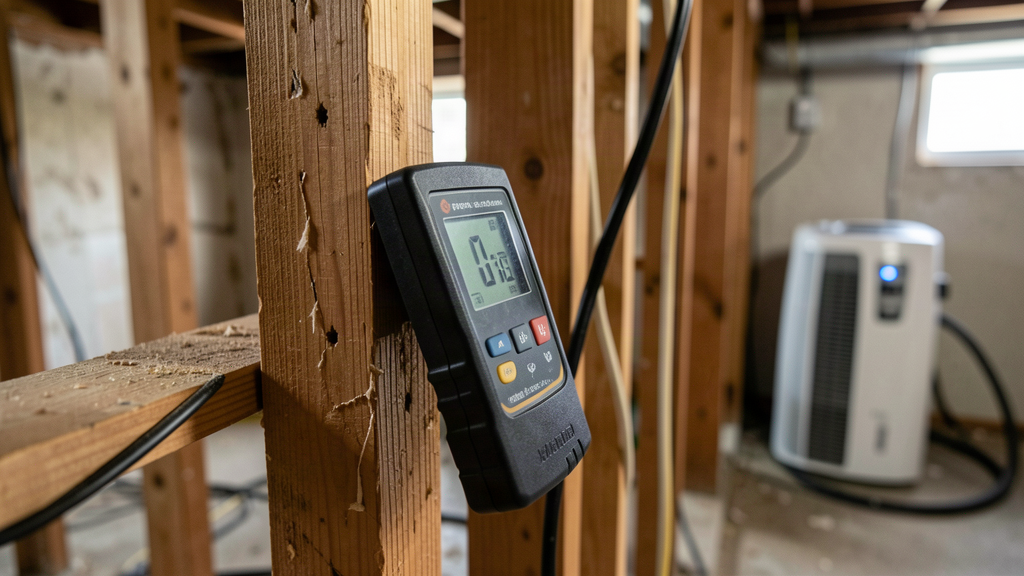
Mitigation is emergency stabilization through drying. You extract standing water, remove saturated porous materials, set equipment, and run it until the affected materials hit the dry standard documented in your moisture log. Reconstruction is the structural rebuild that follows: hanging drywall, replacing flooring, reinstalling trim and cabinets. The line between them is the drying certification, the moment your moisture meter confirms the structure has returned to its pre-loss dry standard and you sign off the mitigation phase.
The Institute of Inspection Cleaning and Restoration Certification lays out this sequence in its S500 reference guide for professional water damage restoration. The S500 frames mitigation as the process of returning a structure to its pre-loss condition through drying, and treats reconstruction as the separate build-back that follows once drying is certified. The standard matters because most insurance adjusters use it as the benchmark for what mitigation should include, and therefore what they will pay for under the emergency portion of the claim.
A typical Category 2 basement loss runs three to five days of mitigation before the drying log clears, with equipment pulled on day four or five. Reconstruction on the same basement usually starts a week to ten days after the drying sign-off, once the rebuild scope is approved and materials are staged. That gap between pulling equipment and starting rebuild is where scope discipline lives.
The Xactimate Line Items That Split the Two Phases
Verisk's Xactimate, the estimating platform most adjusters and restorers use to price water claims, separates the two phases through line-item codes. Mitigation codes cover water extraction, demolition of wet materials, equipment day rates, and monitoring visits. Reconstruction codes cover drywall hang and finish, flooring install, trim, paint, and finish carpentry. The scope break in your estimate is the point where the line-item prefixes shift from mitigation pricing to rebuild pricing.
Mitigation line items you bill now
Bill these under the emergency mitigation portion: extraction (per square foot or per hour), demolition of saturated drywall and insulation (per square foot), antimicrobial application, air movers and dehumidifiers (per day per unit), and daily monitoring visits. These items price at emergency rates and the insurance carrier pays them quickly, usually within the first two weeks, because they are tied to stopping ongoing damage.
Reconstruction line items you defer
Defer these to the rebuild estimate: drywall hang and finish (per square foot), flooring material and install, baseboard and trim, paint, and any cabinetry replacement. These items price at standard construction rates and go through a second round of adjuster review, often with depreciation applied. Mixing them into the mitigation invoice is the most common billing error in small restoration shops.
Why the Overlap Zone Is Where Restorers Lose Money
The overlap is the band of work that could plausibly sit on either side of the line. Demo height is the classic case. Mitigation standards often call for cutting wet drywall two feet above the highest visible moisture line. A PM who cuts four feet, reasoning that it makes the rebuild cleaner, has just moved reconstruction square footage into the mitigation phase. The carrier pays for two feet of demo. The extra two feet of replacement drywall, tape, mud, and paint lands in the rebuild estimate, but the extra demo labor that created that work is never billed. On a 400-square-foot basement with 80 linear feet of perimeter wall, over-cutting from two feet to four feet adds 160 square feet of unbillable demo and 160 square feet of rebuild drywall the loss did not originally require.
The same bleed happens in reverse. A restorer who under-demos, leaving wet material behind the new drywall, gets a callback when moisture traps and mold surfaces three weeks after rebuild. The Environmental Protection Agency's mold remediation guidance flags covered wet material as a primary driver of post-rebuild mold growth. That callback comes out of your margin because the rebuild is already closed out and the carrier will not reopen the mitigation line item for work that should have been done during drying.
Typical Category 2 basement mitigation runs $3,500 to $7,000 depending on square footage and equipment days. Reconstruction on the same loss runs $9,000 to $16,000. Over-demo and scope bleed commonly push 12 to 20 percent of the combined job value into unrecovered labor or callback cost. That is the entire profit margin on a mid-sized loss.
Scoping the Subcontractor Handoff Without a Margin Gap
If you mitigate and a separate rebuild subcontractor takes the build-back, the handoff point decides who owns the callback risk. Hand off before the drying is certified and the sub traps moisture behind fresh drywall, and you eat the remediation callback because the mitigation phase was never closed properly. Hand off too late and you carry the sub's standby time, or the sub walks and you lose the build-back entirely.
What the handoff document must contain
The handoff package should include the final moisture log with dry-standard readings for every affected material, photo documentation of the demo extents with measurements, the approved Xactimate rebuild estimate with line items separated from mitigation, and a signed acknowledgment from the rebuild sub that they accept the structure as dry. Without that signed acknowledgment, any moisture found after rebuild starts becomes a dispute between your mitigation company and the rebuild sub, and the homeowner is the one who calls you about it.
Deductible Math and Co-Pay at the Scope Line
The insurance deductible applies once to the combined claim, but the scope line changes how the homeowner experiences their out-of-pocket cost. Mitigation is typically billed at actual cost with limited depreciation. Reconstruction materials, especially flooring and drywall, are often subject to depreciation if the policy pays actual cash value until work is complete, then recovers to replacement cost. If you blur the scope line, the homeowner's co-pay jumps at a point in the process where they expected it to be settled, and they hold the restoration company responsible for a number the policy, not the contractor, produced.
A typical homeowner deductible on a water loss sits between $1,000 and $2,500. Reconstruction depreciation on older flooring and drywall can run 20 to 40 percent of material replacement cost until the recoverable depreciation is released after the rebuild is complete. Walk the homeowner through the two-phase billing before you start rebuild, with a written estimate that shows mitigation paid, deductible applied, and rebuild subject to depreciation recovery. This is the single step that prevents the most complaint calls.
A Scoping Checklist for the Mitigation-to-Rebuild Handoff
1. Confirm the dry standard before pulling equipment. Every affected material must hit its pre-loss moisture reading on the meter, not just the air in the room. Wood subfloor reads different than framing, and both must clear.
2. Photograph and measure demo extents. Document the exact height and square footage of material removed, with a tape measure visible in the photos. This is your evidence if the adjuster questions the demo line item.
3. Separate the Xactimate estimate into two files. One mitigation estimate, closed and billed. One rebuild estimate, submitted separately with standard construction line items. Never combine them in a single invoice.
4. Get the rebuild sub's dry acknowledgment in writing. A one-line sign-off that the structure is dry and accepted for rebuild transfers callback risk cleanly. Without it, you own every moisture issue that surfaces after the sub starts.
5. Walk the homeowner through the deductible and depreciation split. Before rebuild starts, show them the two estimates, where the deductible sits, and what depreciation may apply. Written estimate, signed acknowledgment.
6. Schedule a 30-day post-rebuild moisture check. One return visit with the meter, behind the new drywall and under the new flooring, confirms no trapped moisture. It costs you an hour and prevents the callback that costs a week.
Revisit the Scope at 30 Days
Thirty days after the rebuild is closed, pull the file and reconcile it. Compare the final Xactimate invoice to the original scope and flag any line item that migrated between mitigation and reconstruction during the job. Check whether the rebuild sub billed exactly the deferred estimate or added scope you did not see. Run the moisture meter one more time behind the new drywall, because a clean reading at 30 days is the closest thing to proof that the scope line was drawn correctly.
If the 30-day check shows trapped moisture, you found the scope line error before the homeowner did. Reopen the mitigation phase on paper, document the cause, and bill the remediation as a continuation of the original emergency work rather than a new claim. That distinction is what keeps a scope mistake from becoming a margin loss. Draw the line once at the drying certification, defend it through the handoff, and verify it held at 30 days. That is the whole discipline.
Frequently Asked Questions
Where does water damage mitigation end and reconstruction begin?+
Mitigation ends at the drying certification, the point your moisture meter confirms every affected material has returned to its pre-loss dry standard. Reconstruction is the structural rebuild, drywall through paint, that starts after that sign-off.
How does Xactimate separate mitigation from reconstruction pricing?+
Xactimate uses different line-item codes for each phase. Mitigation codes cover extraction, demo of wet materials, equipment day rates, and monitoring. Reconstruction codes cover drywall, flooring, trim, and paint. Keep the two in separate estimates so billing and depreciation stay clean.
Why do restorers lose money in the mitigation-to-rebuild overlap?+
The overlap is work that could sit on either side of the line, like over-cutting drywall during demo. If you demo beyond what the carrier pays for, the extra replacement drywall lands in the rebuild estimate but the extra demo labor is never billed. That gap commonly eats 12 to 20 percent of a mid-sized loss.
What should a subcontractor handoff package include?+
A final moisture log with dry-standard readings, photo documentation of demo extents with measurements, the approved Xactimate rebuild estimate separated from mitigation, and a signed acknowledgment from the rebuild sub that the structure is dry and accepted for rebuild.
How does the deductible apply across mitigation and reconstruction?+
The deductible applies once to the combined claim, but reconstruction materials often face depreciation until the rebuild is complete. Walk the homeowner through the two-phase billing before rebuild starts so their out-of-pocket jump does not land as a surprise tied to your scope line.
How often should I check moisture after a water damage rebuild?+
Run a moisture check behind the new drywall and under the new flooring at 30 days post-rebuild. A clean reading confirms the scope line was drawn correctly and lets you catch any trapped moisture before the homeowner reports it.
Can I bill mitigation and reconstruction on one Xactimate invoice?+
No. Combine them and you mix emergency rates with standard construction rates, blur the deductible and depreciation split, and slow both payments. Submit mitigation and reconstruction as separate estimates from the start.
Ready to stop missing calls?
Try Heyfield free for 7 days. Your AI receptionist answers every call, collects customer details, and texts you the summary.
Keep Reading
Locksmiths: Your Most Valuable Calls Come After Midnight
Locksmiths lose $3,000+ every month to missed after-hours calls. Here's what that's costing you — and the simple fix.
ReadDeck Builders: Stop Losing $90K Every Spring
Deck builders miss 2-3 quote calls a week during peak season. Here's the real revenue cost—and how to fix it without hiring a receptionist.
Read