Answering Service for Water Damage Restoration: 24/7 Emergency Call Capture

Meric Karpat · Founder & CEO
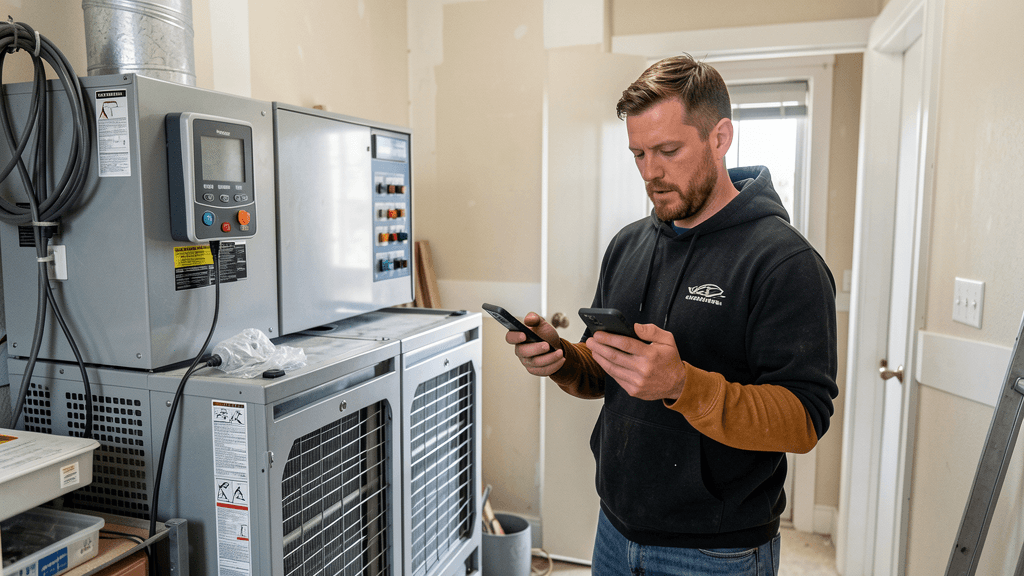
A homeowner wakes up at 2 AM to the sound of water rushing across their basement floor. A pipe burst. They grab their phone and search for "water damage restoration near me." They call the first result. No answer. They call the second. No answer. They call the third. Someone picks up. That third company gets the job.
This is not a hypothetical. According to a NextPhone study, 62% of calls to home service businesses go completely unanswered. For water damage restoration companies, the stakes are higher than in almost any other trade: a missed call at 2 AM is not a missed convenience, it is a missed $4,000 to $12,000 mitigation job that walks straight to your competitor.
If you are running a restoration company and evaluating an answering service for water damage restoration, this guide compares four real options: voicemail, a traditional human answering service, an AI competitor (Rosie), and Heyfield. Each has a different cost structure, speed-to-lead profile, and trade-off. The right choice depends on your call volume, your crew size, and how fast you can mobilize at 2 AM.
Why Speed-to-Lead Is Different in Water Damage Restoration
In most home service trades, a missed call means a delayed estimate. In water damage restoration, a missed call means the homeowner is already calling the next company while your phone rings out. The industry standard for emergency response is 60 minutes from first call to on-site arrival. Companies that consistently hit that window capture disproportionate market share during storm seasons and freeze events.
The math is straightforward. A typical Category 1 water loss mitigation job runs $3,000 to $7,000 in gross revenue. A larger Category 2 or 3 job with demolition and drying can hit $12,000 to $25,000. If you miss even two emergency calls per week because no one answered, you are leaving $24,000 to $50,000 on the table monthly. Over a year, that is a crew salary.
The Cleaning and Restoration Association (CRA) reports that companies with sub-60-minute response times close 40% more emergency jobs than those averaging 90 minutes or more. The gap is not equipment or skill. It is phone coverage.
Option 1: Voicemail (Cost: $0, Effectiveness: Near Zero for Emergencies)
Some restoration owners rely on a voicemail greeting that says "If this is an emergency, call [alternate number]." The problem: homeowners in a panic do not listen to a 20-second greeting. They hang up and dial the next Google result. A BrightLocal study found that 82% of consumers would not leave a voicemail for a business they had not used before, and that number rises to 93% for urgent service needs.
Voicemail costs nothing, but it captures nothing. For non-emergency calls during business hours, it is harmless. For 2 AM water damage calls, it is functionally identical to being closed.
When voicemail is the right choice
It is not, for restoration. If you operate in any market where emergency calls are a meaningful part of your revenue, voicemail alone is a leak you cannot afford.
Option 2: Traditional Human Answering Service (Cost: $1.50-$2.50 per minute, $300-$1,200+/mo typical)
Human answering services like Map Communications, Answer United, and TeleDirect have served the restoration industry for decades. A live operator answers your calls 24/7, follows a script you provide, and dispatches per your on-call instructions.
The strength is human judgment. A skilled operator can calm a panicked homeowner, ask the right triage questions ("Is the water still flowing? Is it near any electrical panels?"), and follow complex escalation rules. For restoration companies doing $500K+ in annual revenue with a high volume of emergency calls, a human service provides a warmth that voicemail and AI cannot replicate.
The weaknesses are cost and consistency. Per-minute pricing at $1.50 to $2.50 means a busy week of 200 calls at 3 minutes each costs $900 to $1,500. During storm season, call volume spikes, and so does the bill. Operators are also human: hold times during peak events, script drift, and occasional missed dispatch details are real issues that restoration owners report.
When a human answering service is the right choice
If your average call requires nuanced conversation (insurance claim intake, multi-party coordination), your monthly call volume is under 200, and you are okay with $500-$1,200/month in variable costs, a human service is a solid fit. Companies like Map Communications and Answer United have restoration-specific scripts and dispatch protocols.
Option 3: Rosie AI Answering Service (Cost: $29-$199/mo, per-tier with minute caps)
Rosie is an AI answering service that targets home service businesses, including restoration. It answers calls instantly, collects caller information, and can book appointments or dispatch based on rules you configure. Rosie has published restoration-specific use cases on their site, which signals genuine vertical awareness.
Rosie's pricing tiers run from $29/month (limited minutes) up to $199/month for higher-volume plans. The per-minute overage structure means costs can climb during storm season, similar to human services but at a lower base rate.
The trade-off versus a human service: Rosie answers instantly (no hold times), but the AI conversation is less flexible than a trained human operator. For straightforward dispatch calls ("I have water in my basement, I need someone now"), it works well. For complex insurance intake or multi-party calls, a human may still be the better fit.
When Rosie is the right choice
If you want AI answering with a proven restoration vertical, your call volume is moderate (50-200 calls/month), and you are comfortable with tier-based pricing, Rosie is a legitimate option. It is particularly strong for overflow calls during business hours and after-hours coverage for solo or 2-3 person restoration shops.
Option 4: Heyfield AI Receptionist (Cost: $49-$199/mo flat, no per-minute billing for included minutes)
Heyfield is an AI phone receptionist built specifically for home service trades, including water damage restoration. It answers calls 24/7, triages emergency versus non-emergency calls, dispatches to your on-call technician, and can book mitigation appointments directly into your calendar.
Heyfield's pricing is flat monthly with included minutes and per-minute overage:
- Starter: $49/mo — 150 minutes included, $0.25/min overage. For solo restoration shops with light call volume.
- Pro: $99/mo — 400 minutes included, $0.20/min overage. The most popular tier for 2-4 person crews doing $300K-$1M annual revenue.
- Business: $199/mo — 800 minutes included, $0.15/min overage. For larger restoration companies with high emergency call volume during storm season.
The honest range is $49 to $199/month. There is no $149 tier. A 7-day free trial requires no credit card, so you can test it against your actual call flow before committing.
For water damage restoration specifically, Heyfield handles the call types that matter most: emergency mitigation intake ("How fast can someone get here?"), moisture source triage ("Is the water still actively flowing?"), insurance carrier identification, and dispatch to the on-call technician via warm transfer or SMS notification. The AI can distinguish between a homeowner with a wet basement at 3 AM and a property manager calling about a scheduled drying check at noon.
When Heyfield is the right choice
If you want flat monthly pricing without per-minute surprises during storm season, your restoration-specific call types are standard (emergency intake, dispatch, scheduling), and you need 24/7 coverage for under $200/month, Heyfield fits. The 7-day trial lets you measure actual capture rate before paying.
Comparison Table: Which Answering Service Fits Your Restoration Company?
OptionMonthly CostSpeed to AnswerEmergency TriageDispatchBest For Voicemail$0Never (caller hangs up)NoneNoneNot recommended for restoration Human answering service (Map, Answer United)$300-$1,200+ (per-minute)10-45 seconds (hold times during peaks)Strong (human judgment)Scripted dispatch$500K+ revenue, complex calls, high-touch intake Rosie AI$29-$199 (tiered)InstantModerate (AI-driven)Rule-based dispatchModerate volume, overflow + after-hours Heyfield AI$49-$199 (flat + overage)InstantRestoration-specific triageWarm transfer + SMS dispatchSolo to 4-person crews, flat-cost predictabilityReal Cost Math: What 100 Emergency Calls Per Month Actually Costs
Assume your restoration company receives 100 emergency calls per month, averaging 3 minutes each (300 total minutes). Here is what each option costs:
- Voicemail: $0 in service fees. But if 60% of callers hang up (per BrightLocal data), you lose 60 potential jobs. At an average mitigation revenue of $5,000 per job, that is $300,000 in lost revenue monthly. The "free" option is the most expensive.
- Human answering service: 300 minutes at $1.75/minute average = $525/month. During a storm month with 200 calls (600 minutes), the bill jumps to $1,050.
- Rosie: A $99/month tier with 400 included minutes covers the 300-minute volume. Overage is minimal. Storm month at 600 minutes may push you to the $199 tier or incur overage.
- Heyfield: The Pro tier at $99/month includes 400 minutes. 300 minutes used, no overage. Storm month at 600 minutes = 200 overage minutes at $0.20 = $40 overage, total $139. The Business tier at $199/month with 800 included minutes would cover even the worst storm month with zero overage.
The key difference is predictability. Human services and per-minute AI services scale linearly with call volume. Heyfield's included-minute model means your cost is flat unless you exceed the tier cap, which is harder to do than with per-call or per-minute billing.
How to Choose: 4 Questions to Ask Before Signing Up
1. What is your monthly emergency call volume?
Under 50 calls: Heyfield Starter ($49) or Rosie's entry tier. 50-200 calls: Heyfield Pro ($99) or Rosie mid-tier. 200+ calls: Heyfield Business ($199) or a human service with negotiated volume pricing.
2. Do your calls require complex human conversation?
If 80% of your calls are "I have water, send someone," AI handles it. If calls involve insurance adjuster coordination, multi-party scheduling, or detailed claim intake, a human service like Map Communications may be worth the per-minute premium.
3. How predictable is your call volume?
If call volume is steady year-round, per-minute services are manageable. If you operate in storm-prone markets where call volume triples in a week, flat-rate pricing (Heyfield) protects you from bill shock.
4. Can you test before committing?
Heyfield offers a 7-day free trial with no credit card. Rosie offers a trial period. Human services typically require a 30-day contract minimum. Test the option against your real call flow before signing a long-term agreement.
Setting Up Your Restoration Answering Service: 5 Implementation Steps
Regardless of which option you choose, the setup process is similar:
- Write your emergency triage script. What questions must the answering service ask every caller? Standard restoration intake: Is the water actively flowing? What is the source? Is it near electrical? What is the approximate affected area (square footage)? Is this an insurance claim?
- Define dispatch rules. Who gets called for after-hours emergencies? Is it a rotation? What is the callback window (15 minutes? 30 minutes?)? What happens if the on-call tech does not respond?
- Set up call recording and logging. Every emergency call should be logged with caller name, address, call time, and triage answers. This feeds your speed-to-lead metrics and helps with insurance documentation.
- Test with a fake emergency call. Before going live, have a friend or family member call your after-hours number at 10 PM. Did the service answer? Did it ask the right questions? Did the dispatch reach your on-call tech within the target window?
- Review monthly. Pull call logs, compare answered vs. missed, measure average response time, and calculate the revenue captured from answered emergency calls versus the service cost. If the ROI is not clear within 60 days, switch options.
The Bottom Line for Restoration Companies
Water damage restoration is one of the few trades where phone answering directly determines revenue. A plumber can return a call in an hour and still book the job. A restoration company that returns a call in an hour has already lost it. The company that answers first wins, and the company that answers at 2 AM wins the jobs that nobody else even heard ringing.
If you are currently relying on voicemail or daytime-only coverage, the first step is simple: pick any option from this guide and deploy it this week. The cost of doing nothing is not zero. It is the revenue from every emergency call that goes to your competitor while your phone rings unanswered.
Heyfield makes an AI phone receptionist for home-service trade businesses, including water damage restoration. If you want to capture every emergency call 24/7 without per-minute billing surprises, see pricing starting at $49/month or read more trade-business guides on our blog. The 7-day free trial requires no credit card.
Frequently Asked Questions
How much does an answering service for water damage restoration cost?+
Traditional human answering services cost $1.50-$2.50 per minute ($300-$1,200+/month typical). AI services like Rosie and Heyfield range from $29-$199/month. Heyfield offers flat monthly pricing at $49, $99, or $199 with included minutes and per-minute overage, so storm-season spikes do not cause bill surprises.
How fast does a restoration company need to respond to emergency calls?+
The industry standard is 60 minutes from first call to on-site arrival. Companies with sub-60-minute response times close 40% more emergency jobs than those averaging 90 minutes or more, according to the Cleaning and Restoration Association.
Can an AI answering service handle complex insurance claim intake calls?+
AI services like Heyfield and Rosie handle standard emergency triage (source identification, urgency classification, dispatch routing) well. For detailed insurance claim intake involving adjuster coordination and multi-party scheduling, a human answering service with restoration-specific scripts may be a better fit.
What is the difference between Heyfield and Rosie for restoration companies?+
Both are AI answering services targeting home service trades. Rosie charges per-tier with minute caps starting at $29/month. Heyfield charges flat monthly ($49-$199) with included minutes and per-minute overage, giving more cost predictability during storm season. Heyfield also offers a 7-day free trial with no credit card.
Should I use a human answering service or AI for my restoration company?+
If your calls are primarily emergency dispatch, AI handles it at lower cost. If your calls involve nuanced insurance intake, multi-party coordination, or detailed claim documentation, a human service like Map Communications or Answer United provides the conversational flexibility AI cannot yet match.
What questions should my restoration answering service ask every emergency caller?+
Standard triage: Is the water actively flowing? What is the source (pipe, appliance, roof, groundwater)? Is the water near any electrical panels or outlets? What is the approximate affected area in square feet? Is this an insurance claim? What is the best callback number for the on-call technician?
How do I measure whether my answering service is worth the cost?+
Track three metrics monthly: (1) answered vs. missed call ratio, (2) average time from first call to technician dispatch, (3) revenue from jobs captured through after-hours calls. If the revenue from captured emergency calls exceeds the service cost by 5x or more, the ROI is clear.
Does Heyfield work with ServiceTitan or other restoration management software?+
Heyfield operates as a standalone phone receptionist. It can dispatch via SMS or warm transfer to your on-call technician. Direct CRM integration with ServiceTitan or Xactimate is not currently a native feature, but dispatch notifications can be received by any phone.
What happens if my on-call technician does not respond to the dispatch notification?+
Both Heyfield and Rosie support escalation rules: if the primary on-call tech does not respond within a set window (15 or 30 minutes), the service can automatically call a secondary contact. Human answering services also support this through scripted escalation protocols.
Can I use an answering service only during after-hours and handle daytime calls myself?+
Yes. Most answering services, including Heyfield, offer flexible coverage modes: after-hours only, overflow during business hours, or full 24/7 coverage. This lets you start with after-hours coverage and expand to 24/7 as your call volume grows.
Ready to stop missing calls?
Try Heyfield free for 7 days. Your AI receptionist answers every call, collects customer details, and texts you the summary.
Keep Reading
Why Welding Shops Can't Risk Answering Their Own Phones
Sparks fly, face shields go down, and phone calls go to voicemail. How safety-first welding shops lose business to missed calls.
ReadPool Service Owners: Every Missed Call Costs You $900
Pool season is short and winterization is now. One missed call can cost you a full-season client worth $900+. Here's how solo pool service pros stop losing jobs to voicemail.
Read