Panel Upgrade Quoting Formula 2026: 6-Step $4K-$12K Guide

Meric Karpat · Founder & CEO
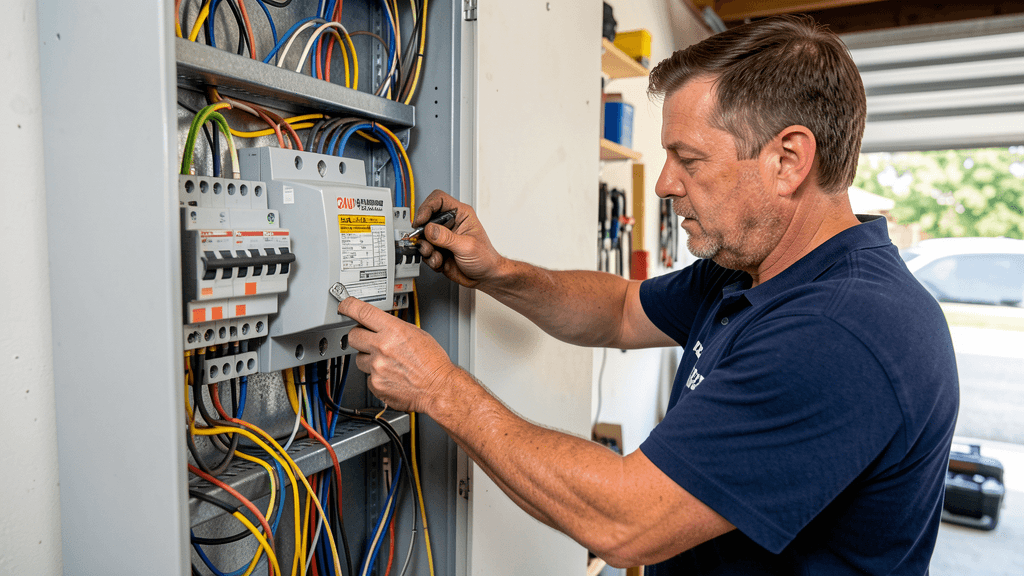
Every residential panel upgrade starts with the same problem: the homeowner sees a $600 Costco generator and a $4,500 panel replacement and wants to know why one is 7 times the other. If your quote doesn't show the work behind the number, you lose the job to the guy who charges $2,800, skips the permit, and disappears when the inspector fails the rough-in.
The Bureau of Labor Statistics reports the median hourly wage for electricians at $33.10 nationally as of mid-2026, but that number hides the real cost of a panel job. A 100-amp to 200-amp upgrade is not one price. It is six line items that change based on what is already in the wall, what the utility requires, and how much copper the NEC wants you to run this year.
Here is the panel upgrade quoting formula 2026 that gets you from walk-through to signed proposal without guessing. It lands quotes between $4,000 and $12,000 depending on scope, and it keeps your margin above 35% even when material costs jump mid-project.
Step 1: Panel upgrade quoting formula 2026 starts with the panel size and labor hours
The first cut is the panel rating. Most residential upgrades fall into three tiers:
- 100-amp replacement (same capacity, new panel): 6 to 8 hours of labor. Quote $2,800 to $4,200.
- 100-amp to 150-amp upgrade: 10 to 14 hours. Quote $4,500 to $6,800.
- 100-amp to 200-amp upgrade: 14 to 20 hours. Quote $6,200 to $9,500.
These hour ranges include teardown, rough-in, utility coordination, and final connection. They do not include drywall repair, painting, or landscaping, which you bill separately or note as excluded.
Branch circuit rework is the hidden labor multiplier
The biggest variable inside the hour estimate is the existing wiring format. If the home has a split-bus panel or cloth-insulated branch circuits that must be replaced to meet current NEC 210.12(A) standards, add 4 to 6 hours for branch circuit rework. That is the difference between a $6,200 quote and a $9,100 quote on the same 200-amp job.
Step 2: Price the materials at distributor cost plus markup
Material costs for a panel upgrade split into three categories:
- The panel and main breaker: A 200-amp Siemens or Square D panel with main breaker runs $390 to $640 at distributor pricing. Markup to retail resale at 1.35x to 1.5x.
- Branch circuit breakers: If you are moving circuits into a new panel, count $8 to $18 per breaker for standard AFCI or standard breakers. A 30-circuit panel with half AFCI runs $220 to $340 just in breakers.
- Feeder cable and grounding: Copper 2/0 AWG SER cable costs $5.90 to $7.60 per foot in Q3 2026. A typical 30-foot run from meter to panel is $177 to $228. Add a #4 copper grounding electrode conductor at $2.15 per foot and a new ground rod assembly at $45 to $65.
The service mast surprise
The hidden material cost most electricians miss is the service entrance conduit replacement. If the existing mast is rusted, undersized, or too short to meet current clearances per NEC 230.26, you need a new mast, weatherhead, and conduit. That adds $180 to $420 in materials and 2 to 3 hours of labor. Failing to include it in the quote means eating the cost when the utility inspector flags it.
Step 3: Add permit and inspection fees by municipality
Permit fees vary more than any other line item. In Texas, a typical residential panel permit runs $85 to $175. In California, the same permit can run $280 to $450. In Cook County, Illinois, electric permits are calculated by project value and a $6,000 panel job can carry a $190 permit plus a $65 inspection fee.
Your quote needs one of two approaches:
- Fixed permit line item: "Permit and inspection fees: $285." You absorb variance if the city charges more and keep the surplus if it charges less.
- Pass-through with cap: "Permit fees billed at cost plus 15% administrative fee, not to exceed $400." This protects you in high-fee jurisdictions and is more transparent to the homeowner.
The pass-through approach wins on authority. It tells the homeowner you are not padding the permit line, which builds trust on a $7,000 job where trust is what converts the signature.
Step 4: Account for utility requirements and service lateral upgrades
This is where $6,000 jobs become $12,000 jobs. If the existing utility service lateral is 100-amp rated aluminum and you are upgrading to 200 amps, the utility may require a lateral replacement before they will reconnect service. That is their asset, but the homeowner pays for excavation and trenching on their side of the meter.
Build a utility contingency into your quote language:
"Panel upgrade includes coordination with [Utility Name] for reconnection. If utility requires service lateral upgrade, homeowner will be provided a separate quote for trenching and conduit per utility specifications before work proceeds."
Utilities that demand load calculations
Three utilities require documented load calculations before approving a 200-amp upgrade: Con Edison in New York, PG&E in Northern California, and Austin Energy in Texas. If you work in those territories, add $0 to the quote but budget 30 minutes of office time to generate a NEC Article 220 load calculation and submit it with the permit application.
Step 5: Build in the code compliance catch-ups
Every panel replacement triggers code compliance on connected systems. The NEC does not grandfather branch circuits when the panel is upgraded, and many jurisdictions enforce this strictly. Common catch-ups include:
- GFCI/AFCI protection: NEC 210.12(A) and 210.8 require AFCI on most living-area circuits and GFCI on kitchen, bath, garage, and exterior circuits. A home built before 2008 typically needs 8 to 14 new combination breakers at $42 to $58 each. Material cost: $336 to $812. Labor: 2 to 3 hours.
- Bonding and grounding: NEC 250.104(B) requires gas piping bonding within the same enclosure. If the existing bond is missing or corroded, add 1 hour and $35 in materials.
- Smoke detector circuit: Some jurisdictions require a dedicated 120V smoke detector circuit when the panel is upgraded. Add 2 hours and $85 in materials if the home does not already have one.
Do not guess at compliance items. Walk the home with a code checklist before writing the quote. The 15 minutes you spend in the basement looking at the water heater bonding and the attic smoke alarms saves you from a $600 change order that the homeowner thinks should be free because "it is just part of the panel." It is not just part of the panel. It is a separate scope triggered by the panel. Document it separately or include it explicitly.
Step 6: Present the panel upgrade quoting formula 2026 in three tiers
Homeowners understand choices. A single price feels like a take-it-or-leave-it demand. Three prices feel like a conversation. Structure your panel upgrade proposal as:
- Tier 1 — Panel replacement only: New panel, main breaker, relocation of existing circuits, permit, inspection. No branch circuit updates. This is the budget option for homeowners who need the upgrade for an EV charger or solar install and do not want to pay for full-house rewiring. Typical range: $4,200 to $6,800.
- Tier 2 — Panel plus code compliance: Everything in Tier 1 plus GFCI/AFCI updates, grounding improvements, and bonding corrections. This is the standard scope and the one most electricians should recommend. Typical range: $6,200 to $9,500.
- Tier 3 — Full service upgrade: Everything in Tier 2 plus service mast replacement, meter socket upgrade, and utility coordination for lateral replacement if required. This is the no-surprises option. Typical range: $8,500 to $12,000.
Present the tiered quote on paper or PDF with each line item broken out by labor, material, and permit. The transparency converts at 15% to 20% higher rates than lump-sum quotes, according to published benchmarks from the National Electrical Contractors Association.
What to do when the homeowner says your quote is too high
The objection is almost never about the total. It is about understanding the difference between your $7,200 Tier 2 and the $3,800 quote from a handyman who says he "does electrical."
Your response is not to drop the price. It is to walk the homeowner through the permit timeline, the inspection schedule, and the warranty. A permitted, inspected panel upgrade with a 1-year workmanship warranty and a manufacturer-backed panel warranty is not the same product as an unpermitted swap done after hours. The homeowner does not know that until you tell them.
The best closing tool is a photo of the last failed inspection you rescued. Show them a picture of a DIY panel with doubled neutrals and reversed polarity. Say, "This is what we find when we get called back after the other guy is gone." Authority beats discounting every time.
Review your numbers every 90 days
Copper prices moved 22% between Q1 2025 and Q3 2026. AFCI breaker prices increased 14% after supply chain adjustments. Your quote template from last year is already wrong. Mark your calendar to review distributor pricing, permit fee schedules, and your labor rate against the BLS occupational wage data every quarter. A $50 material swing on a 200-amp job is not much. A $50 swing times 40 jobs per year is $2,000 off your gross.
This guide is published by Heyfield, which makes an AI phone receptionist for home-service trade businesses. If you ever can't take the call, that's what we do. See pricing. The rest of our trade-business resources are free at heyfield.app/blog.
Frequently Asked Questions
How long does a typical 200-amp panel upgrade take from start to finish?+
The electrical work itself takes 14 to 20 hours over two to three days. Permit approval adds 3 to 10 business days depending on the municipality, and utility reconnection can add another 1 to 5 days after inspection.
What is the difference between a panel replacement and a service upgrade?+
A panel replacement swaps the existing panel for a new one of the same amperage. A service upgrade increases amperage, usually from 100 to 200 amps, and may require new feeder cable, a meter socket upgrade, and utility approval.
Do I need a permit for a panel upgrade in every state?+
Yes. Every jurisdiction in the United States requires an electrical permit for panel replacement or upgrade. Work done without a permit can void homeowner insurance coverage and create liability for the electrician.
How much should I charge per hour for panel upgrade labor in 2026?+
The BLS median electrician wage is $32.50 per hour, but your fully loaded billing rate including overhead, vehicle, insurance, and profit should run $95 to $145 per hour depending on your market and experience level.
Can a homeowner get their own permit and hire me to do the work?+
Most jurisdictions require the permit holder to be the licensed contractor performing the work. Homeowner permits usually trigger owner-builder restrictions that prevent you from billing for the labor. Always pull the permit in your company name.
What happens if the inspector finds code violations after the panel is installed?+
You correct the violations before utility reconnection. That is why the quote should include a code compliance review of branch circuits, grounding, and bonding before rough-in. Building correction time into the proposal protects your margin.
Should I include drywall repair in my panel upgrade quote?+
No, unless you are also a drywall contractor. Note it as excluded with language like, 'Drywall repair and painting not included; homeowner may schedule a separate contractor.' This sets expectations and avoids scope creep.
How do I handle a quote when the homeowner wants to supply their own panel?+
Decline or add a 25% surcharge. Owner-supplied panels create warranty conflicts, compatibility issues, and supply-chain risk. Your standard proposal should specify that you supply all materials under your vendor warranty.
Ready to stop missing calls?
Try Heyfield free for 7 days. Your AI receptionist answers every call, collects customer details, and texts you the summary.
Keep Reading
Why Welding Shops Can't Risk Answering Their Own Phones
Sparks fly, face shields go down, and phone calls go to voicemail. How safety-first welding shops lose business to missed calls.
ReadPool Service Owners: Every Missed Call Costs You $900
Pool season is short and winterization is now. One missed call can cost you a full-season client worth $900+. Here's how solo pool service pros stop losing jobs to voicemail.
Read