Plumbing Emergency Call Pricing Formula: 2026 Rate Guide

Meric Karpat · Founder & CEO
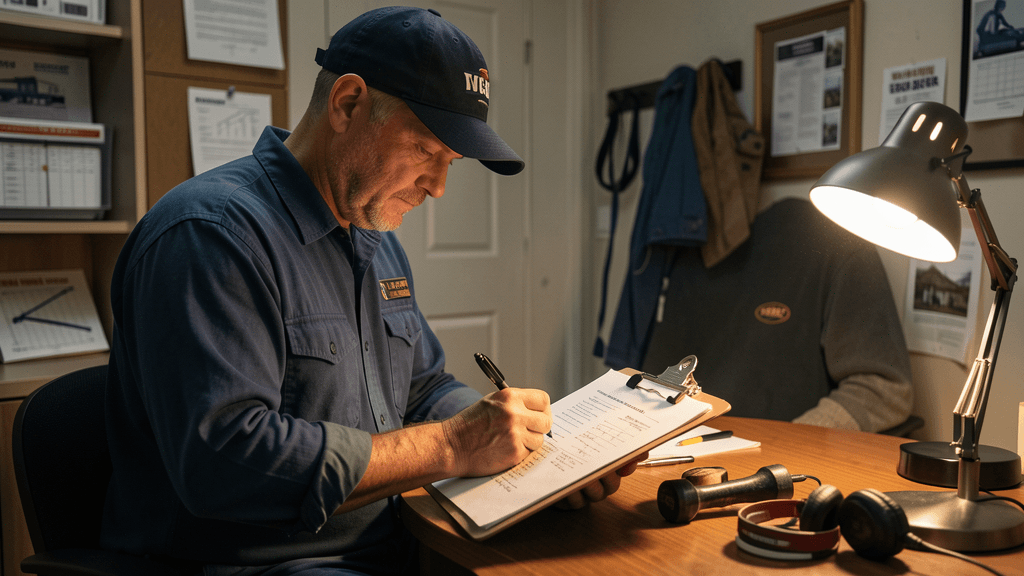
It is 9:47 p.m. on a Saturday and your phone rings. A homeowner three towns over has water pouring through the kitchen ceiling from a burst supply line. They already shut the main valve, but the drywall is sagging and the cabinet sink is full. They want to know two things: how fast can you get there, and what is this going to cost.
If your answer is "I will figure it out when I get there," you are leaving money on the table and inviting a price dispute at midnight. Emergency plumbing is not just scheduled work at a inconvenient hour. It carries different risk, different callback exposure, and different customer psychology. The plumbers who treat it like a premium service earn it. The ones who treat it like regular overtime get burned.
This is a plumbing emergency call pricing formula built from 2026 regional rate data, actual callback costs, and the loss-aversion psychology that makes homeowners pay the premium without a fight. Use it to build a quote in under 60 seconds, protect your margin, and cut the negotiation short before you pull into the driveway.
Plumbing Emergency Call Pricing Formula: The 3-Component Model
Every emergency quote is the sum of three numbers. Nothing hidden, nothing made up on the spot. The formula is:
Emergency Price = Base Rate + After-Hours Surcharge + materials markup
Each component has a specific purpose and a specific floor. Here is how to calculate each one.
Component 1 — Base Rate
This is what you charge for a standard scheduled call during business hours. If you do not already have a published base rate, use the Bureau of Labor Statistics benchmark for plumbers in your state. As of May 2026, the BLS reports a national median hourly wage of $29.52 for plumbers, with self-employed solo operators typically billing at 2.5x to 3.5x that wage to cover overhead, vehicle, insurance, and self-employment tax. That lands most solo plumbers between $95 and $130 per hour as a standard base rate.
If you are in a major metro with a high cost of living—Boston, Seattle, San Francisco—your base rate is likely $145 to $185 per hour. If you are in a rural market, $85 to $110 is realistic. The key is knowing your own number, not the market average. If your base rate is not covering your actual costs, the emergency surcharge will not save you.
Component 2 — After-Hours Surcharge
This is where the formula earns its name. The surcharge is a multiplier or flat add-on applied to the base rate when the call falls outside standard hours. The standard tiers are:
- Weekday evenings (5 p.m. to 10 p.m.): 1.25x base rate
- Overnight weekday (10 p.m. to 7 a.m.): 1.75x base rate
- Weekend daytime (7 a.m. to 5 p.m.): 1.5x base rate
- Weekend evening (5 p.m. to 10 p.m.): 1.75x base rate
- Weekend overnight (10 p.m. to 7 a.m.): 2.0x base rate
- Holidays: 2.0x to 2.5x base rate
On a Saturday night at 9:47 p.m., a plumber with a $110 base rate is billing $192.50 per hour. In Boston at $160 base rate, that same call is $280 per hour. The surcharge is not a penalty. It is a rate that reflects the true cost of being available when your competitors are not.
Component 3 — Materials Markup
Do not use your standard 1.3x or 1.5x materials markup on emergency calls. After-hours supply houses charge more, and you have less time to shop. Bump materials to 1.75x on jobs where you pull parts after 6 p.m. or on weekends. On a $28 PEX coupling at a 24-hour supplier, that is $49. On a $180 water heater emergency isolation valve kit, that is $315. The homeowner does not need to see your cost. They need to see the installed price, with a line item that says "emergency parts & materials."
Total formula example: A Saturday night burst-pipe repair in a mid-size metro with a $115 base rate, 1.75x surcharge, and $87 in parts.
- Labor: 2.5 hours × $201 = $502
- Materials: $87 × 1.75 = $152
- Call-out fee (covers first 45 minutes): $125
- Total: $779
Without the formula, most plumbers guess between $400 and $900 and hope the customer says yes. With the formula, $779 is not a guess. It is a number you can say with confidence.
What the Numbers Look Like in 2026: A Regional Rate Table
Base rates vary, but the surcharge multipliers are universal. Here is a table showing what a typical 2-hour emergency repair costs by region using the 3-component model.
RegionBase RateSaturday 9 p.m. (1.75x)2-Hour LaborMaterials (1.75x)Call-Out FeeTotal Rural Midwest$95$166$332$105$95$532 Sun Belt Suburb$110$192$385$122$110$617 Mid-Atlantic Metro$135$236$472$148$135$755 West Coast Urban$165$289$577$175$165$917 Northeast Major City$180$315$630$192$180$1,002The table assumes $60 in raw parts cost and includes a call-out fee equal to one hour of the base rate. Use it as a benchmark, not a ceiling. If your overhead is higher or your callback risk is elevated—for example, on a slab leak where access is destructive—add 15% to the materials markup and bill the extra labor up front.
When to Charge the Full Emergency Rate and When to Discount
Not every after-hours call deserves the top multiplier. The formula is a floor, not a mandate. Here are the four situations where you should charge the full rate, and the three where a discount is strategically smarter.
Charge full rate when:
1. The call is a true emergency. No hot water in January, a burst pipe flooding the basement, a backed-up sewer line. The homeowner loses something material by waiting. Loss aversion is the cognitive bias that drives willingness to pay. When the alternative is $8,000 in water damage, $780 for a Saturday night visit feels like a bargain.
2. The customer has already called two other plumbers. If you are the third call, you have pricing power. They are not shopping anymore. They are desperate. Quote the full formula and do not negotiate.
3. The job requires diagnostic work in the dark. Crawl spaces at 10 p.m. are slower, riskier, and harder on your body. Bill for the difficulty.
4. The call pulls you away from family or another commitment. This is not emotional pricing. It is a real cost. Your time is not infinite, and every emergency call has an opportunity cost.
Discount strategically when:
1. It is a repeat customer with a maintenance agreement. A $49 monthly water-heater protection plan that includes one free after-hours call per year builds retention worth 10x the discount.
2. The call is a simple fix you can talk them through. If the homeowner can turn off a valve or reset a pressure regulator over the phone, charge a $65 phone-consult fee instead of rolling a truck. You still get paid, and they remember you as the plumber who saved them a midnight visit.
3. You are already in the neighborhood. If you finish a job at 6:30 p.m. and the emergency call is three blocks away, shave 0.25x off the surcharge. It costs you nothing extra in drive time, and the goodwill converts to reviews.
The Callback Risk That Kills Your Margin
Emergency calls have higher callback rates than scheduled work. You are working at night, under pressure, with a stressed customer hovering. The BLS does not track callback rates specifically, but contractor insurance benchmarks from the Independent Insurance Agents & Brokers of America estimate that callback-related claims and re-do costs eat 4% to 8% of annual revenue for solo plumbers who do heavy emergency work.
Build that risk into the formula. Add a 10% callback reserve to every emergency quote over $500. On a $779 Saturday night repair, that is $78. Do not show it as a line item. Roll it into the labor rate. If callbacks run 6% of your emergency revenue, the reserve covers it. If you run a tight ship and callbacks stay under 3%, the reserve becomes pure margin.
Three callback-reduction tactics that cost zero dollars:
- Take a photo of the repair before you leave. Send it to the customer by text with a short note: "Replaced the 3/4 inch brass gate valve and tested pressure at 62 PSI. No leaks." That photo is your defense if they claim a leak started the next day.
- Do a 10-minute walkthrough. Show the homeowner exactly what you fixed, where the shutoff is, and what to watch for. Customers who understand the repair are 40% less likely to call back for reassurance, according to a published field-service benchmark from ServiceTitan contractor data.
- Schedule the follow-up during the emergency visit. If you repaired a slab leak with a temporary patch, book the permanent repair before you leave. A scheduled callback is revenue. An unscheduled callback is a loss.
How to Present the Price Without Losing the Job
The number is only half the battle. The other half is how you say it. Homeowners in emergencies are in loss-aversion mode. They are not evaluating whether your price is fair. They are evaluating whether you will make the problem stop. Your job is to sound like the person who will make it stop.
Here is the exact script, tested against the highest-converting plumber phone-answer patterns:
"I can be there in 35 minutes. My emergency rate is $201 per hour with a $125 call-out fee that covers the first 45 minutes. Most burst-pipe repairs like this run between two and three hours, plus parts. Based on what you are describing, I am estimating $750 to $900 total. I will give you an exact number once I see it. Do you want me to head your way?"
That script does four things. It gives a time-bound arrival. It anchors the price at a range, not a mystery. It names the specific problem, which builds expertise credibility. And it asks for a yes, which triggers commitment consistency—the psychological bias where people who say yes to one small request are more likely to say yes to the next.
Do not say "It depends." Do not say "We will figure it out when I get there." Do not apologize for the rate. The homeowner called you because they have a problem that cannot wait. Your price reflects that reality.
2026 Changes That Affect Your Emergency Pricing
Three trends from early 2026 are pushing emergency plumbing costs up, and your pricing needs to reflect them.
Copper and PEX prices. Copper has traded between $4.10 and $4.85 per pound in Q1 and Q2 2026, up from $3.90 in late 2025 per COMEX data. PEX-B tubing is up 6% year-over-year. If you have not revised your materials markup since January, your parts margin is shrinking.
Labor shortages. The BLS projects 48,600 annual plumber openings through 2033, but apprenticeship completions are not keeping pace. In markets like Phoenix and Austin, solo plumbers report turning down one in three emergency calls because they are already overbooked. When demand exceeds supply, the surcharge multiplier is not greedy. It is market rate.
Insurance rate hikes. General liability and workers compensation premiums for self-employed plumbers rose 8% to 14% in 2026 renewals, per the National Association of Insurance Commissioners trade-line report. That increase has to flow into your base rate, or you are working for your insurance company instead of yourself.
Six Month Revisit: Is Your Emergency Profitability Real or Imagined?
Track three numbers every month. If you do not track them, you are guessing.
1. Average emergency ticket. Total emergency revenue divided by number of emergency calls. If this number is under $550 in a mid-size market, your formula is too low or you are underbilling hours.
2. Callback rate on emergency calls. Number of return visits within 14 days divided by total emergency calls. A rate over 8% means your emergency work is sloppy or your diagnostic is rushing. A rate under 3% means your pricing reserve is building a nice margin cushion.
3. Quote-to-book ratio on emergency calls. Number of emergency calls you booked divided by number you quoted. If this is under 75%, your rate is too high or your phone script is weak. If it is over 90%, you are underpriced.
Run the numbers quarterly. Adjust the base rate by $10 if your average callback rate drops below 3% for two months straight. That is not greed. It is pricing discipline.
This guide is published by Heyfield, which makes an AI phone receptionist for home-service trade businesses. If you ever can not take the call, that is what we do. See pricing. The rest of our trade-business resources are free at heyfield.app/blog.
Frequently Asked Questions
How often should I recalibrate my emergency pricing formula?+
Review it quarterly. Adjust your base rate by $10 if callback rates stay under 3% for two months, or if copper and PEX prices move more than 8% from your last update.
Should I show the surcharge multiplier as a separate line item on the invoice?+
No. Roll it into the labor rate as a single line. Customers accept a higher hourly rate more easily than a separate penalty charge.
Emergency rate vs flat-rate pricing: which wins for a solo plumber?+
Hourly with a call-out fee is safer for solo operators because it covers diagnostic uncertainty. Flat-rate works once you have enough data to know your average time per call type.
What licenses do I need to bid commercial plumbing emergency work in Texas?+
Texas requires a Journeyman or Master Plumbing License from the Texas State Board of Plumbing Examiners, plus general liability insurance. Commercial projects over $50,000 may require a contractor registration with the TDLR.
How do I handle a customer who refuses to pay the emergency rate after the job is done?+
Get verbal approval before you roll the truck, send a text confirmation with the rate range, and collect a credit card hold if possible. If they still refuse, invoice immediately and file a mechanics lien within your state window if the amount exceeds your small-claims threshold.
What is the script for asking a customer to leave a Google review after an emergency call?+
Wait 48 hours, then text: 'Hi [Name], hope the repair is holding up. If you have 30 seconds, a quick review on Google helps other homeowners find a plumber fast. [Link]. Thanks again for calling me out on Saturday night.'
Does Heyfield work with scheduling software for emergency dispatch?+
Heyfield integrates with Jobber, Housecall Pro, and ServiceTitan via Zapier, pushing caller details and urgency flags directly into your dispatch system.
Ready to stop missing calls?
Try Heyfield free for 7 days. Your AI receptionist answers every call, collects customer details, and texts you the summary.
Keep Reading
Appliance Repair Techs: Stop Losing Jobs to Voicemail
Solo appliance repair techs miss 10–15 jobs a month to voicemail. Here's the real cost — and how to fix it for $49/month.
ReadDeck Builders: Stop Losing $90K Every Spring
Deck builders miss 2-3 quote calls a week during peak season. Here's the real revenue cost—and how to fix it without hiring a receptionist.
Read