Water Heater Installation Warranty Contract Clauses: 7 Key Terms

Meric Karpat · Founder & CEO
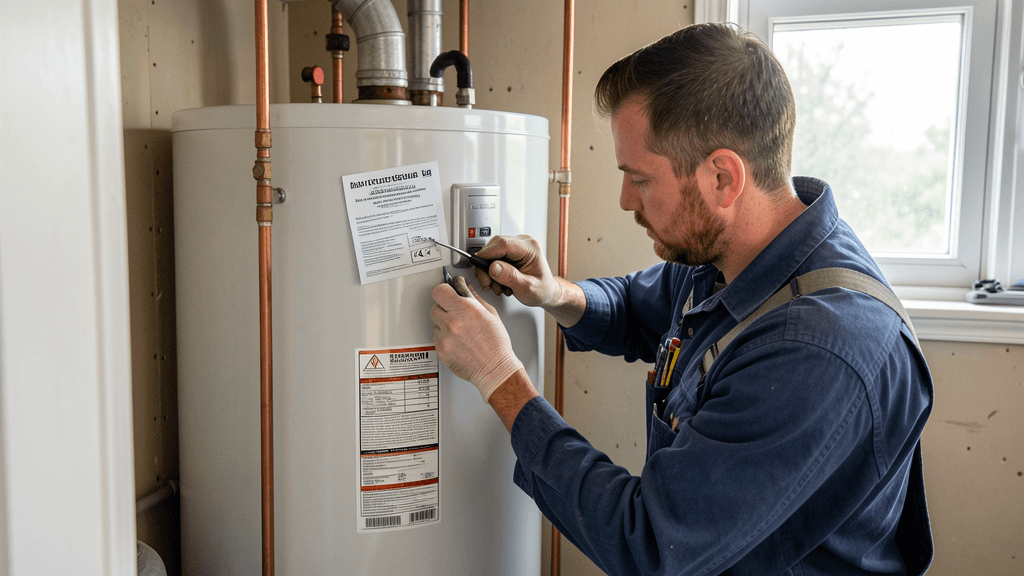
The water heater installation warranty contract clauses you hand a homeowner before the unit goes in determine who pays when the thermocouple fails at month 11.
You install a 50-gallon power-vent water heater on a Tuesday. The homeowner signs the invoice, pays the $3,400, and everything works. Eleven months later, the thermocouple fails. The homeowner calls you and says, "You installed this, you fix it for free." You know the thermocouple is a manufacturer part, not your labor, but you never put that in writing. Now you are driving 40 minutes round-trip on a Saturday to replace a $22 part for free, or you are having an awkward conversation about what your warranty actually covers.
That conversation is the most common callback cost for plumbers doing water heater installations. The Bureau of Labor Statistics reports the median hourly wage for plumbers at $29.52 nationally, but a callback visit burns two billable hours, $30 in fuel, and a customer relationship that may cost you a future referral. The fix is not better installation technique. It is the water heater installation warranty contract clauses you hand the homeowner before the unit goes in.
Here are seven specific clauses with copy-paste language, the callback economics behind each one, and what the major manufacturers actually cover so you know where your liability starts and theirs ends.
1. Scope of Warranty: What You Cover vs What the Manufacturer Covers
The first clause separates your workmanship from the manufacturer's equipment. Most plumbers conflate the two, and that confusion costs money. Rheem, A.O. Smith, and Bradford White each offer 6-year, 9-year, or 12-year tank warranties depending on the model tier. Those warranties cover tank leaks and component failures inside the unit. They do not cover your labor to swap the part.
Your warranty should cover one thing: the quality of your installation work. Leaks at your solder joints, gas connections you made, venting you installed, and the T&P valve you set. It should not cover the thermocouple, the heating element, the anode rod, or the gas control valve. Those are manufacturer parts.
Clause language: "This warranty covers installation workmanship only, including pipe connections, venting, and valves installed by [Company Name]. It does not cover the water heater unit, internal components, or parts manufactured by others, which are covered under the manufacturer's separate warranty. Manufacturer warranty claims must be filed directly with the manufacturer. Labor for manufacturer-warranty part replacements is billed separately at our standard service rate."
That paragraph does two things. It tells the homeowner what you are responsible for and what they need to handle with the manufacturer. When the thermocouple fails at month 11, you refer them to the Rheem 1-800 number and offer to replace it at your standard $185 service call rate. Most homeowners accept that. The ones who push back accept it faster when you show them the clause they signed.
2. Warranty Duration: Why 12 Months Is the Industry Standard
Most plumbing warranties run 12 months from the date of installation. Some plumbers offer 24 months as a differentiator, but the data does not support it. According to a published ServiceTitan contractor benchmark, 87% of installation-related callbacks occur within the first 90 days. By month 12, callbacks drop to under 2% of installed units. Extending to 24 months adds risk without adding meaningful customer value.
The 12-month term should be stated explicitly, with a start date tied to the installation date, not the invoice date. If the job was completed on January 15 but the final invoice was paid January 30, the warranty starts January 15.
Clause language: "Installation workmanship is warranted for twelve (12) months from the date of installation completion. The installation date is recorded on the final invoice and the warranty start date. Claims must be reported within this period. Claims reported after expiration will be billed at standard service rates."
3. Exclusions: The 6 Things Your Warranty Does Not Cover
Exclusions are not fine print. They are the boundary between a fair warranty and an open-ended liability. Without explicit exclusions, a homeowner can argue that "the installation" caused a problem months later that was actually caused by water chemistry, sediment buildup, or a pressure-regulator failure upstream of the unit.
Six exclusions every water heater installation warranty contract clause should name:
- Sediment and scale buildup from lack of annual flushing. This is a maintenance responsibility, not an installation defect.
- Anode rod depletion — a wear item with a service life of 3 to 5 years depending on water quality.
- Pressure damage from a failed or absent expansion tank. If the home did not have an expansion tank and you recommended one but the homeowner declined, document the declination.
- Flood or freeze damage from events unrelated to the installation workmanship.
- Code changes enacted after the installation date that retroactively require modifications to the install.
- DIY modifications by the homeowner or a third-party contractor after your installation.
Clause language: "This warranty does not cover damage or failure caused by: (a) sediment or mineral buildup, (b) anode rod depletion, (c) excessive water pressure without a functioning expansion tank, (d) flooding, freezing, or acts of nature, (e) building code changes enacted after the installation date, or (f) modifications, repairs, or adjustments made by anyone other than [Company Name]."
4. Annual Maintenance Requirement: The Flush-and-Inspect Clause
Water heaters fail early because of sediment. A 50-gallon tank in a home with hard water accumulates 8 to 15 pounds of mineral sediment per year if left unflushed. That sediment coats the bottom of the tank, insulates the heating element from the water, and causes overheating, premature element failure, and tank cracking. The plumber who installs the unit is the natural candidate for the annual flush. But if you do not make maintenance a warranty condition, the homeowner skips it, the tank fails at year 4, and they blame your installation.
Clause language: "This warranty requires annual maintenance performed by [Company Name] or a licensed plumber, including tank flushing, anode rod inspection, and T&P valve testing. Proof of maintenance must be available upon request. Failure to perform annual maintenance voids this workmanship warranty."
This clause does two things. It protects you from sediment-related callbacks, and it creates a recurring revenue stream. A $129 annual flush-and-inspect visit on a water heater you installed keeps your truck in front of that homeowner once a year. That visit is where you sell the next replacement, the expansion tank upgrade, or the whole-house filter they did not know they needed.
5. Response Time: What "Warranty Service" Actually Means
Homeowners hear "warranty" and think "same-day free fix." Without a response-time clause, you are on the hook for a Saturday night emergency trip because the homeowner's pilot light went out and they believe your 12-month warranty means 24/7 coverage. It does not.
The clause should define three things: response time, business hours, and what constitutes a warranty emergency versus a manufacturer issue.
Clause language: "Warranty service requests will be scheduled within 48 hours during normal business hours (Monday through Friday, 8 a.m. to 5 p.m.). Warranty service does not include after-hours, weekend, or holiday calls. If the homeowner requests same-day or after-hours service, standard emergency rates apply. Leaks at installation connections that risk property damage will be prioritized within 24 hours."
This clause sets expectations without being hostile. A leak at your solder joint is your problem, and you should fix it fast. A pilot light relight on a Saturday night is a manufacturer issue or a homeowner convenience, and billing for it is reasonable.
6. Permit and Inspection Responsibility
In most jurisdictions, the plumbing permit for a water heater replacement is pulled by the installing contractor. The inspection is scheduled by the contractor and performed by the municipal inspector. If the inspection fails, the re-inspection fee and the correction labor are your cost. But if the homeowner refuses the inspection, skips the permit, or requests an unpermitted install, your warranty should exclude the consequences.
Clause language: "[Company Name] will obtain all required permits and schedule inspections as part of the installation. If the homeowner requests an unpermitted installation or refuses inspection, the workmanship warranty is void. The homeowner is responsible for providing access for the municipal inspection."
Unpermitted water heater installs are common in markets where permit fees run $85 to $175 and homeowners want to save money. The risk is not the permit fee. It is that an unpermitted install may not meet current plumbing code, and a code violation discovered years later, during a home sale or an insurance claim, becomes your problem even though the homeowner chose to skip the permit. This clause shifts that risk back where it belongs.
7. Transferability: What Happens When the Home Sells
A homeowner sells the house 18 months after you installed the water heater. The new owner calls you six months later and says, "The water heater you installed is leaking, it is under warranty." Is it? That depends on whether your warranty transfers to subsequent owners.
Most manufacturer warranties are transferable one time. Your workmanship warranty does not need to be. Non-transferability is standard in the trade industry because the new owner was not your customer, did not sign your contract, and may have modified the unit without your knowledge.
Clause language: "This warranty is transferable to a subsequent property owner only if [Company Name] receives written notice of the property transfer within 30 days and performs a paid inspection of the installation at the current service rate. Without transfer registration and inspection, the warranty expires upon property sale."
This clause is not about being difficult. It is about maintaining a relationship with the equipment you installed. A paid inspection at transfer gives you the opportunity to confirm the unit is in good shape, document its condition, and introduce yourself to the new homeowner as the installing contractor. That introduction is worth more than the $129 inspection fee.
Water Heater Installation Warranty Contract Clauses: The Callback Economics
A single callback on a water heater installation costs more than most plumbers calculate. Here is the real math for a solo operator billing $115 per hour:
- Drive time round-trip: 1.5 hours = $172.50 in lost billable time
- Fuel and vehicle wear: $18
- Diagnostic time on site: 45 minutes = $86.25
- Replacement part (if under manufacturer warranty): $0 for part, but 20 minutes to source = $38
- Installation time for part swap: 30 minutes = $57.50
- Customer goodwill cost (the awkward conversation): unquantifiable
Total hard cost: $372.25 per callback. If you do 40 water heater installs per year and 15% generate a callback, that is 6 callbacks at $372 each, or $2,234 in lost margin annually. With the clauses above, callbacks that are manufacturer-related become billed service calls at $185 instead of free labor. That is $1,110 recovered per year on 6 callbacks.
The clauses are your water heater callback prevention strategy. They do not eliminate callbacks. They redirect the cost from your margin to the party responsible for the failure: the manufacturer for parts, the homeowner for maintenance neglect, or you for the 2% of cases that are genuine installation defects.
What the Major Manufacturers Actually Cover
You cannot write a warranty clause without knowing what the manufacturer covers. Here is the 2026 landscape for the three brands most plumbers install:
Rheem
Rheem's standard residential tank warranty runs 6 years on the tank and 6 years on parts for most models. Professional-grade models extend to 9 or 12 years. Coverage includes tank leaks, heating element failure, and gas control valve failure. Labor is not included. The homeowner or the plumber files the claim through Rheem's contractor line.
A.O. Smith
A.O. Smith offers 6-year, 9-year, and 10-year tank warranties depending on the model. Component coverage matches the tank warranty period. Claims require the serial number and proof of professional installation. A.O. Smith is the strictest about requiring an installation receipt, which is another reason your invoice should state the installation date and model serial number clearly.
Bradford White
Bradford White sells primarily through plumbing wholesalers, not big-box retailers. Their standard warranty is 6 years tank and parts on residential models, with extended options through the Defender and High-Efficiency lines. Bradford White is the most plumber-friendly brand for warranty claims, with a streamlined process through wholesale distributors rather than direct homeowner calls.
None of these manufacturers cover labor. That gap is where your installation warranty and your service-call revenue intersect. The homeowner who understands that the manufacturer covers the part and you cover the installation is the homeowner who pays your $185 service call without arguing.
How to Present These Clauses Without Scaring the Customer
A warranty document with seven clauses and multiple exclusions can feel hostile if handed over with the invoice. The framing matters. Present it as a protection document, not a limitation document. Here is the script:
"This is your installation warranty. It spells out exactly what I cover, what the manufacturer covers, and how we handle service calls. Most plumbers do not put this in writing, which means you never know what you are actually getting. This document protects you because you know exactly what is guaranteed, and it protects me because we both agreed on the terms before any work started."
Think of this document as a plumbing installation contract template that your attorney can adapt. That framing uses authority bias. You are the expert who puts things in writing. The plumber who hands a warranty document looks more professional than the one who says, "Don't worry, I stand behind my work." Standing behind your work is a verbal promise. A signed warranty is a contract. Homeowners pay more for the contractor with the contract.
Six-Month Review: Are Your Clauses Working?
Track three numbers after implementing written warranty clauses on your water heater installations:
- Callback rate — percentage of installs that generate a callback within 12 months. Target: under 8%. If it is over 12%, your installation quality needs attention, not just your contract.
- Billed callback rate — percentage of callbacks that result in a billed service call rather than free labor. Target: 40% to 60% of callbacks. If every callback is free, your clauses are not being enforced. If every callback is billed, your clauses may be too aggressive.
- Warranty-related disputes — number of times a homeowner pushes back on the warranty terms. Target: under 10% of installs. If higher, your presentation script needs work, not your clauses.
The water heater installation warranty contract clauses in this guide are a starting point. Have your attorney review them for your jurisdiction. The plumber with a signed warranty wins every argument, because the argument was settled before the unit went in.
This guide is published by Heyfield, which makes an AI phone receptionist for home-service trade businesses. If you ever can't take the call, that's what we do. See pricing. The rest of our trade-business resources are free at heyfield.app/blog.
Frequently Asked Questions
What should a plumber's water heater installation warranty cover?+
Your warranty should cover installation workmanship only: pipe connections, venting, valves, and gas connections you made. It should not cover manufacturer parts like the thermocouple, heating element, or gas control valve, which are covered under the manufacturer's separate warranty.
How long should a water heater installation warranty last?+
Twelve months from the installation date is the industry standard. According to published contractor benchmarks, 87% of installation-related callbacks occur within the first 90 days. Extending to 24 months adds risk without meaningful customer value.
Can a homeowner file a manufacturer warranty claim without the plumber?+
Yes. Most manufacturers (Rheem, A.O. Smith, Bradford White) allow the homeowner to file directly using the serial number and proof of professional installation. Your invoice with the installation date and model serial number serves as that proof. The manufacturer covers the replacement part but does not cover your labor to install it.
Does a water heater warranty transfer to a new homeowner when the house sells?+
Most plumbing workmanship warranties are non-transferable unless you explicitly allow it. A common approach is to require a paid inspection at the current service rate before transferring the warranty, which gives you a chance to document the unit's condition and introduce yourself to the new owner.
What voids a plumber's water heater installation warranty?+
Common voiding conditions include failure to perform annual maintenance (tank flushing, anode rod inspection), modifications or repairs by anyone other than the installing plumber, flood or freeze damage, code changes enacted after installation, and unpermitted installation if the homeowner refused the permit or inspection.
How much does a water heater callback cost a plumber?+
For a solo operator billing $115 per hour, a callback visit costs approximately $372 in lost billable time, fuel, diagnostic labor, and part sourcing. With written warranty clauses, manufacturer-related callbacks become billed service calls at $185 instead of free labor.
Should I include an annual maintenance requirement in my warranty?+
Yes. An annual flush-and-inspect requirement protects you from sediment-related failures that are not installation defects, and it creates a recurring revenue stream. A $129 annual maintenance visit keeps your truck in front of the homeowner and is where you sell the next replacement or upgrade.
What does a Rheem water heater warranty cover vs the plumber's warranty?+
Rheem covers the tank and internal components (heating elements, gas control valve, thermocouple) for 6 to 12 years depending on the model. Rheem does not cover labor. Your plumber warranty covers the installation workmanship: solder joints, gas connections, venting, and valve settings. Manufacturer parts are filed through Rheem's warranty line.
Ready to stop missing calls?
Try Heyfield free for 7 days. Your AI receptionist answers every call, collects customer details, and texts you the summary.
Keep Reading
Why Welding Shops Can't Risk Answering Their Own Phones
Sparks fly, face shields go down, and phone calls go to voicemail. How safety-first welding shops lose business to missed calls.
ReadPool Service Owners: Every Missed Call Costs You $900
Pool season is short and winterization is now. One missed call can cost you a full-season client worth $900+. Here's how solo pool service pros stop losing jobs to voicemail.
Read