Roofing Storm Chasing Season Decision: A Go No-Go Framework

Meric Karpat · Founder & CEO
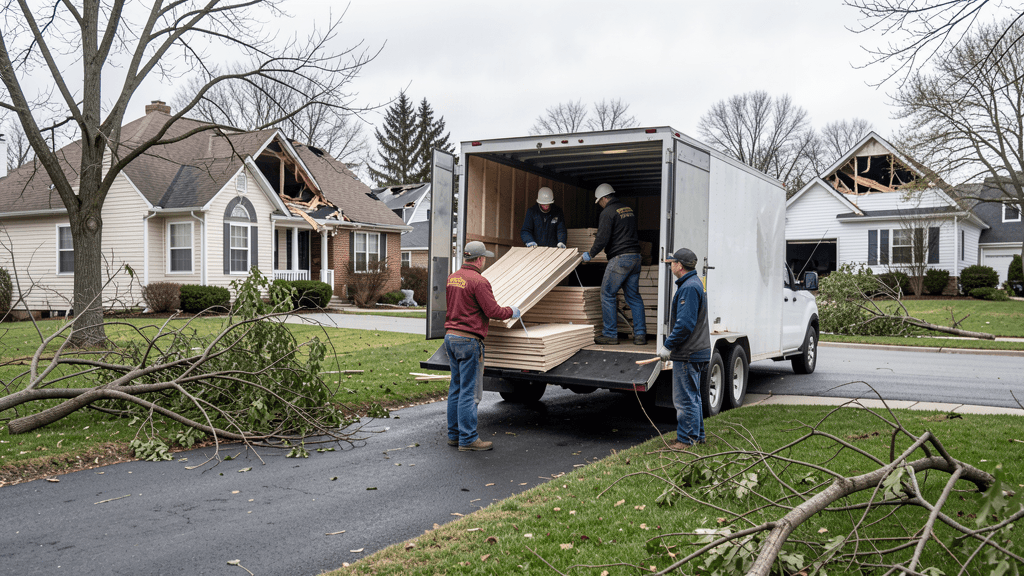
A roofing crew in Oklahoma City grossed $340,000 in six weeks after a May 2025 hailstorm. Another crew from the same region drove to the same storm, worked the same number of days, and grossed $28,000. The first crew had a deployment plan with real numbers. The second crew had a truck, a ladder, and hope.
The roofing storm chasing season decision is not about courage or work ethic. It is about whether the math works before you load the trailer. Every roofing owner who has chased storms has asked the same question: should I go, and if I go, what does it cost me to be there? Most answer with gut instinct. The ones who profit answer with a break-even worksheet.
This guide breaks down the four numbers that determine whether deploying to a storm market makes sense for your roofing business this season: per-truck weekly deployment cost, license and registration barriers, break-even job count, and the opportunity cost of leaving your local market undermanned.
What the roofing storm chasing season decision actually costs you per truck
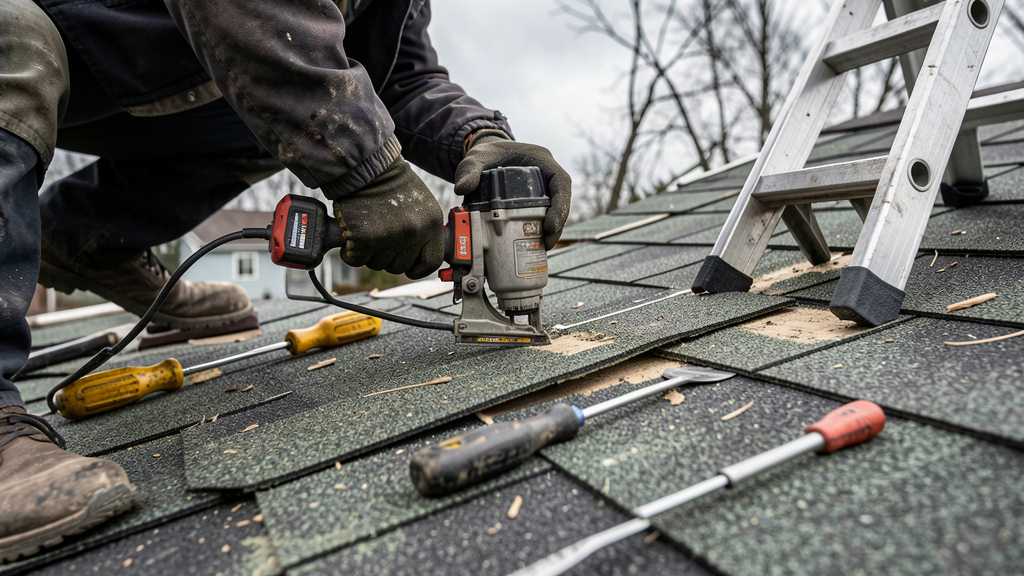
Before you decide whether to go, calculate what it costs to be there. Not estimates. Real dollars, per truck, per week. Here is what a two-person crew deployment looks like in 2026 dollars.
The weekly deployment cost breakdown
Lodging: A budget hotel in a storm-impacted market runs $85-120 per night. The federal per diem rate for most U.S. counties in FY 2026 is $107 per night for lodging, per the GSA. Two crew members sharing a room at $95/night comes to $665 per week. An extended-stay suite with a kitchenette drops that to roughly $550 and lets you cook meals instead of eating out.
Meals and incidentals: The federal M&IE rate for 2026 is $59 per day per person. Two crew members, seven days: $826 per week. You can cut this to $400-500 with grocery runs and a hotel kitchenette, but budget the full rate to be safe.
Fuel: A loaded truck and trailer getting 10 mpg, driving 60 miles per day between job sites in a storm market, burns roughly 42 gallons per week. At $3.40/gallon (the 2026 national average for diesel as of June, per the EIA), that is $143 per week. Add the drive to the storm market: 500 miles each way at 10 mpg is 100 gallons, or $340 round trip. Prorate that over a four-week deployment: $85 per week.
Trailer and equipment wear: Storm work is harder on equipment. Tear-offs in heat, daily trailer loading, and rough roads in damaged neighborhoods accelerate wear. Budget $200 per week for blade replacement, nail gun service, and miscellaneous gear loss. This is not a maybe cost. It is a certainty.
Per-truck weekly total: $665 + $826 + $228 + $200 = $1,919 per week per two-person crew. Round to $2,000 for planning. If you run a three-person crew, add $413 per week in meals and incidentals for the third person, plus shared-lodging adjustments. Call it $2,300 per week for three.
License reciprocity: which states let you work and which make you wait
The biggest hidden cost in storm deployment is not fuel or lodging. It is the license application you did not know you needed. Roofing contractor licensing varies by state, and reciprocity agreements are narrower than most roofers assume.
States with reciprocity agreements
Florida has reciprocity with California, Louisiana, Mississippi, North Carolina, and Georgia, meaning a licensed contractor from those states can obtain a Florida license by endorsement without retaking the full trade exam, according to the Florida Department of Business and Professional Regulation. Several other states have limited bilateral agreements. Texas does not require a state-level roofing license, but cities like Dallas and Houston require local registrations. Colorado requires state registration for roofing contractors through the Colorado Office of Policy, Research and Regulatory Reform, with no reciprocity.
States with no reciprocity and new application requirements
Oklahoma, Kansas, Missouri, and Iowa do not have statewide roofing contractor licenses, but individual municipalities often require local permits or registrations. This means you may be legal in one county and illegal in the next. The NRCA recommends verifying registration requirements with the local jurisdiction before soliciting work. In practice, this means calling the city building department in every town where you plan to door-knock.
The application timeline matters. In states that do require a full license (Minnesota, Michigan, Oregon, California), the process can take 4-8 weeks and cost $300-600 in fees plus exam costs. By the time your application clears, the storm work is done. Plan your deployment targets around states where you can legally work within 48 hours of arrival.
Break-even: how many roofs per week covers your deployment cost
The average residential roof replacement cost hit $17,631 in 2025, according to Verisk's roofing loss data. Repair work averaged $4,699. Your revenue per job depends on whether you are doing full replacements (insurance-funded) or repairs (homeowner-funded).
If your average replacement contract is $14,000 and your gross margin is 35%, your gross profit per roof is $4,900. At $2,000 per week in deployment costs, you need roughly one replacement roof every three days to break even on deployment alone. That sounds easy in a storm market, but it ignores the cost you are not tracking.
The opportunity cost of leaving home
If your local market has $8,000 per week in gross profit from steady work, and you leave one truck behind to handle it while you deploy one truck to the storm, your deployed truck needs to generate not just its deployment cost but the local profit you are not earning. A one-truck shop that deploys to a storm market and leaves zero coverage at home is not just spending $2,000 per week to be there. They are also foregoing whatever they would have earned at home.
For a two-truck shop deploying one truck: the math is more favorable. The home truck covers local pipeline and keeps the lights on. The deployed truck needs to clear $2,000 per week in deployment costs plus produce profit above what that truck would have contributed locally. If that truck typically generates $3,500 per week in gross profit at home, your break-even in the storm market is $5,500 per week in gross profit, or roughly 1.1 replacement roofs per week.
A go/no-go framework for the roofing storm chasing season decision
Before each storm season, build a one-page worksheet with these five inputs. If any one of them fails, do not go.
1. License clearance within 48 hours. Can you legally solicit and contract in the target state and municipality within two days of arrival? If you need a new application that takes four weeks, this storm is not yours.
2. Local pipeline depth. Do you have enough work at home to keep your remaining crew profitable for the full deployment duration? If you are a solo operator, the answer is no unless you have a referral partner covering your local customers.
3. Storm severity and density. State Farm paid $5.6 billion in hail claims in 2025, with Texas alone accounting for $1.4 billion. Verisk reported that 16 states had severe hail impacting more than 20% of roofs. A storm that damages 200 roofs in a 10-mile radius is deployable. A storm that damages 40 roofs spread across three counties is not worth the drive.
4. Break-even job count. Based on your per-truck weekly cost ($2,000 for two-person, $2,300 for three) and your average gross profit per roof, how many jobs per week do you need? If the answer is more than two full replacements per week per truck and the storm market cannot support that volume based on competition and damage density, stay home.
5. Crew capacity and willingness. Storm work means 12-hour days, hotel living, and physical strain in damaged neighborhoods. If your crew has not agreed to the deployment and the compensation structure (per job vs. hourly plus per diem), do not go. Crew burnout in week two is the most common reason storm deployments fail.
Lodging and logistics: hotel, RV, or rental house
Your housing choice in a storm market is not a comfort decision. It is a margin decision that compounds over a multi-week deployment.
Hotel versus extended-stay versus rental house
A budget hotel at $95/night costs $665 per week for two crew members sharing a room. An extended-stay suite with a kitchenette at $80/night costs $560 per week and saves $300-400 on meals because you can cook. A rental house or Airbnb at $1,800-2,200 per month costs $450-550 per week and can house a full three-person crew, bringing per-person lodging below $200 per week.
The RV route is increasingly popular among storm chasers. A used 30-foot travel trailer at $18,000-25,000 amortized over three storm seasons costs roughly $150-200 per week including park fees of $40-60 per night. The upfront capital is the barrier. If you already own an RV, this is the cheapest option. If you do not, the break-even on buying one is two full storm seasons of deployment.
The practical tradeoff: hotels are fastest to book and easiest to leave if the market dries up. Rental houses are cheapest for multi-week stays but require a one-month minimum commitment. RVs are cheapest long-term but require the highest upfront capital and a tow vehicle capable of pulling them.
When to stay home: the case for not chasing
The roofing storm chasing season decision is not always go. Sometimes the right answer is to stay home and capture the overflow work that storm chasers leave behind. When a major storm hits a neighboring state, your local market often sees an influx of adjusters, insurance agents, and homeowners who need emergency tarping and temporary repairs while they wait for full replacement scheduling.
If your local market is within 100 miles of a storm-impacted area, you may be better positioned to capture insurance repair work at home than to deploy. You avoid all deployment costs, work in a market where you are already licensed and known, and can charge premium rates for emergency tarping and inspection work that adjusters need completed quickly.
The roofing contractor who stays home and captures 15 emergency tarp-and-inspect jobs at $450 each during the two weeks after a nearby storm earns $6,750 in gross revenue with zero deployment cost. The contractor who deploys to the storm market and closes one replacement roof in the same two weeks earns $14,000 in revenue but nets roughly $3,200 after deployment costs and opportunity cost. The stay-home roofer actually keeps more.
Revisit your deployment plan every storm season
Storm markets shift. Hail alley is expanding eastward. Material costs change. Labor rates rise. The deployment worksheet you built this year needs updating every season. Set a calendar reminder for February to review license reciprocity changes, update your per-truck cost numbers with current fuel and lodging rates, and recheck your local pipeline projections before the first hail reports come in.
The roofers who profit from storm season are not the ones who drive the farthest. They are the ones who ran the numbers before they put the key in the ignition.
Frequently Asked Questions
How much does it cost to deploy a roofing crew to a storm market?+
A two-person crew costs approximately $2,000 per week in lodging, meals, fuel, and equipment wear. A three-person crew runs about $2,300 per week. These are deployment costs only and do not include materials or labor wages.
Which states have roofing license reciprocity in 2026?+
Florida has reciprocity with California, Louisiana, Mississippi, North Carolina, and Georgia. Many states without statewide roofing licenses still require local municipal registrations. Check with the city building department in every town where you plan to work before deploying.
How many roofs per week do I need to break even on storm deployment?+
At $2,000 per week in deployment costs and an average gross profit of $4,900 per replacement roof, you need roughly one replacement every three days just to cover deployment. Add your local opportunity cost to calculate true break-even.
Is it better to chase storms or stay home and capture local overflow work?+
If your local market is within 100 miles of a storm-impacted area, staying home to capture emergency tarping and inspection work can net more profit than deploying, because you avoid all deployment costs and work in a market where you are already licensed and trusted.
What is the federal per diem rate for construction workers in 2026?+
The standard federal per diem rate for most U.S. counties in FY 2026 is $166 per day, split as $107 for lodging and $59 for meals and incidental expenses, per the GSA.
How long does it take to get a roofing license in a new state?+
States requiring a full license application typically take 4-8 weeks for processing and may cost $300-600 in fees plus exam costs. This timeline makes full licensing impractical for storm chasing unless you plan to return to the same market repeatedly.
Should I buy an RV for storm chasing or stay in hotels?+
Hotels are fastest to book and easiest to leave. An RV is cheapest long-term at $150-200 per week including park fees, but requires $18,000-25,000 upfront. The break-even on buying an RV for storm work is roughly two full storm seasons of deployment.
What happens to my local customers when I deploy to a storm market?+
If you are a one-truck shop, deploying means zero local coverage and lost pipeline revenue. A two-truck shop can deploy one truck while the other maintains local work. Factor the forgone local profit into your storm deployment break-even calculation.
Ready to stop missing calls?
Try Heyfield free for 7 days. Your AI receptionist answers every call, collects customer details, and texts you the summary.
Keep Reading
Why Welding Shops Can't Risk Answering Their Own Phones
Sparks fly, face shields go down, and phone calls go to voicemail. How safety-first welding shops lose business to missed calls.
ReadPool Service Owners: Every Missed Call Costs You $900
Pool season is short and winterization is now. One missed call can cost you a full-season client worth $900+. Here's how solo pool service pros stop losing jobs to voicemail.
Read